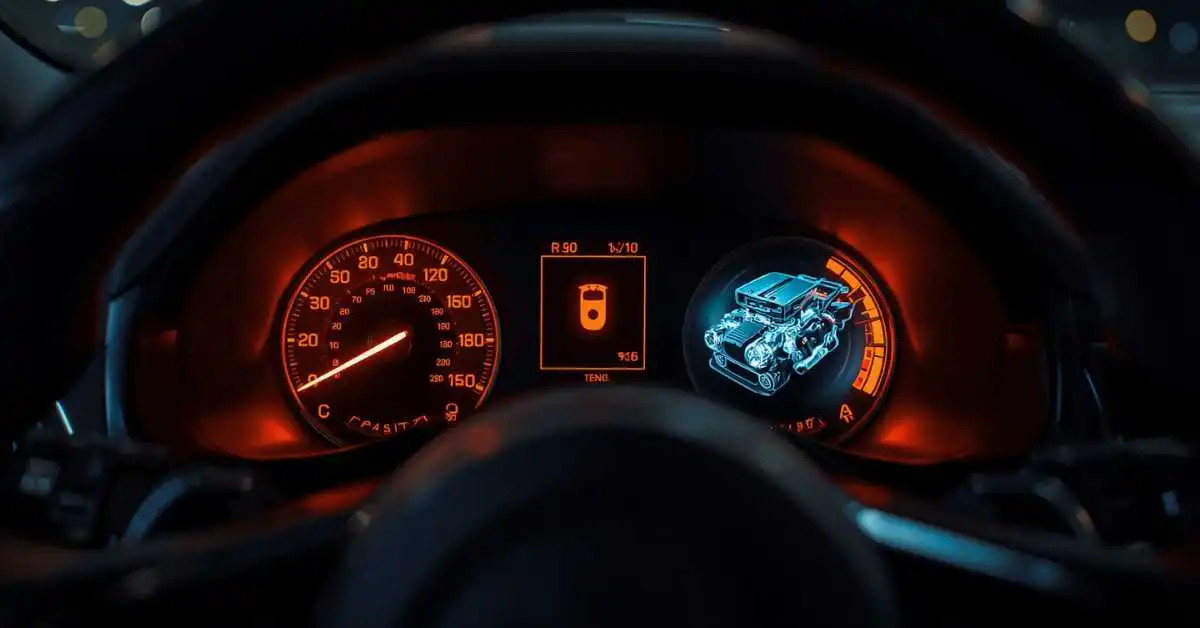
A flashing check engine light usually means your engine has a severe misfire happening right now. That is urgent because a serious misfire can quickly overheat and damage the catalytic converter and other emissions-related parts.
In most cases, you should reduce speed, avoid hard acceleration, and get the vehicle checked immediately.
A steady check engine light can point to many problems, but a flashing light is more serious. It usually means the On-Board Diagnostics system, or OBD-II, has detected an active misfire severe enough to increase exhaust temperature and risk expensive damage.
That is why drivers searching “what does a flashing check engine light mean” usually want a fast answer, a clear safety warning, and the right next step.
Why a flashing check engine light matters so much
It usually means a severe engine misfire
The check engine light is also called the malfunction indicator lamp (MIL) or service engine soon light. When it flashes, official guidance from EPA says it indicates a rather severe level of engine misfire. Ford owner manuals say the same thing more directly: if the light is blinking, engine misfire is occurring or may be occurring.
A misfire happens when one or more cylinders do not burn the air-fuel mixture correctly. When that happens, unburned fuel can enter the exhaust system.
The catalytic converter then has to deal with excessive heat, which is why a flashing light is treated as urgent instead of routine. EPA says severe misfire over even a short period can seriously damage emission-control components, especially the catalytic converter.
It can become expensive very fast
A flashing light does not always mean the engine is about to fail, but it does mean you should not ignore it.
Ford warns that under engine misfire conditions, excessive exhaust temperatures can damage the catalytic converter, the fuel system, or other vehicle components. That is one reason this warning can turn into a much more expensive repair if you keep driving hard.
What to do right away
The safest immediate response
If your check engine light is flashing, do this:
- reduce speed
- avoid hard acceleration and hard deceleration
- avoid high-load driving like fast highway pulls or towing
- pay attention to rough running, shaking, or power loss
- get the vehicle serviced as soon as possible
That advice comes straight from EPA and Ford guidance. The goal is simple: lower stress on the engine and reduce the chance of catalytic-converter damage while you get the car diagnosed.
Can you keep driving?
Official guidance does not say every illuminated dashboard light means you must stop the vehicle immediately. EPA says the light is generally meant to tell the driver service is needed, not automatically to stop the vehicle.
But EPA also makes a clear exception for a flashing light: reduce speed and seek service as soon as possible. In practice, that means a flashing light is not something to keep driving on normally. If the engine is shaking badly or power drops a lot, getting to a safe location and arranging service is the better choice.
Flashing vs. steady check engine light
A lot of drivers confuse these two warnings, so this comparison helps.
| Check engine light behavior | What it usually means | How urgent it is |
|---|---|---|
| Steady light | The OBD-II system has detected an emissions or engine-related fault | Important, but not always immediate |
| Flashing light | A severe or active engine misfire is happening or may be happening | Urgent; reduce speed and get service immediately |
| Flashes eight times after startup on some vehicles | On some Ford vehicles, this can mean the car is not ready for Inspection and Maintenance testing | Check the owner’s manual before assuming it is an active failure |
This difference matters because a loose gas cap or similar temporary issue can turn on a steady light, but a flashing light points far more strongly toward misfire risk.
Ford also notes that temporary issues like poor fuel quality, water in the fuel, or wet electrical components can make the engine run poorly and trigger the system, but flashing behavior still deserves immediate attention.
Common causes of a flashing check engine light
A flashing check engine light is usually about the misfire, but the misfire itself can come from different root causes.
1) Spark plugs, ignition coils, and coil pack problems
One of the most common causes is an ignition issue. EPA specifically uses a poorly performing spark plug as an example of a fault that can cause misfire and hurt catalytic-converter performance.
In real-world diagnosis, ignition coils or coil packs are also common suspects because weak spark can keep one cylinder from firing correctly.
2) Fuel delivery or combustion problems
A flashing MIL can also happen when fuel is not delivered or burned correctly. Ford notes that poor fuel quality or water in the fuel can make the engine misfire or run poorly. That brings fuel injectors, fuel quality, and combustion stability into the picture.
3) Coolant leaking into the cylinders
Some misfire cases are more serious than plugs or coils. A 2024 GM service bulletin says some vehicles with MIL illumination, rough running, and DTC P0300 may have coolant getting into the cylinders. That shows why random part-swapping is risky: the same flashing light can come from a deeper internal issue.
4) Valve, camshaft, or carbon-related problems
Honda and GM service information also show that some misfire conditions are tied to drivability issues, rich running, or internal engine problems that need mechanical inspection. In other words, the cause may involve more than simple maintenance items.
Depending on the engine, diagnosis may need to check for carbon buildup, valve problems, or related wear.
Symptoms that often appear with a flashing check engine light
A flashing light rarely comes alone. Many drivers also notice rough idle, shaking, hesitation, reduced smoothness, or trouble under load.
| Symptom | What it can point to |
|---|---|
| Car shakes at idle | One or more cylinders may be misfiring |
| Rough running when warm | Active misfire or internal engine issue |
| Hesitation under acceleration | Misfire gets worse under load |
| Long crank or hard start | Fuel, ignition, or cylinder-related issue |
| Flashing light during highway merge | Load-related misfire becoming severe |
GM service information lists engine running rough and P0300 on cold start, while Honda documents drivability issues and cylinder-specific misfire codes such as P0301, P0302, P0303, and P0304. That matches what drivers often feel in real life when the light starts flashing.
What codes usually show up
When a mechanic connects a scan tool, the most common diagnostic trouble codes (DTCs) for this problem are the misfire codes:
- P0300 = random or multiple-cylinder misfire
- P0301 = cylinder 1 misfire
- P0302 = cylinder 2 misfire
- P0303 = cylinder 3 misfire
- P0304 = cylinder 4 misfire
- P0305–P0308 = cylinder-specific misfires on engines with more cylinders
Ford OBD documentation lists P0300 through P0308 as misfire monitor codes. That is why a flashing check engine light and a P0300 code often appear together. But the code is only the start. It tells the technician where to look, not always which part to replace.
What a mechanic usually checks first
A good diagnosis usually starts with the OBD-II scan data, then moves to the most likely causes in a logical order. That often includes checking spark plugs, ignition coils, cylinder-specific misfire data, fuel quality, injector behavior, and any signs of a mechanical problem inside the engine.
GM and Honda bulletins make it clear that the same misfire code can come from very different root causes.
This is why simply clearing the MIL or replacing random parts can waste money. The strongest repair path is diagnosis first, then the right repair second.
Common mistakes to avoid
Treating it like a minor warning
A lot of drivers assume every check engine light is the same. It is not. EPA guidance draws a clear line between a normal illuminated light and a flashing one, with the flashing light tied to severe misfire and fast catalytic-converter damage risk.
Assuming it is just a loose gas cap
A loose gas cap can cause the dashboard light to come on, and EPA uses that as a classic example of a normal OBD issue. But that is not the best explanation for a flashing light. A flashing light should be treated first as a likely misfire problem.
Driving hard to “test it”
Ford specifically says to drive in a moderate fashion and avoid heavy acceleration and deceleration when the light is blinking. Hard driving can increase exhaust temperatures and make damage worse.
Ignoring it because the light stopped flashing
EPA explains that the dashboard light can sometimes turn off automatically if the system no longer detects the problem over several checks. That means a light that flashed and then stopped may still point to an intermittent issue that deserves diagnosis, especially if the engine ran rough at the same time.
Real-world examples
Flashing check engine light and car shaking
If the car is shaking and the light is flashing, that strongly fits an active misfire. The cylinder is not contributing power correctly, so the engine feels rough and uneven. This is one of the clearest “get it checked now” situations.
Flashing check engine light while accelerating
Misfires often show up more clearly under load. That is why some drivers first notice the flashing light when accelerating onto a highway or climbing a hill. More load puts more demand on ignition, fuel, and combustion quality.
Flashing check engine light but the car still seems to run
Even if the vehicle still moves, the warning is still serious. EPA says severe misfire over only a short period can damage emissions components, especially the catalytic converter. So “it still drives” does not mean “it is safe to ignore.”
FAQ
Is a flashing check engine light always serious?
Usually, yes. EPA says a flashing light indicates a rather severe level of engine misfire, and Ford warns it can damage the catalytic converter and other components.
Can bad spark plugs cause a flashing check engine light?
Yes. EPA specifically uses a poorly performing spark plug as an example of a misfire-related problem that can damage catalytic-converter performance.
Can bad ignition coils or a coil pack cause it?
Yes. A weak or failed ignition coil can cause one cylinder to misfire, which can make the MIL flash. This is a common misfire path in real-world diagnosis.
What does P0300 mean with a flashing check engine light?
P0300 means random or multiple-cylinder misfire detected. It is one of the most common codes seen when the check engine light flashes.
Can low-quality fuel cause a flashing check engine light?
It can contribute. Ford says poor fuel quality or water in the fuel can make the engine misfire or run poorly, which can lead to this warning.
Can a loose gas cap cause a flashing check engine light?
A loose gas cap can turn on the dashboard light, but it is much more commonly associated with a normal illuminated light than a flashing misfire warning.
Why did the light flash and then stop?
EPA says the OBD system can turn the light off automatically if it no longer detects the original problem over several checks. That can happen with intermittent faults, but it still deserves diagnosis.
What if the light flashes eight times after startup?
On some Ford vehicles, that pattern can mean the vehicle is not ready for Inspection and Maintenance testing, not that there is an active engine fault. Always check the owner’s manual for your exact model.
The bottom line
If you are wondering what does a flashing check engine light mean, the short answer is this: it usually means a severe engine misfire is happening, and continued driving can damage the catalytic converter and other parts of the emissions system.
Slow down, avoid hard driving, and get the vehicle diagnosed as soon as possible. That quick response can prevent a smaller ignition or fuel problem from turning into a much larger repair.
Click Below To Read About More Posts:
What Does Mirror Front Camera Mean? Complete Explanation
What Does Connected Without Internet Mean?
What Does Mason Mean? Name Meaning, Origin, Popularity

Hello! I’m Clara Lexis, creator of Meanpedia.com. I specialize in breaking down words, phrases, and idioms so that anyone can understand and enjoy the beauty of English. My goal? Making language approachable, fun, and meaningful, one word at a time.