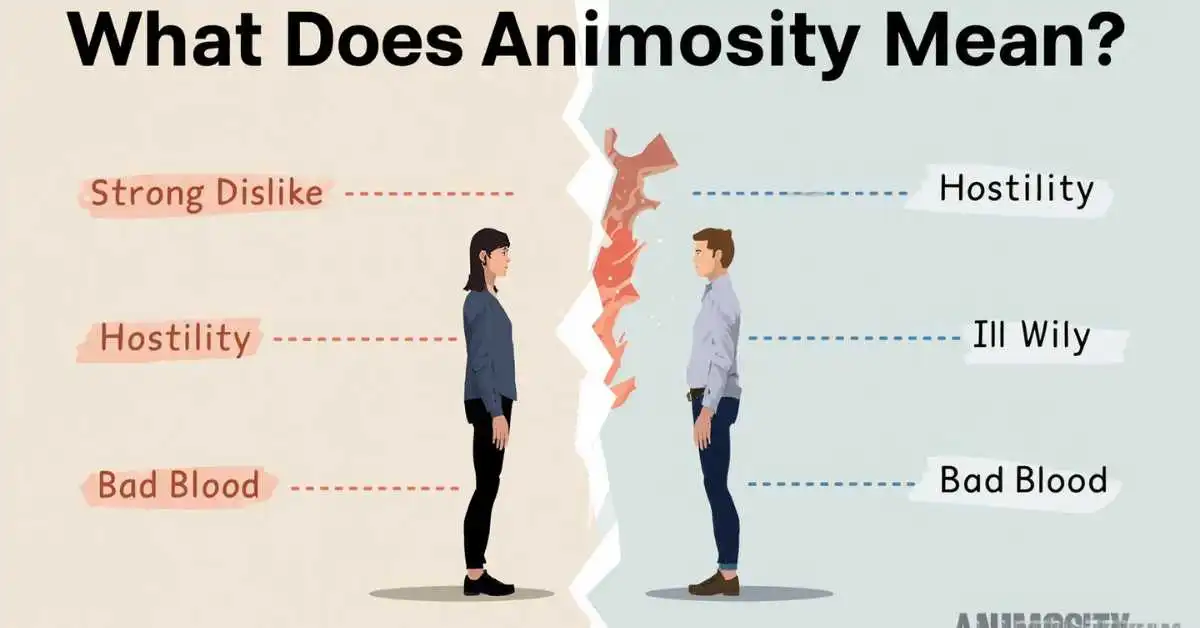
Animosity means a strong feeling of dislike, ill will, or hostility toward someone. It is deeper than simple annoyance and often suggests lasting tension, resentment, antagonism, or bad blood between people or groups.
If you want the plain answer to what does animosity mean, think of it as deep personal hostility. It is the kind of feeling that goes beyond a quick moment of anger. Animosity often shows up when there is bitterness, enmity, or long-running conflict in a relationship, family, workplace, team, or public dispute.
In this guide, you will learn the exact meaning, pronunciation, synonyms, examples, and how to use the word naturally in everyday English.
Quick answer: what does animosity mean?
Animosity is a noun that means strong dislike, ill will, or hostile feeling toward a person, group, or side. It usually suggests more than a small disagreement. It points to tension that feels serious, personal, or long-lasting.
Pronunciation
A simple pronunciation guide is: an-uh-MOS-i-tee. Standard dictionaries list both American and British pronunciations, and the plural form is animosities.
Part of speech
- Word: animosity
- Part of speech: noun
- Plural: animosities
What does animosity mean in simple words?
In simple English, animosity means bad blood. It is the feeling people have when they hold deep dislike, resentment, hostility, or animus toward someone. It can be open and obvious, or quiet and hidden under the surface.
For example, two coworkers may disagree once and move on. That is not necessarily animosity. But if they keep holding grudges, speak with tension, and act with coldness or antagonism, that can become animosity.
The word often fits situations involving a feud, rivalry, bitterness, or long-standing conflict.
When do people use the word animosity?
People use animosity when a feeling is stronger than annoyance and more personal than a simple disagreement. It commonly appears in these kinds of situations:
In relationships
Animosity can exist after betrayal, divorce, breakups, family arguments, or broken trust. A sentence like “there is no animosity between them” means there are no lasting hard feelings or ill will, even if the relationship ended. Cambridge also uses this kind of example in everyday English.
In the workplace
The word also fits office conflict. There may be animosity between managers, coworkers, departments, or business partners when professional tension turns personal. In these cases, the word implies hostility, friction, or resentment that affects communication and teamwork.
In sports, politics, and group conflict
Animosity is also common in rivalry language. You may hear about animosity between teams, parties, communities, or public figures. It works well when the tension is serious and repeated, not just competitive.
Animosity vs anger, resentment, hostility, and hatred
These words are related, but they are not exactly the same. Understanding the difference helps you use animosity more accurately.
| Word | Main idea | Tone | Usual use |
|---|---|---|---|
| Anger | A strong emotional reaction | Can be temporary | A moment, event, or trigger |
| Resentment | Lingering hurt or bitterness | Quiet but lasting | Feeling wronged or treated unfairly |
| Hostility | Openly unfriendly attitude | Sharp and direct | Actions, tone, or behavior |
| Animosity | Deep dislike or ill will | Personal and lasting | Ongoing tension between people or groups |
| Hatred | Extreme dislike | Strongest and harshest | Intense emotional rejection |
Dictionaries group animosity with words like enmity, hostility, antagonism, animus, bitterness, grudge, and rancor. Compared with anger, animosity usually lasts longer. Compared with resentment, it feels more openly hostile. And compared with hatred, it can be slightly broader and less absolute, though the two often overlap.
A simple rule helps:
- anger can be quick
- resentment can stay inside
- hostility often shows on the outside
- animosity usually means deep, ongoing ill will
- hatred sounds the most intense
Common phrases with animosity
Some searchers do not just want the definition. They want to know how the word appears in real phrases.
“No animosity”
This means no hard feelings, no ill will, and no hostility. People often say this after a breakup, resignation, public disagreement, or business split. Example: “We decided to work separately, but there is no animosity between us.”
“Personal animosity”
This phrase means the negative feeling is personal, not just professional or general. If someone says a decision was based on personal animosity, they mean it may have been driven by dislike, bitterness, or animus toward a specific person.
“Long-standing animosity”
This means the hostility has existed for a long time. It often appears in family disputes, political conflict, rivalries, or old feuds.
Synonyms and antonyms of animosity
Best synonyms
The strongest related words include:
- hostility
- ill will
- resentment
- bitterness
- antagonism
- enmity
- hatred
- grudge
- rancor
- animus
- bad blood
- friction
- feud
These are not always perfect substitutes, but they sit in the same meaning family. That makes them useful for semantic depth and natural writing around the keyword.
Opposites of animosity
Common antonyms include:
- amity
- friendliness
- cordiality
- goodwill
- harmony
Examples of animosity in sentences
Here are clear, natural examples:
- There was obvious animosity between the two former business partners.
- She left the company with no animosity toward her manager.
- Years of rivalry created animosity between the two teams.
- Family tension turned into open animosity after the inheritance dispute.
- His comment added more animosity to an already hostile meeting.
- Even after the breakup, they tried to avoid bitterness and animosity.
Reference dictionaries also show sentence patterns like animosity between, animosity against, and personal animosities, which are useful for learning correct usage.
What causes animosity?
Animosity usually grows over time. It often begins with something smaller and then becomes deeper. Common triggers include:
- betrayal
- repeated disrespect
- jealousy
- unfair treatment
- unresolved arguments
- humiliation
- broken trust
- competition that turns personal
In real life, animosity often grows when conflict is left unresolved. A single disagreement may create anger. Repeated negative experiences can turn that anger into resentment, hostility, or a full grudge. That is when words like animosity, enmity, or bad blood become more accurate.
How to use animosity correctly
If you want to use the word naturally, these sentence structures work well:
Animosity toward someone
“There is still animosity toward the former coach.”
Animosity between people
“There has been animosity between the neighbors for years.”
Animosity against someone
“He acted out of personal animosity against his rival.”
The word sounds natural in formal writing, articles, essays, workplace communication, and serious conversation. It is less common in very casual speech, where people may say bad blood, hard feelings, or beef instead.
Common mistakes to avoid
1. Using animosity for mild dislike
Animosity is stronger than “I do not like him” or “she annoyed me.” If the feeling is light, use words like dislike, irritation, or frustration instead.
2. Confusing it with a single burst of anger
Someone can feel angry for five minutes. Animosity usually suggests a deeper pattern of ill feeling or active hostility.
3. Using it without context
The word is often directed somewhere. It usually works best with a target:
- animosity toward him
- animosity between them
- animosity against the other side
4. Overusing it as a dramatic word
Because it is strong, it should be used where the emotional tone really fits. Not every disagreement is animosity.
What does animosity mean in a relationship?
In a relationship, animosity usually means the connection has moved from hurt or frustration into deeper hostility.
There may be bitterness, hard feelings, contempt, resentment, or emotional distance. When people say a couple has animosity between them, they usually mean the conflict feels personal and unresolved.
This does not always mean hatred. Sometimes it means there is enough emotional damage that every conversation carries tension. That is why the phrase often appears in breakup talk, divorce discussions, co-parenting situations, and family conflict.
What does animosity mean in the workplace?
At work, animosity means more than ordinary disagreement. It suggests personal friction, hostility, animus, or antagonism that may start affecting meetings, collaboration, decision-making, or morale. It can exist between two individuals or between teams, departments, or leaders.
For example:
- disagreement is normal
- competition is manageable
- animosity is when the conflict becomes personal and poisonous
That distinction matters because language shapes how serious the problem sounds.
Practical takeaway
If you want the shortest, clearest answer to what does animosity mean, remember this:
Animosity means strong, lasting dislike or ill will toward someone. It often includes hostility, bitterness, resentment, antagonism, or bad blood. It is stronger than annoyance, usually deeper than momentary anger, and often tied to ongoing conflict.
FAQ
Is animosity a bad word?
It is not offensive, but it is a strong word. It describes serious dislike, ill will, or hostility.
What is the simplest meaning of animosity?
The simplest meaning is strong dislike or bad blood toward someone.
Is animosity the same as hatred?
Not exactly. Hatred is often more extreme. Animosity usually means deep hostility or ill will and may overlap with hatred, but it does not always sound as absolute.
What does “no animosity” mean?
It means there are no hard feelings, no hostility, and no lasting ill will between people.
What is a good synonym for animosity?
Good synonyms include hostility, resentment, animus, antagonism, enmity, bitterness, rancor, and bad blood.
What is the opposite of animosity?
Common opposites are amity, friendliness, cordiality, goodwill, and harmony.
How do you use animosity in a sentence?
A correct example is: “There was clear animosity between the two former friends.” Another is: “She felt no animosity toward her old employer.”
How is animosity pronounced?
A simple pronunciation is an-uh-MOS-i-tee.
Conclusion
Animosity is a powerful word for deep dislike, ill will, and hostility. It works best when there is real tension between people, groups, partners, coworkers, relatives, or rivals. Once you understand how it differs from anger, resentment, and hatred, you can use it more accurately in speech and writing. If you are building a stronger vocabulary, this is also a good word to learn alongside hostility, enmity, animus, bitterness, and antagonism.
Click Below To Read About More Posts:
What Does Nina Mean? Origin, Symbolism, Why the Name Lasts
What Does Kink Mean? Full Definition, Slang, and Examples
What Does 187 Mean? Slang, Text, and Legal Meaning

Hi, I’m Evan Lexor, the voice behind Meanpedia.com. I break down English words, slang, and phrases into clear, simple meanings that actually make sense. From modern internet terms to everyday expressions, my goal is straightforward: help you understand English better, faster, and with confidence, one word at a time.