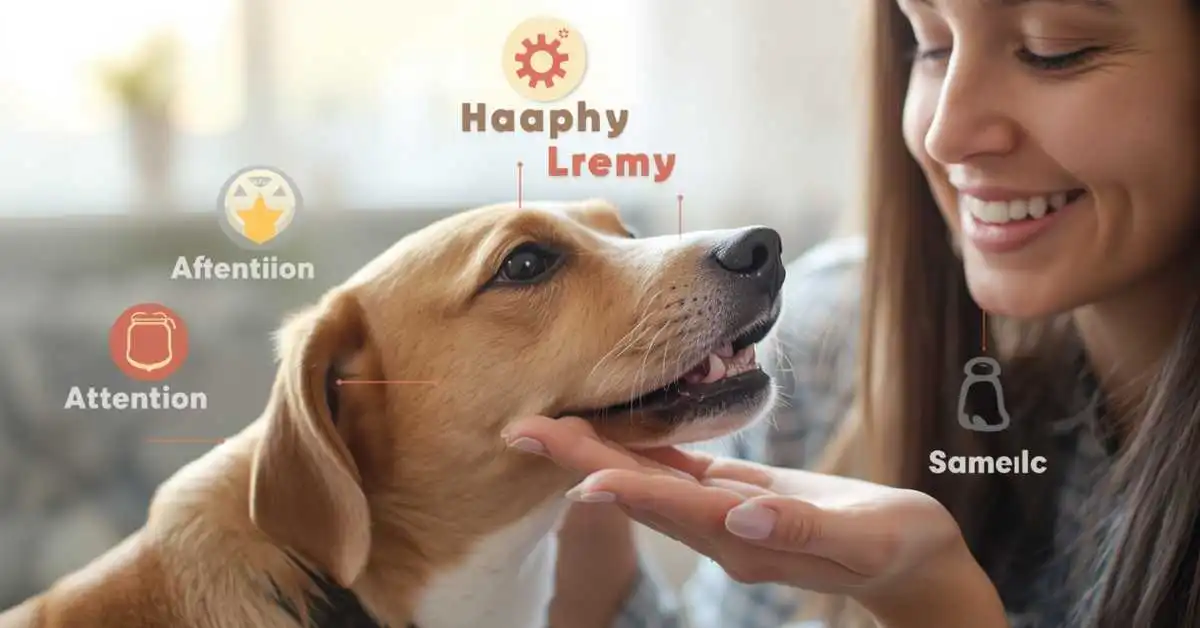
When dogs lick you, it usually means one or more of these things: affection, greeting, taste, scent-checking, attention-seeking, or self-soothing. In many cases, licking is normal canine behavior. But if licking becomes sudden, obsessive, or paired with other symptoms, it can also point to stress, anxiety, allergies, pain, nausea, or another health problem.
Dogs use their mouths, nose, tongue, posture, and body language to communicate. That is why one simple lick does not always mean the same thing. A relaxed dog licking your hand after you get home is different from a tense dog licking nonstop while pacing, whining, or chewing their paws.
To understand the real meaning, you need to look at the full context: where your dog licks, when it happens, how often it happens, and what the rest of the dog’s behavior looks like.
Why do dogs lick people?
Licking can be a sign of affection
Many dogs lick the people they bond with most. This can be part of social attachment, greeting, and comfort. For some dogs, licking works a bit like cuddling, leaning, tail wagging, or following you from room to room.
That is why many owners read licking as “dog kisses.” The idea is not completely wrong, but it is only one part of the picture.
Licking is also a natural puppy behavior
Licking starts early in canine life. Mother dogs lick their puppies to clean them and care for them, and puppies learn that licking is part of social communication.
AKC notes that face licking in young canids is tied to early feeding-related behavior, and some of that instinct carries over into adult dogs. That is one reason face, mouth, and muzzle licking still show up in domestic dog behavior today.
Your dog may like your taste and smell
Sometimes the answer is simple. Humans taste interesting. Dogs are strongly guided by scent, and they often lick skin because it carries sweat, salt, food traces, skin oils, lotion, soap residue, or smells from outside. That is why dogs often lick hands, feet, legs, ears, and faces more than other body parts.
Licking can be a way to get attention
Dogs repeat behaviors that work. If your dog licks you and you laugh, pet them, talk to them, or look at them right away, the dog may learn that licking is a fast way to start interaction.
In that case, licking is not only communication. It is a reinforced habit. Over time, a small greeting lick can turn into constant attention-seeking licking.
Licking may help a dog calm down
PetMD notes that licking may release feel-good chemicals such as dopamine and endorphins, which can make the behavior soothing for some dogs.
That means licking can become a stress-relief habit. A dog may lick you more when excited, overwhelmed, anxious, or unsure, especially during loud events, new situations, or separation-related stress.
Sometimes licking is appeasement, not affection
Dogs do not always lick to show love. Face licking in particular can be an appeasement signal. In dog-to-dog communication, muzzle and face licking may signal respect, harmless intent, or a wish to avoid conflict.
So if your dog licks your face while showing nervous body language, the meaning may be “please stay gentle” rather than “I adore you.”
What different types of licking usually mean
Why does my dog lick my hands?
Hands carry a lot of information. They smell like food, other pets, outdoors, furniture, soap, and whatever else you touched that day.
Dogs often lick hands because they are easy to reach and packed with scent. If it mostly happens when you arrive home or after eating, it is usually normal greeting or taste-based behavior.
Why does my dog lick my face?
Face licking can mean affection, greeting, appeasement, or interest in food smells. PetMD notes that many owners call this kissing, but canine behavior experts also explain that face licking can be linked to gentle social signaling.
If your dog does it with a loose body and soft eyes, it is more likely friendly. If your dog does it while tense or hyper, it may be stress-related.
Why does my dog lick my feet?
Feet are one of the most common targets because they are salty and rich in scent. Sweat, skin, socks, and shoes all leave strong odor trails.
That is why dogs often go straight for feet after exercise or at the end of the day. In most cases, it is about taste and smell, not dominance or a hidden message.
Why does my dog lick me after a shower?
After a shower, your skin may smell like shampoo, body wash, lotion, shaving cream, or clean water. For a dog, that can be new and interesting.
Some dogs also lick wet skin because of the moisture itself. If the licking happens mainly after bathing, the trigger is often scent, taste, or curiosity.
Why does my dog lick me when I cry?
Dogs can be sensitive to changes in your voice, breathing, posture, and scent. Some dogs lick when you cry because they are responding to emotion, trying to reconnect, or offering a learned comfort behavior that has worked before.
It does not prove that every dog understands sadness the way humans do, but it often reflects social attention and bonding.
Why does my dog lick me so much?
Frequent licking can still be normal if it is brief, easy to interrupt, and tied to greeting, routine, or attention. It becomes more concerning when it is intense, repetitive, hard to stop, or paired with pacing, whining, skin problems, air licking, lip licking, or chewing.
At that point, you have to think beyond affection and consider stress, compulsive behavior, allergies, pain, nausea, parasites, or infection.
Is your dog licking you out of love, stress, or habit?
The easiest way to read licking correctly is to check body language and pattern, not just the lick itself. The guide below helps separate common meanings.
| Situation | Likely meaning | Other signs to watch |
|---|---|---|
| Quick licks when you come home | Greeting, affection, excitement | Loose body, wagging tail, soft eyes |
| Licking hands after meals or cooking | Taste and food scent | Sniffing, following food smells |
| Licking feet or legs after exercise | Salt and sweat | Focus on feet, shoes, socks |
| Licking during loud noise or tension | Stress or self-soothing | Panting, pacing, tucked tail, yawning |
| Face licking with nervous posture | Appeasement | Avoiding eye contact, low body posture |
| Constant licking that is hard to interrupt | Habit, anxiety, or medical issue | Restlessness, whining, compulsive pattern |
This pattern matches the behavior guidance from AKC, PetMD, and VCA on affection, attention-seeking, appeasement, anxiety, and compulsive disorders.
When dog licking is no longer normal
Occasional licking is common. Excessive licking is different. PetMD notes that red flags include hair loss, skin redness, open or oozing sores, chewing at the paws, whimpering, and licking that interrupts sleep, play, eating, or normal daily life. If that is happening, you should stop assuming it is “just kisses.”
Health issues can drive licking too. Common causes include allergies, skin irritation, parasites, infection, pain, and nausea.
In some dogs, repeated licking can turn into acral lick dermatitis, also called a lick granuloma, where the dog creates a cycle of inflammation and self-trauma by licking the same spot over and over.
Behavior also matters. VCA explains that compulsive disorders in dogs can include surface licking, air licking, and other repetitive behaviors that are excessive or out of context. If your dog seems trapped in the behavior, a veterinary exam should come first, followed by behavior support if needed.
Should you let your dog lick you?
For most healthy adults, an occasional lick on intact skin is not a major issue. But dog saliva should not contact open wounds, sores, or mucous membranes if it can be avoided.
The CDC says Capnocytophaga germs can sometimes make people sick when dog or cat saliva gets into an open wound or sore, and people with weakened immune systems are at greater risk.
That means the safest rule is simple: a quick lick on normal skin is one thing, but it is smarter to avoid letting your dog lick cuts, cracked skin, eyes, mouth, or other sensitive areas. Extra caution makes sense for children, older adults, and immunocompromised people.
How to stop unwanted licking without hurting your bond
Do not punish the behavior
Punishment can raise stress and make the problem worse, especially if licking already has an anxiety component. A better approach is to interrupt calmly and teach a replacement behavior.
Reward a different behavior
Ask for “sit,” “down,” “place,” or another simple cue before your dog starts licking. Then reward that behavior with praise, petting, or a treat. This uses positive reinforcement and teaches your dog a new way to get attention.
Reduce boredom and stress
Exercise, sniff walks, food puzzles, chewing outlets, training games, and predictable routines can help dogs who lick from boredom or tension. VCA and PetMD both point to stress and compulsive patterns as possible drivers of repetitive licking, so better enrichment often helps.
See your vet if the pattern changes
A sudden change matters. If your dog starts licking far more than usual, licking specific body parts obsessively, or showing skin changes, pain, stomach issues, lip licking, or air licking, a veterinary exam is the right first step.
Common mistakes dog owners make
One common mistake is assuming every lick means love. Sometimes it does. Sometimes it means salt, scent, stress, appeasement, or a learned habit. Looking at the full canine body language picture is much more accurate.
Another mistake is rewarding licking without meaning to. If you give instant attention every time your dog licks, you may be training more licking. Dogs are good at repeating behaviors that pay off.
A third mistake is ignoring excessive licking for too long. Allergies, pain, nausea, infection, parasites, and compulsive disorders can all hide behind a behavior people dismiss as cute. Early action is better for both health and training.
Practical takeaways
If your dog licks you now and then, the behavior is usually normal. In most homes, it means affection, greeting, taste, scent interest, or attention-seeking. If the licking is frequent, look for clues in posture, facial expression, tail position, and timing. And if it is sudden, intense, repetitive, or paired with physical symptoms, think medical issue first and book a vet visit.
The best way to respond is to stay calm, avoid punishment, reward a different behavior, and give your dog enough enrichment, exercise, and routine. That protects your bond while also addressing the real cause of the licking.
FAQ
Does it mean my dog loves me when they lick me?
Often, yes. Licking can be part of affection, bonding, and greeting. But it can also reflect attention-seeking, stress relief, or interest in your taste and scent.
Why does my dog lick my face but not other people’s faces?
Your dog may be more bonded to you, more used to your reactions, or more interested in your scent and food traces. Face licking can also be a social or appeasement behavior.
Why does my dog lick me when I am sad?
Some dogs respond to human emotion, voice, posture, and familiar routines. Licking may be a comfort-seeking or connection-seeking behavior that the dog has learned works in emotional moments.
Why does my dog lick me before bed?
Dogs often repeat bedtime routines that feel calming and predictable. If your dog licks before bed, it may be part affection, part habit, and part self-soothing.
Is it bad if my dog licks me a lot?
Not always, but frequent licking becomes a concern when it is hard to interrupt, suddenly increases, or comes with skin damage, whining, pacing, air licking, or paw chewing.
Should I let my dog lick my mouth or open cuts?
It is better not to. CDC guidance warns that dog saliva can transmit germs into open wounds or sores, and people with weakened immune systems have higher risk.
Can anxiety cause a dog to lick people?
Yes. Some dogs lick as a calming behavior when stressed, overwhelmed, or uncertain. In more serious cases, the behavior can become repetitive or compulsive.
When should I take my dog to the vet for licking?
See your vet if the licking is sudden, nonstop, obsessive, or linked to redness, sores, hair loss, limping, stomach upset, paw chewing, or changes in sleep and daily behavior.
Conclusion
So, what does it mean when dogs lick you? Most of the time, it means connection. Your dog may be greeting you, showing affection, tasting your salty skin, checking your scent, or asking for attention. But when licking becomes nonstop, anxious, or physically damaging, it may signal stress, compulsive behavior, or a health problem.
Watch the pattern, read the body language, and do not ignore sudden changes. If you are unsure, a veterinarian or qualified dog behavior professional can help you find the real reason and the right fix.
Click Below To Read About More Posts:
What Does Mirror Front Camera Mean? Complete Explanation
What Does Milky White Discharge Mean? Everything Explained
What Does Piety Mean? Definition, Religion, and Examples

Hi, I’m Evan Lexor, the voice behind Meanpedia.com. I break down English words, slang, and phrases into clear, simple meanings that actually make sense. From modern internet terms to everyday expressions, my goal is straightforward: help you understand English better, faster, and with confidence, one word at a time.