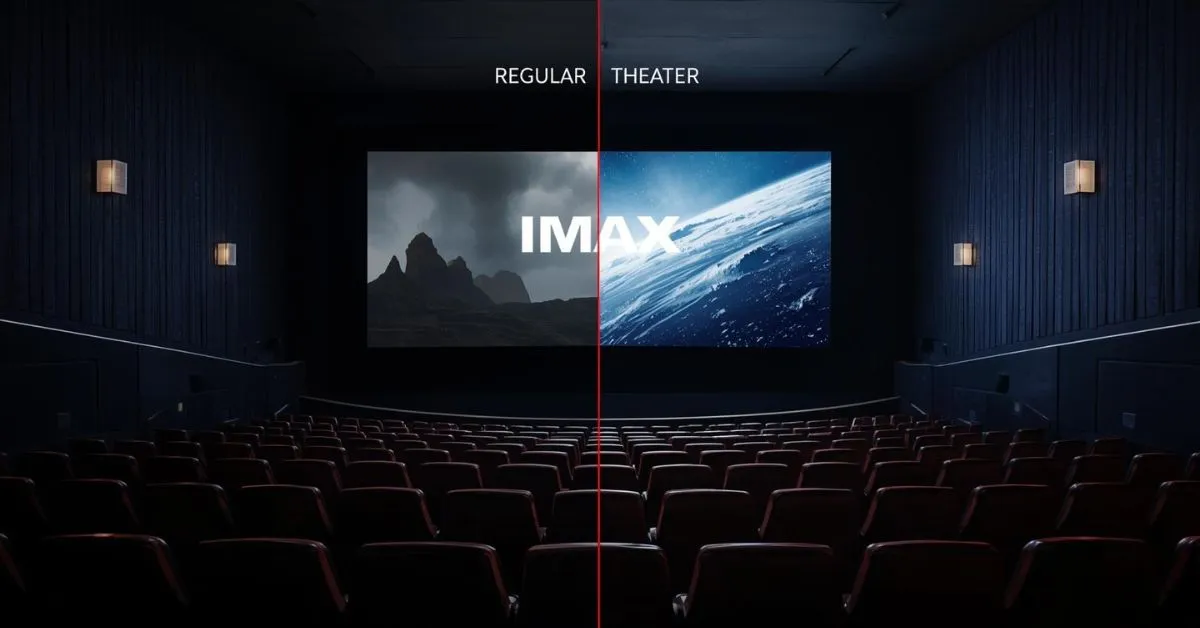
IMAX means a premium movie format and theater system designed to make films look and sound more immersive than a standard screening.
In practice, people use “IMAX” to mean a special large-screen cinema experience, but the term also refers to a proprietary system of cameras, film formats, projectors, and theaters.
If you saw IMAX on a movie ticket page, trailer, or poster, the simple answer is this: it usually means you are looking at a premium version of the movie, shown in a theater built or equipped to deliver a bigger-feeling image.
More powerful sound than a standard auditorium. Officially, IMAX describes a full cinema system, not just a bigger screen.
What IMAX means in plain English
In everyday use, IMAX means a movie shown in a premium theater format built to feel larger, sharper, and more immersive than a regular screening. That is why people say things like “Let’s see it in IMAX” even when they are not thinking about cameras, aspect ratios, or projection systems.
The easiest way to understand the word is to separate it into three practical meanings:
- IMAX as a brand: the company and its technology
- IMAX as a theater format: a premium way to present a movie
- IMAX as a movie label: a film shot with IMAX cameras, formatted for IMAX, or promoted as “Filmed for IMAX”
That distinction matters because many weak articles treat IMAX like a simple synonym for “big screen,” which is only part of the story.
Does IMAX stand for anything?
Not in the strict way many people assume.
A lot of people casually say IMAX stands for “Image Maximum.” But the company’s name was originally created from the idea of “maximum image,” and IMAX has been described by the company as a made-up word rather than a formal acronym.
So if you want the most accurate explanation, it is better to say that IMAX is a brand name built around the idea of a maximum or enlarged image experience.
That nuance helps because it clears up a common confusion: IMAX is not just an abbreviation you decode once and move on from. It is the name of a specific cinema technology ecosystem.
Is IMAX a brand, a format, or a theater?
It is all three.
IMAX is the name of a company and a proprietary cinema system that includes high-resolution cameras, film formats, projectors, and theaters. But in normal conversation, most people use the word to describe the premium moviegoing experience itself.
So when someone asks, “What does IMAX mean?” the best answer is:
IMAX is a branded premium movie format that can refer to the theater, the projection system, the way a movie is prepared for release, or the cameras used to shoot parts of it.
What makes IMAX different from a regular theater?
IMAX is designed to change more than one part of the moviegoing experience. Compared with a standard theater, IMAX is associated with:
- larger or more immersive screens
- specialized projection systems
- premium sound design
- steeper or more direct seating angles in many locations
- versions of films prepared specifically for IMAX presentation
StudioBinder notes that IMAX theaters commonly use speakers behind the screen and stadium seating designed to face the taller screen more directly, while the official IMAX site describes the format as an immersive experience built through coordinated technology and theater design.
IMAX vs regular theater at a glance
| Feature | IMAX | Regular theater |
|---|---|---|
| Core idea | Premium branded cinema format | Standard movie presentation |
| Screen feel | Usually larger and more immersive | Usually smaller and more conventional |
| Projection | Specialized IMAX projection systems | Standard digital cinema projection |
| Sound | Premium sound system, often a key selling point | Standard theater sound |
| Movie version | May include IMAX remastering or expanded framing | Standard theatrical version |
| Experience | Event-style, spectacle-driven | Basic moviegoing option |
This table simplifies the experience, but it reflects the main difference users care about: IMAX is meant to feel like an upgraded version of the same movie, especially for blockbuster releases.
Is IMAX just a bigger screen?
No. That is the most common oversimplification.
A bigger screen is one visible part of IMAX, but IMAX also involves the projection system, the sound setup, the shape of the screen, the auditorium design, and sometimes the way the film itself was shot or remastered.
Official IMAX materials describe the experience in terms of both technology and presentation, not just size.
A better short explanation is this:
IMAX is a premium presentation system, and the larger screen is only one reason it feels different.
Why some IMAX theaters feel different from others
This is where many articles lose readers.
Not all IMAX locations are the same. Older purpose-built IMAX theaters were known for very tall 1.43:1 screens, while many newer digital retrofit locations in multiplexes use a 1.90:1 presentation and smaller auditoriums.
Wikipedia notes that IMAX introduced multiplex-friendly systems and later digital and laser systems partly to make the format easier to install in existing theaters.
That is why two people can both say they saw a movie “in IMAX” and still have noticeably different experiences.
The short version
- Classic / purpose-built IMAX: taller, more dramatic large-format feel
- Digital IMAX in multiplexes: more common, still premium, but not always as massive as the classic venues
- IMAX with Laser: a more advanced digital setup with stronger brightness, contrast, and color performance
Digital IMAX vs IMAX 70mm vs IMAX with Laser
If you want to understand IMAX beyond the basic definition, this is the most useful section.
IMAX 70mm
Classic IMAX film is often called 15/70, referring to 70mm film running horizontally with 15 perforations per frame. It is the original large-format version most closely associated with giant screens and the classic IMAX look.
Digital IMAX
IMAX introduced digital projection systems in 2008 to bring the format into more multiplexes. These installations made IMAX more widely available, but many of them use smaller auditoriums and are typically limited to a 1.90:1 presentation rather than the taller 1.43:1 format of traditional large-format IMAX venues.
IMAX with Laser
IMAX with Laser is the company’s more advanced digital projection format. And IMAX says it was designed from the ground up for IMAX screens.
Highlights features like dual 4K laser projection, brighter images, deeper contrast, broader color, and advanced sound. Official IMAX materials also say the system can support up to a 1.43:1 aspect ratio on the largest compatible screens.
What this means for regular moviegoers
If you only care about the practical takeaway, it is this:
- IMAX 70mm is the most iconic large-format version
- Digital IMAX is more common and still premium
- IMAX with Laser is usually the best digital IMAX experience available
What does “Filmed for IMAX” mean?
“Filmed for IMAX” does not always mean an entire movie was shot start to finish with traditional IMAX film cameras.
IMAX’s official “Filmed For IMAX” program says it works with filmmakers from pre-production through release to help them use IMAX technology and deliver a more immersive experience.
The company also launched a “Filmed in IMAX” initiative with certified digital camera partners such as ARRI, Panavision, RED, and Sony.
So these phrases can mean different things:
- Shot with IMAX film cameras
- Shot with IMAX-certified digital cameras
- Prepared or remastered for IMAX
- Released in IMAX theaters
Those terms overlap, but they are not identical.
Does IMAX show more of the picture?
Sometimes, yes.
One reason people care about IMAX is expanded aspect ratio. Official IMAX materials say select films can expand to a taller image in certain IMAX venues, including 1.43:1 in some IMAX 70mm and IMAX with Laser locations.
That means you may literally see more image vertically than you would in a standard widescreen presentation.
This is also why articles about IMAX often mention aspect ratio. In simple terms, aspect ratio describes the shape of the image. A taller IMAX ratio can show more picture top-to-bottom than a wider standard theatrical crop.
Real movie examples that make IMAX easier to understand
Christopher Nolan is one of the clearest real-world examples of why IMAX matters. Wikipedia’s IMAX entry notes that The Dark Knight used IMAX cameras for major sequences, and that Nolan later used substantial IMAX footage in films including The Dark Knight Rises, Dunkirk, and Interstellar.
These examples helped make IMAX part of mainstream blockbuster marketing rather than just a museum or specialty format.
That is why you often see IMAX mentioned most heavily around visually ambitious films. The format is especially useful when filmmakers want scale, image detail, or an event-style presentation that feels different from a normal showing.
Is IMAX worth it?
Usually, IMAX is worth it when the movie is built around scale.
Good candidates include:
- action blockbusters
- science fiction
- fantasy
- visually ambitious animation
- movies marketed as “Filmed for IMAX” or shot with IMAX cameras
It may matter less for a quiet dialogue-heavy drama where the visual spectacle is not the main draw. So the better question is not “Is IMAX always better?” It is “Is this the kind of movie that benefits from a larger, more premium presentation?”
FAQ
What does IMAX mean at the movies?
It usually means the movie is being shown in a premium theater format designed to deliver a more immersive image and sound experience than a standard screening.
Does IMAX officially stand for Image Maximum?
That is a common shorthand, but historically IMAX is better described as a coined brand name built from the idea of “maximum image,” not a strict formal acronym.
Is every IMAX screen the same?
No. Some IMAX theaters are classic large-format venues with taller 1.43:1 screens, while many multiplex IMAX locations use smaller 1.90:1 digital setups.
What is the difference between IMAX and IMAX 70mm?
IMAX is the broader brand and theater format. IMAX 70mm refers to the original large-format film version, often called 15/70, and is generally the most iconic and rarest form of the format.
What does “Filmed for IMAX” actually mean?
It means the film was developed with IMAX’s production and presentation workflow in mind, often involving certified cameras, IMAX-specific mastering, or both. It does not automatically mean the whole movie was shot on traditional IMAX film cameras.
Does IMAX always show more of the image?
Not always. Some IMAX releases include expanded aspect ratio scenes, but how much extra image you see depends on the movie and the specific IMAX theater you visit.
Conclusion
So, what does IMAX mean?
In the simplest, most useful sense, IMAX means a premium movie format and theater experience built to make films feel bigger, more immersive, and sometimes more visually expansive than a regular screening. Technically, it also refers to a proprietary system of cameras, film formats, projection, and theater design.
IMAX is not just a label on a ticket page. It is a specific premium presentation format, and the exact experience can vary depending on whether the theater is classic IMAX, digital IMAX, or IMAX with Laser.
Click Below To Read About:
What Does YN Mean in Text, TikTok, and Fanfiction?
What Does HTML Mean? Full Form, Example, and Simple Guide
What Does Civil Rights Mean? Definition, Examples, Differences

Hello! I’m Clara Lexis, creator of Meanpedia.com. I specialize in breaking down words, phrases, and idioms so that anyone can understand and enjoy the beauty of English. My goal? Making language approachable, fun, and meaningful, one word at a time.