Written by Editorial Team | Reviewed by Medical Review Team
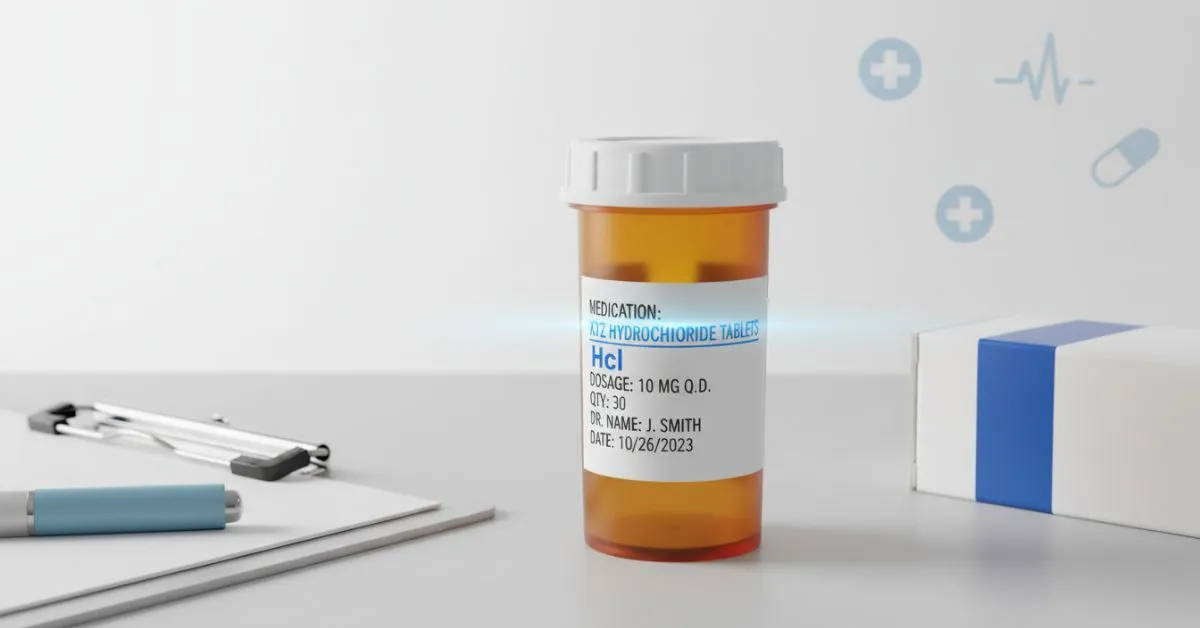
On a prescription, HCl usually means hydrochloride. It tells you the medicine is in a hydrochloride salt form, which is a common way drugs are named and formulated. In many cases, it does not mean a different medicine or a stronger one, but the full drug name still matters, especially when the same drug exists in more than one salt form.
If you saw HCl on your prescription bottle, pharmacy label, or medication list and felt confused, that is completely normal. Many people wonder if it means hydrochloric acid, a warning, or a different drug altogether.
In most cases, it simply means hydrochloride, which is part of the medicine’s official chemical name. The key is knowing when that extra part is just a naming detail and when it is important enough to double-check with your pharmacist.
What does HCl stand for in medicine?
HCl usually means hydrochloride
On a prescription label, HCl usually stands for hydrochloride when it appears after a drug name, such as metformin HCl or diphenhydramine HCl.
ISMP medication safety guidance notes that abbreviations in drug names can create confusion, which is one reason patients should focus on the full printed medicine name rather than guessing from a short form.
FDA and USP naming guidance also explain that salt forms like hydrochloride are part of how many drug products are identified and labeled.
It does not usually mean hydrochloric acid
This is one of the biggest areas of confusion. In general chemistry, HCl can mean hydrochloric acid.
On a prescription, though, when it appears after a medicine name, it usually refers to hydrochloride. ISMP specifically warns that HCl can be misread in medical communication, which is why the full name on the label is so important.
Why do some medicines use hydrochloride?
Hydrochloride is a common salt form
Some medicines are made as salts because that form can help with how the drug is manufactured, dissolved, or absorbed.
FDA guidance on salt drug substances explains that drug products may contain a salt form, while the product name and strength may still focus on the active moiety, which is the main active part of the drug.
USP guidance also explains that the salt form is often still stated on the labeling because that information may matter for identification and safe use.
In simple terms, hydrochloride is often there because it helps define the medicine’s chemical form. It does not automatically mean the drug is harsher, stronger, or unsafe. It usually means the medicine is being supplied in a common, recognized salt form.
Does HCl change the medicine?
Usually, the main drug is still the same
For many common prescriptions, the answer is no, not in the way most patients fear. If your label says metformin HCl, the core drug is still metformin.
DailyMed labels for metformin products show the medicine listed as metformin hydrochloride or Metformin HCl, while FDA naming guidance explains that drug naming often centers on the active drug rather than the salt alone.
But sometimes the salt form matters
This part is important. FDA guidance says the salt may remain part of the drug name when it provides clinically important information.
In other words, the salt form is sometimes not just background chemistry. It can matter for product identity, labeling, and safe substitution.
A strong example is hydroxyzine. DailyMed has separate labels for hydroxyzine hydrochloride and hydroxyzine pamoate.
That shows why patients should never assume that two products are identical just because the first word is the same. The full name matters.
Real prescription examples
Metformin HCl
If your bottle says metformin HCl, that means the medicine is metformin hydrochloride. DailyMed lists multiple metformin products using that naming style, including regular tablets and extended-release tablets. This is a common real-world example of how HCl appears on prescription labels.
Diphenhydramine HCl
Another familiar example is diphenhydramine HCl. Diphenhydramine is an antihistamine, and HCl on the label refers to its hydrochloride form.
If someone sees this on a prescription or over-the-counter label, it does not mean there is a separate medicine called “HCl.” It is still diphenhydramine.
Hydroxyzine HCl vs hydroxyzine pamoate
This is the best example of why the salt form can matter. DailyMed shows hydroxyzine hydrochloride and hydroxyzine pamoate as distinct labeled products. If a patient is comparing old and new prescriptions, they should not ignore that second word.
HCl vs hydrochloride vs hydrochlorothiazide
This is where many readers get tripped up, so let’s make it simple.
| Term | What it means | What to know |
|---|---|---|
| HCl | Usually shorthand for hydrochloride after a drug name | Common on labels like metformin HCl |
| Hydrochloride | The full salt-form name | Often part of the official ingredient name |
| Hydrochlorothiazide | A completely different medicine | A diuretic used for high blood pressure and fluid retention |
MedlinePlus confirms that hydrochlorothiazide is its own separate prescription drug used to treat high blood pressure and edema. So HCl is not the same as hydrochlorothiazide, even though the words look similar.
What the full prescription label matters more than
Many people focus on the letters HCl, but these parts usually matter more when reading your prescription:
1. The full drug name
Look at the complete printed name, such as metformin hydrochloride extended-release tablets or hydroxyzine hydrochloride tablets. The full name tells you more than one abbreviation ever can.
2. The strength
Check whether the label says 10 mg, 25 mg, 500 mg, or another strength. FDA guidance explains that labeling may present strength in terms of the active moiety while still listing the full active ingredient elsewhere.
3. The dosage form
A tablet, capsule, liquid, injection, or extended-release tablet may not be interchangeable. DailyMed labels make these differences very clear.
4. The directions
Always follow the dosing instructions on the prescription label, not assumptions based on abbreviations.
Common mistakes people make
Mistake 1: Thinking HCl means the medicine contains dangerous acid
This is the most common misunderstanding. On a prescription label, HCl usually means hydrochloride, not a warning about stomach acid or corrosive acid.
Mistake 2: Confusing HCl with hydrochlorothiazide
These are not interchangeable terms. Hydrochlorothiazide is a separate medication, not shorthand for hydrochloride.
Mistake 3: Ignoring the second word in a drug name
With medicines like hydroxyzine hydrochloride and hydroxyzine pamoate, the second word can matter. This is why patients should compare the full name on the bottle, especially during refills or pharmacy changes.
Mistake 4: Assuming the salt form makes the medicine stronger
HCl does not automatically mean “stronger.” It often just identifies the hydrochloride salt form used in the product.
What to do if you see HCl on your prescription
If your prescription label says HCl, use this quick checklist:
- Read the full drug name
- Check the strength
- Check the dosage form
- Compare it with your last bottle if it is a refill
- Ask your pharmacist if the name looks different
This is a smart step because medication abbreviations and partial drug names can cause confusion. ISMP specifically recommends avoiding shortened drug-name communication when possible because it increases the risk of mistakes.
Questions to ask your pharmacist
If you are unsure, ask:
- “Does HCl here mean hydrochloride?”
- “Is this the same medicine I had before?”
- “Does the salt form matter for this drug?”
- “Is this interchangeable with my previous prescription?”
- “Why does this label look different from my last refill?”
These questions are practical because FDA naming guidance and DailyMed examples show that some products use clinically important salt forms that should not be ignored.
FAQ
What does HCl stand for on a prescription bottle?
It usually stands for hydrochloride when it appears after a medicine name.
Is HCl the same as hydrochloride?
On prescription labels, HCl usually refers to hydrochloride.
Is HCl the same as hydrochlorothiazide?
No. Hydrochlorothiazide is a separate medicine used for high blood pressure and fluid retention.
Does HCl mean hydrochloric acid?
Not usually in this setting. On a prescription label after a drug name, it usually means hydrochloride.
Does HCl make medicine stronger?
Not automatically. It often just identifies the salt form of the drug.
Why does metformin say HCl?
Because the labeled medicine is metformin hydrochloride, which is the hydrochloride salt form of metformin.
Why does the full drug name matter?
Because some medicines exist in more than one salt form, such as hydroxyzine hydrochloride and hydroxyzine pamoate.
Should I worry if I see HCl on my prescription?
Usually no, but you should still read the full label and ask your pharmacist if the name looks different from your usual medicine.
Simple bottom line
If you are asking, what does HCl mean on a prescription, the answer is usually this: it means hydrochloride, a common salt form used in the naming of many medicines. In many cases, it does not mean the medicine is different in the way patients worry about. But the full drug name, strength, and dosage form still matter, especially when similar drugs or different salt forms exist. If anything on the label looks unfamiliar, your pharmacist is the best person to ask.
Click Below To Read About These Posts:
What Does Value Mean in Art? Examples & Value Scale
What Does the Upside Down American Flag Mean?
What Does Tea Mean? Slang, Texting, Social Media, and More

Hi, I’m Evan Lexor, the voice behind Meanpedia.com. I break down English words, slang, and phrases into clear, simple meanings that actually make sense. From modern internet terms to everyday expressions, my goal is straightforward: help you understand English better, faster, and with confidence, one word at a time.