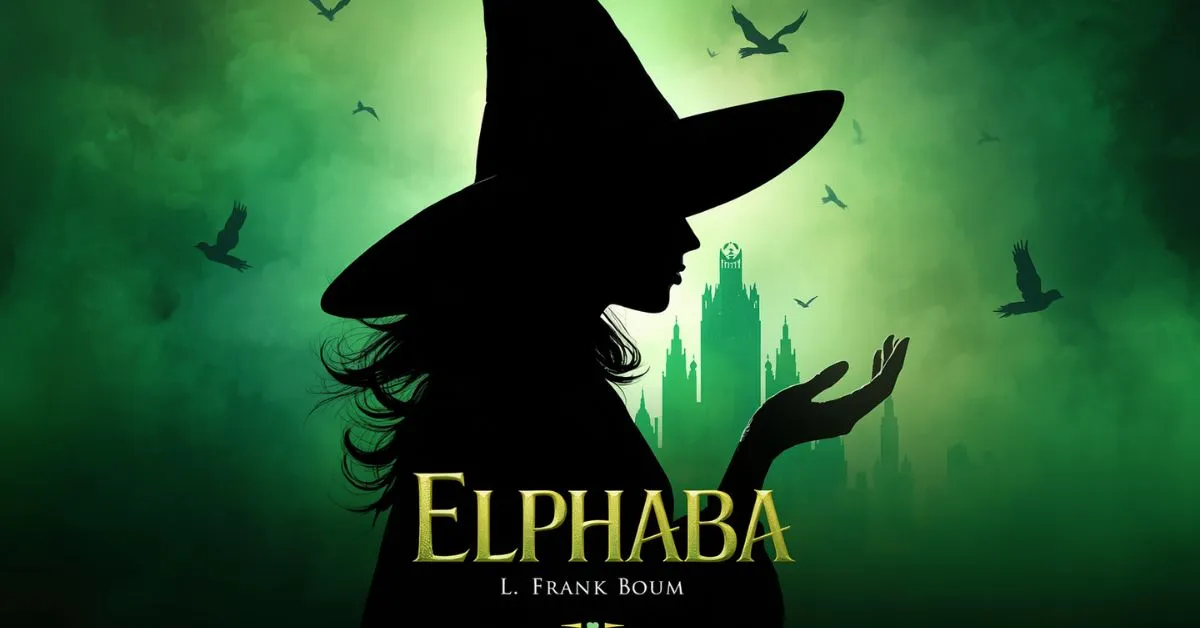
Elphaba is a fictional name created by Gregory Maguire for his 1995 novel Wicked. It does not have a traditional dictionary meaning.
Instead, it is widely explained as a creative form of L. Frank Baum’s initials, and it became meaningful because Maguire used it for his reimagined Wicked Witch of the West.
If you searched this because you heard the name in Wicked, here is the simple version: Elphaba is not an old baby name or a hidden word from folklore.
It is a literary invention. Its meaning comes from two places at once: where the name came from, and what the character comes to represent in the story.
Quick facts about Elphaba
| Question | Quick answer |
|---|---|
| What does Elphaba mean? | It is an invented literary name, not a standard dictionary word. |
| Where did it come from? | Gregory Maguire created it from the initials of L. Frank Baum. |
| Who is Elphaba? | She is Maguire’s reimagined Wicked Witch of the West. |
| Is it from the original Oz book? | No. The witch was unnamed in Baum’s original story. |
| Why does the name matter? | It helps turn a flat villain into a full, human character. |
These facts reflect Maguire’s own explanation of the name, the Library of Congress summary of its origin, and Britannica’s description of Wicked and its place in the Oz story.
Where the name Elphaba comes from
The clearest answer is that Gregory Maguire created the name while writing Wicked: The Life and Times of the Wicked Witch of the West, published in 1995.
According to Maguire, he formed the name by playing with the initials of Lyman Frank Baum, better known as L. Frank Baum, the author of The Wonderful Wizard of Oz. He tried a few versions before landing on Elphaba.
That matters because many readers assume unusual names must come from mythology, another language, or an old naming tradition. In this case, the origin is simpler and more elegant: Elphaba is a writer’s invented tribute to Baum.
Why L. Frank Baum matters here
L. Frank Baum wrote The Wonderful Wizard of Oz, first published in 1900. That book introduced the Wicked Witch of the West as part of the Oz world, but Maguire later reimagined her in Wicked by giving her a much fuller backstory and personal identity.
In other words, Baum gave the world the witch. Maguire gave her the name Elphaba and the inner life that made modern audiences care about her.
Was the Wicked Witch named Elphaba in the original Oz story?
No. This is one of the most important clarifications, and one that many weak articles skip.
The Wicked Witch of the West did not have the name Elphaba in Baum’s original Oz story. The Library of Congress states that Maguire created the name because the witch did not have one in the original book or movie, and Maguire said the same in his 2024 comments about the character.
So if someone asks, “What does Elphaba mean in The Wizard of Oz?” the best answer is: it is not an original Oz-era name from Baum’s text. It is a later creation from Wicked.
How to pronounce Elphaba
The name is commonly rendered as el-FAH-bah in modern pronunciation and name references. That pronunciation also matches how the name is often explained as a sound-based transformation of Baum’s initials.
This helps because a lot of readers understand the origin faster once they hear the sound connection:
L. F. Baum → El-fa-ba / Elphaba.
What Elphaba means in the story
This is where the answer gets deeper.
Literally, Elphaba is just an invented name. But inside Wicked, the name becomes attached to a character who is not written as a simple villain. Britannica describes the musical as the story of ostracized Elphaba and Galinda before they become the Wicked Witch of the West and Glinda the Good, and Maguire has explained that part of his interest was in retelling Oz from the witch’s point of view.
That means Elphaba comes to suggest more than a label. In practice, the name is associated with ideas like:
- being misjudged
- living as an outsider
- moral complexity
- power, fear, and public image
- the difference between how a person is seen and who they really are
Those meanings are interpretive rather than dictionary-based, but they grow naturally out of the role Elphaba plays in Wicked.
Does Elphaba mean evil?
No. It is more accurate to say that Elphaba is linked to a character whom the world calls wicked.
That distinction matters. In Wicked, the story is built around the idea that public labels can be shallow, political, or unfair. Britannica’s summary of the musical frames Elphaba as an ostracized figure, and Maguire has discussed how rethinking the witch’s perspective was central to the project from the beginning.
So the name does not simply mean “evil.” A better explanation is:
- origin: invented from Baum’s initials
- story role: name of the future Wicked Witch of the West
- deeper sense: a symbol of a misunderstood person being reduced to a public label
Is Elphaba a real name?
Elphaba began as a fictional literary name, not a traditional given name with long historical usage. Over time, some name databases and baby-name style pages have started treating it as a usable modern name, but that recognition comes from Wicked, not from an older naming tradition.
So the practical answer is:
- Yes, people can use it as a name now
- But its origin is fictional
- Its meaning is still tied mainly to Wicked
That short clarification helps satisfy the mixed intent behind this keyword, because some searchers are clearly curious about name usage, while most simply want the Wicked explanation.
Why the name still gets searched so much
Elphaba remains highly visible because Wicked moved beyond the 1995 novel into a hugely successful Broadway musical and then into screen adaptations.
Britannica notes that the musical premiered on Broadway in 2003 and later expanded through tours and film adaptations, including the two-film adaptation starring Cynthia Erivo as Elphaba and Ariana Grande as Galinda.
That ongoing visibility means many people first encounter the name through:
- the stage musical
- movie trailers and cast coverage
- social media clips
- soundtrack discussion
- general curiosity after hearing an unusual name
Because of that, a strong article needs to explain the name quickly, not bury it under franchise history.
Literal meaning vs origin vs story meaning
| Type of answer | Best explanation |
|---|---|
| Literal meaning | Elphaba does not have a standard dictionary meaning. |
| Origin | Gregory Maguire created it from L. Frank Baum’s initials. |
| Franchise context | It is the name he gave the Wicked Witch of the West in Wicked. |
| Story meaning | It becomes associated with a misunderstood, powerful outsider. |
| Modern use | Some people now treat it as a usable literary name. |
This distinction is what makes the topic easier to understand. Many pages blur all of these together, but readers usually need them separated.
What Most Articles Miss About This Topic
Most pages stop too early. They say Elphaba comes from L. Frank Baum’s initials and leave it there.
That answer is true, but incomplete.
What readers often really want is this:
Elphaba is meaningful not because it translates into a dictionary definition, but because it gives a once-unnamed villain a personal identity. Maguire did not just rename the witch. He changed the way audiences could think about her.
That is the deeper value of the name. It turns the Wicked Witch of the West from a stock figure into a character with agency, emotion, history, and point of view. Once that happens, the name starts to carry emotional meaning of its own.
Another thing many pages miss is the difference between:
- a created name
- a name people now use
- a name with symbolic weight in a story
Elphaba is all three, but not in the same way. That distinction is what helps readers leave with a clear answer instead of vague impressions.
Common mistakes readers make
One common mistake is thinking Elphaba must be an ancient word with a hidden translation. It is not. It is a modern literary invention.
Another mistake is assuming Elphaba automatically means evil. That oversimplifies the whole point of Wicked, which asks readers and viewers to reconsider who gets labeled as wicked and why.
A third mistake is treating Elphaba as if it came directly from Baum’s original Oz novel. It did not. The original Wicked Witch of the West was unnamed there.
FAQ
What does Elphaba mean in Wicked?
In Wicked, Elphaba is the invented name of the character who becomes known as the Wicked Witch of the West. The name’s origin comes from L. Frank Baum’s initials, while its deeper meaning comes from the character’s role as a misunderstood outsider.
Who created the name Elphaba?
Gregory Maguire created the name for his 1995 novel Wicked: The Life and Times of the Wicked Witch of the West.
Is Elphaba the Wicked Witch of the West?
Yes. Elphaba is Maguire’s reimagined version of the Wicked Witch of the West in Wicked and its adaptations.
Did the Wicked Witch have a name before Wicked?
No. The Library of Congress and Maguire’s own explanation both indicate that the witch did not have a personal name in the original book or film versions.
Is Elphaba a traditional baby name?
No, not in the usual historical sense. It started as a fictional literary name, though some modern name sites now list it as usable.
How do you pronounce Elphaba?
It is commonly pronounced el-FAH-bah.
Conclusion
If you want the clearest answer in one sentence, here it is: Elphaba is a fictional name Gregory Maguire created for Wicked, inspired by L. Frank Baum’s initials, and it became powerful because it gave a once-unnamed witch a human identity and a new point of view.
Click Below To Read About:
What Does LKR Mean in Text? Meaning, Uses, and Examples
What Does Ese Mean? Slang, Spanish Meaning, When to Use It
What Does Miss Mean? Full Meaning, Uses, and Title Differences
Hello! I’m Clara Lexis, creator of Meanpedia.com. I specialize in breaking down words, phrases, and idioms so that anyone can understand and enjoy the beauty of English. My goal? Making language approachable, fun, and meaningful, one word at a time.