Debrief means talking about what happened after an activity to learn from it.
Many people hear the word debrief and feel confused. It sounds serious. It sounds professional. But the meaning is actually very simple and very useful in daily life.
Debriefing happens when people sit down after something ends and talk about it. They discuss what went well. They talk about what went wrong. And they think about how to do better next time. This can happen after a meeting, a class, a project, an event, or even a normal day at work.
People debrief because experience alone is not enough. Learning happens when we reflect. A short conversation after action can prevent mistakes, improve results, and build stronger teams.
In this article, you will learn what does debrief mean using clear language and real examples. You will understand the meaning, purpose, process, and benefits of debriefing in a simple way.
No complex words. No long sentences. Just clear answers anyone can understand.
Debrief Meaning in Simple Words
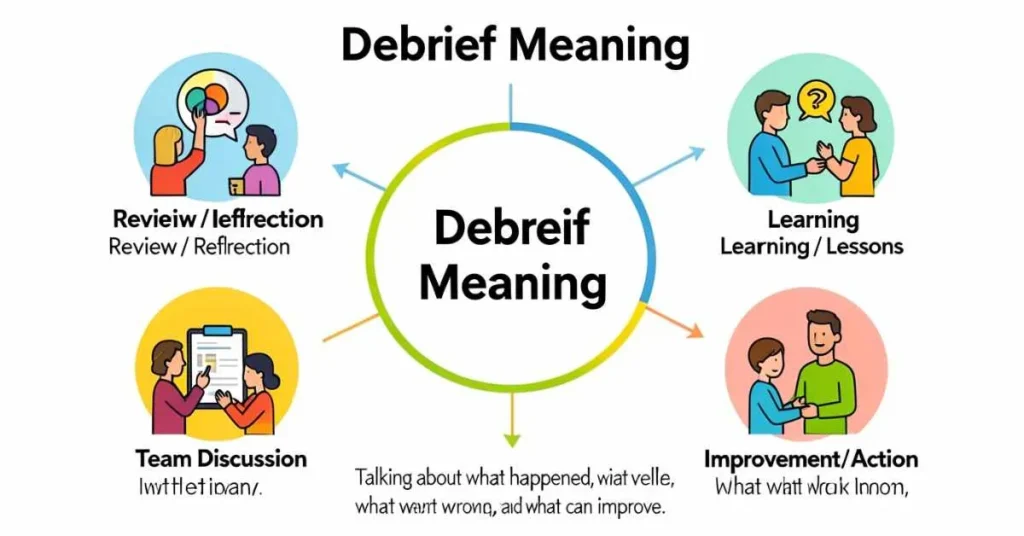
What does debrief mean in simple words?
Debrief means talking about an experience after it is finished.
People debrief to understand:
- What happened
- What went well
- What went wrong
- What to do better next time
In simple terms, debriefing is a learning conversation after action.
For example:
After finishing a group project, students talk about what worked and what did not. That talk is a debrief.
In Urdu, debrief ka matlab hota hai:
kaam ke baad us par baat karna aur us se seekhna.
The meaning of debrief is the same everywhere. It is not about blame. It is about learning.
Debrief Definition (Clear and Easy)
A simple debrief definition is:
A discussion held after an activity to review actions, results, and lessons.
This debrief explanation shows one key idea:
Debriefing focuses on reflection, not judgment.
A debrief can be:
- Short or long
- Formal or informal
- Planned or casual
What matters most is learning from experience.
What Is a Debrief Meeting?
A debrief meeting is a planned discussion that happens after work is done.
It may happen:
- After a meeting
- After a project
- After an event
- After a task
Common types include:
- Team debrief
- Project debrief
- Post-event debrief
- After-action debrief
Real Example:
After hosting a company event, the team meets to discuss attendance, timing, and issues. This meeting is a debrief.
A debrief meeting is not a performance review.
It is closer to a reflection session where everyone shares ideas.
Purpose of a Debrief
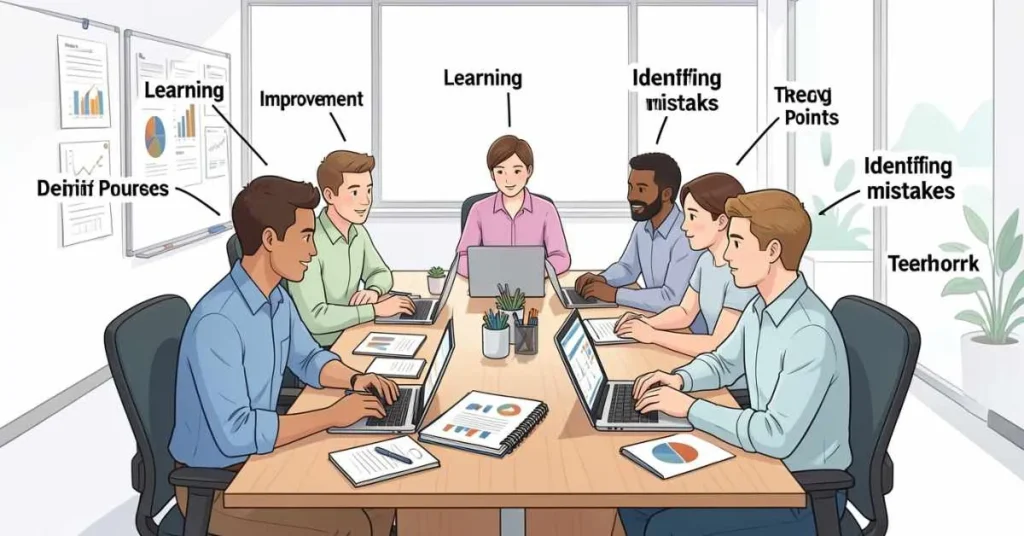
The purpose of debrief is simple:
to learn from experience.
Debriefing helps people:
- Identify mistakes
- Improve future performance
- Think clearly
- Plan better
Example:
After a sales call, a salesperson reviews what questions worked and what objections failed. This helps improve the next call.
When people talk after action, they see patterns. They avoid repeating the same mistakes.
This is why learning from debrief is powerful.
Importance of Debriefing
The importance of debriefing is often ignored. Many teams rush to the next task without reflection.
This leads to:
- Repeated mistakes
- Poor communication
- Weak teamwork
Benefits of debriefing include:
- Better decisions
- Stronger teams
- Clear goals
- Improved safety
Debriefing is not extra work.
It saves time in the long run by preventing errors.
Debrief in Different Contexts
Workplace Debrief
A workplace debrief helps teams review tasks and outcomes.
Debriefing for employees improves clarity, teamwork, and productivity.
Example:
After finishing a shift, staff discuss what problems came up and how to fix them next time.
Debrief in Business
Debrief in business happens after campaigns, deals, or client work.
It helps companies grow and plan better.
Example:
After a marketing campaign, the team reviews results and customer response.
Debrief in Education
Debrief in education helps students reflect on learning.
Example:
After a class presentation, students discuss what they learned and what they would improve.
Debrief in Healthcare
A medical debrief happens after treatments or emergencies.
It improves patient safety and care quality.
Military Debrief
A military debrief reviews missions and operations.
It focuses on lessons, readiness, and safety.
How the Debriefing Process Works
A good debriefing process is simple and clear.
Basic Debrief Steps:
- What happened?
- What went well?
- What went wrong?
- What can improve next time?
Real Example:
After a school trip, teachers discuss planning, student behavior, and safety issues.
To conduct a debrief:
- Keep the tone calm
- Encourage honesty
- Let everyone speak
A debrief session works best when people feel safe.
Helpful Debrief Questions
Good debrief questions guide the discussion:
- What surprised us?
- What should we repeat?
- What should we avoid next time?
- What did we learn?
These questions keep the talk focused and useful.
Debrief vs Similar Terms
Debriefing is often confused with other ideas.
| Term | How It’s Different |
|---|---|
| Feedback meeting | Often one-way |
| Evaluation discussion | Focused on judgment |
| Performance review | Score-based |
| Post-analysis | Data-heavy |
Debriefing is shared, reflective, and practical.
Is Debrief Formal or Informal?
Is debrief formal or informal?
It can be both.
- Formal debriefs follow structure
- Informal debriefs are casual talks
Both are effective if learning happens.
What Happens in a Debrief?
People often ask: What happens in a debrief?
During a debrief:
- Events are reviewed
- Successes are noted
- Problems are discussed
- Lessons are shared
The goal is growth, not blame.
When Should You Debrief?
When should you debrief?
Debrief after:
- Important tasks
- Big decisions
- Team activities
- Complex work
If learning matters, debriefing matters.
Why Is Debrief Important?
Why is debrief important?
Because experience alone does not teach.
Reflection teaches.
Debriefing turns action into understanding.
Simple Checklist for Effective Debriefing
Use this checklist to avoid wasted debriefs:
- Right people present
- Clear purpose
- Honest discussion
- Notes taken
- Follow-up actions
Frequently Asked Questions (FAQs)
What does debrief mean?
Debrief means talking about an activity after it ends to understand what happened and learn from it.
What is debriefing in simple words?
Debriefing is a learning talk after work is done. People discuss what went well and what needs improvement.
What is a debrief meeting?
A debrief meeting is a planned discussion after a task, project, or event to review results and lessons.
Why is debrief important?
Debrief is important because it turns experience into learning. It helps avoid repeat mistakes and improves future performance.
What happens during a debrief?
During a debrief, people:
- Review what happened
- Talk about successes
- Discuss problems
- Share lessons
The goal is learning, not blame.
When should you debrief?
You should debrief after important tasks, team activities, meetings, or events where learning matters.
Is debrief formal or informal?
Debrief can be formal or informal. A short casual talk or a structured meeting—both count as debriefing.
What is the purpose of debriefing?
The purpose of debriefing is to learn from experience, improve performance, and plan better for the future.
Is debriefing the same as feedback?
No. Feedback is often one-way.
Debriefing is shared, open, and focused on learning together.
Where is debriefing used?
Debriefing is used in:
- Workplaces
- Schools and education
- Business and marketing
- Healthcare
- Military and emergency services
What is debrief meaning in Urdu?
Debrief ka matlab hota hai:
kaam ke baad us par baat karna aur us se seekhna.
Final Thoughts
So, what does debrief mean?
It means learning from experience through discussion.
Debriefing works in work, school, business, healthcare, and daily life. It builds understanding. It improves results. And it prevents repeat mistakes.
Debriefing is simple.
But its impact is powerful.
Click Here To Read About: What Does Character Traits Mean? Quick Answer + Full Guide

Hello! I’m Clara Lexis, creator of Meanpedia.com. I specialize in breaking down words, phrases, and idioms so that anyone can understand and enjoy the beauty of English. My goal? Making language approachable, fun, and meaningful, one word at a time.