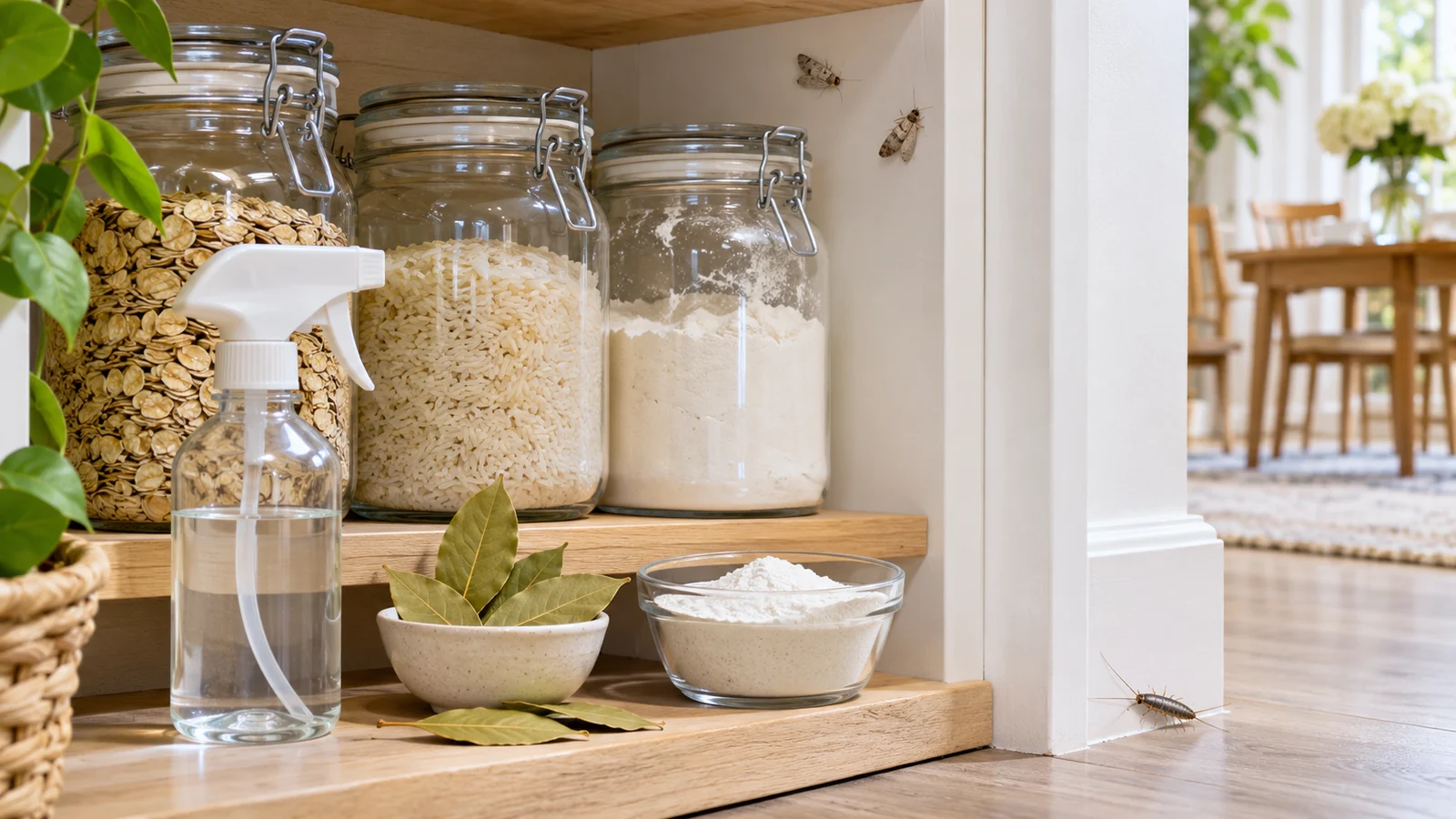
You open your pantry to grab oats for breakfast, and a tiny gray moth flutters out. Or worse, you flip on the bathroom light at midnight and see a shiny, wriggling silverfish dart under the baseboard.
Your stomach drops. Finding creepy crawlies near your food or clean towels is deeply frustrating.
The good news? You do not need to spray toxic chemical bug sprays all over the places where your family eats and sleeps.
This guide walks you through simple, proven methods for non-toxic pest control. You will learn how to clear out these uninvited guests using safe ingredients you likely already have at home.
Why Choose Natural Pest Removal?
Traditional bug sprays rely on synthetic chemicals that leave residues on your shelves, flooring, and food packaging.
Choosing a natural approach keeps your indoor air clean while protecting kids, pets, and your wallet. Switching to non-chemical remedies saves money while keeping your living space safe and fresh.
Step-by-Step Guide: 7 Natural Steps to Clear Out Bugs
Step 1: Empty and Inspect Every Item
Start by taking everything off your pantry shelves or out of affected cabinets.
Check open bags of flour, cereal, rice, pet food, and dried fruit. Look closely for faint webbing, tiny clumped grains, or little larvae.
If you see any sign of activity, toss that bag straight into an outdoor trash can immediately.
Step 2: Deep Clean Shelves with Vinegar
Once shelves are clear, pull out your vacuum cleaner. Use the hose attachment to clear out eggs, webs, and crumbs hidden in corners or shelf bracket holes.
Next, wipe down every surface with white vinegar mixed with equal parts warm water.
Vinegar strips away hidden insect eggs and disrupts the scent trails pests use to navigate around your home.
Step 3: Freeze Suspicious Dry Goods
Pantry moth eggs often ride home inside brand-new cardboard boxes or bulk bags from the grocery store.
To prevent outbreaks before they start, place newly bought grains, flour, or nuts in your freezer for 48 hours.
The freezing temperatures instantly eliminate any invisible eggs before they can hatch inside your cupboards.
Step 4: Upgrade to Airtight Glass or Hard Plastic
Cardboard boxes and thin plastic bags are no match for hungry insect jaws. Moths and beetles can easily chew right through paper packaging.
Transfer all dry foods into airtight glass jars or sturdy BPA-free plastic containers with rubber seals.
If you are looking for smart, easy ways to organize your kitchen while keeping bugs out, explore practical home care ideas at HomeKiTips.
Step 5: Dust Corners with Diatomaceous Earth
For silverfish, moisture and dark cracks are paradise. To stop them in their tracks, use diatomaceous earth for silverfish.
Food-grade diatomaceous earth is a natural powder made from crushed microscopic fossils.
Lightly dust it along baseboards, behind the fridge, and under bathroom sinks.
It feels soft to human hands, but it damages the outer shell of crawling insects, causing them to dry out within days.
Step 6: Use Natural Scent Barriers
Once your space is clean, set up natural scent barriers to keep pests away for good.
- Bay Leaves: Place whole dried bay leaves inside grain containers and on pantry shelves to scare off moths.
- Essential Oils: Mix water with 10 drops of cedarwood, lavender, or peppermint essential oil in a spray bottle.
- Cedar Blocks: Place natural cedar blocks inside closets and drawers. Silverfish naturally avoid the smell of cedar.
Rethinking your household spending on store-bought cleaners and pest sprays is a great step toward low-waste living. You can find more practical, budget-friendly household management strategies over at Finance Post Daily.
Step 7: Lower Indoor Humidity Levels
Silverfish need high humidity to survive. If your home stays dry, they simply cannot thrive.
Fix leaking pipes under sinks promptly and run a dehumidifier in damp basements or laundry rooms.
Always turn on the exhaust fan during hot showers to pull excess steam out of your bathroom.
Natural Pest Solution Comparison
| Pest Type | Target Area | Best Natural Remedy | How It Works |
|---|---|---|---|
| Pantry Moths | Food cupboards, grain jars | White vinegar spray & bay leaves | Destroys scent trails and repels adult moths naturally |
| Silverfish | Bathrooms, basements, baseboards | Food-grade Diatomaceous Earth | Dries out insect exoskeletons without toxic vapors |
| Both | Kitchen counters, cracks, dark corners | Peppermint & cedar essential oils | Strong natural aromas block pest navigation |
Writing Tip for Creators: Human Writing vs. AI Tone
If you write lifestyle or home-improvement content, making your writing sound authentic is essential for keeping readers engaged.
Here is an example showing how to upgrade robotic copy into clear, human-centered advice:
Weak / AI-Generated Version
To delve into the multifaceted landscape of home maintenance, one must appreciate that pantry moths present a clear testament to compromised sanitary standards. Utilizing harsh chemical sprays serves as a game-changer; however, natural remedies offer a holistic tapestry of eco-friendly protection.
Strong / Human-Sounding Version
Finding moths in your cereal is annoying, but you do not need harsh chemicals to fix the problem. Simple pantry staples like vinegar and bay leaves can clear out an active infestation and prevent future bugs from coming back.
Why the Second Version Works Better
- Uses active voice and simple, conversational language.
- Cuts out overused filler words like “delve,” “tapestry,” and “game-changer.”
- Connects directly with the reader’s immediate problem.
Quick Checklist Before Publishing Your Home Guide
Before you hit publish on your next natural home post, run through this quick quality check:
Hook the Reader: Does your introduction describe a real problem your reader faces?
Keep Paragraphs Short: Are your paragraphs under 3 sentences for easy mobile reading?
Add Action Steps: Does your guide offer practical steps readers can take right now?
Check Content Flow: Did you remove unnecessary buzzwords and awkward transitions?
Verify Links: Are your helpful resource links working properly?

Hello! I’m Clara Lexis, creator of Meanpedia.com. I specialize in breaking down words, phrases, and idioms so that anyone can understand and enjoy the beauty of English. My goal? Making language approachable, fun, and meaningful, one word at a time.