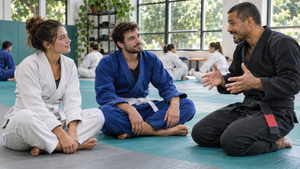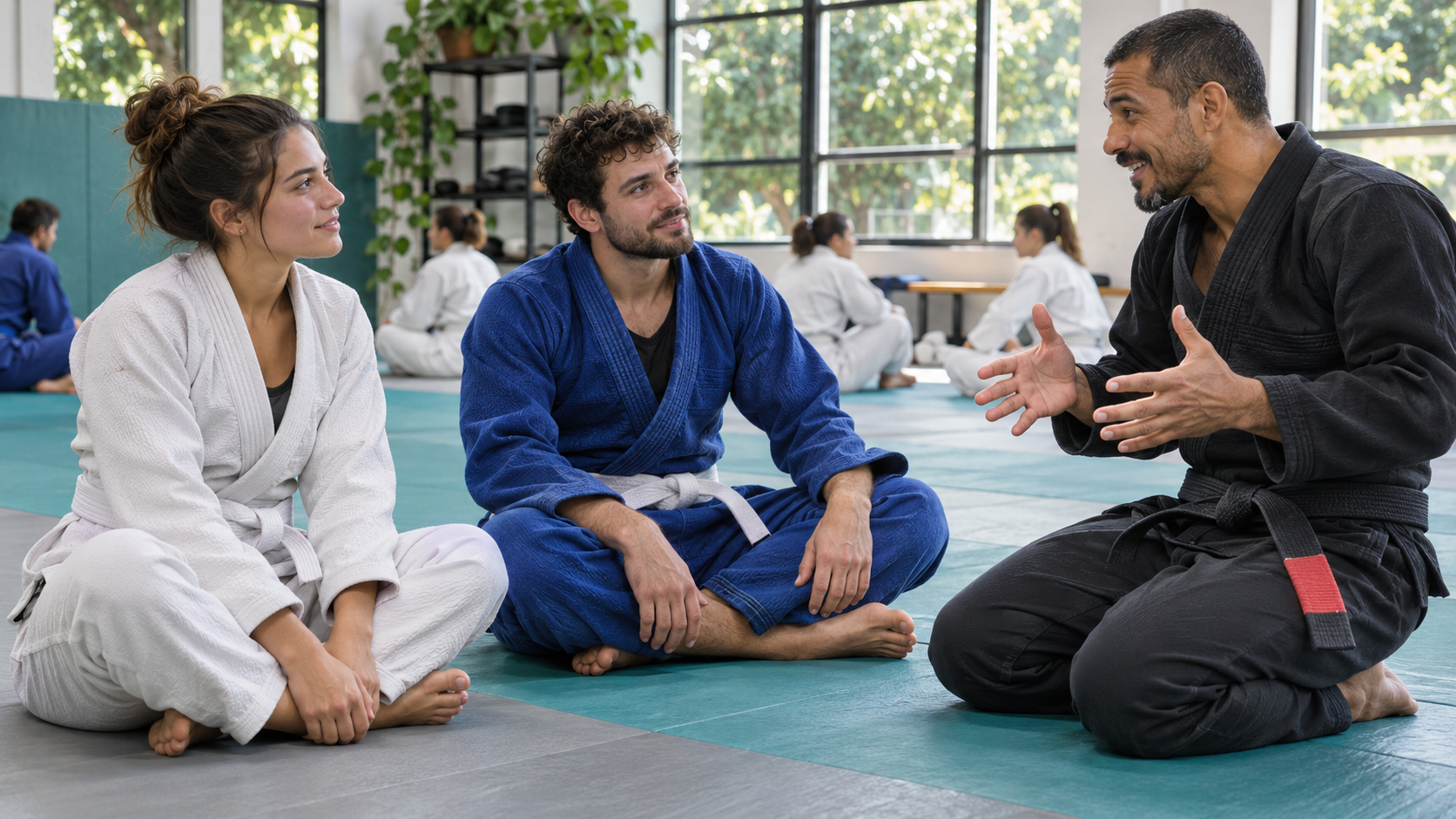
Your first Brazilian Jiu-Jitsu class might start with a simple exercise. One person tries to stay on top while the other tries to get their legs back between them. You switch roles after a short round and try again. The exercise sounds simple until your partner moves, your balance shifts, and the step you practiced a minute ago suddenly feels harder to find. That gap between practicing a move and using it against resistance is a big part of what makes Brazilian Jiu-Jitsu interesting.
Brazilian Jiu-Jitsu, often called BJJ, is a grappling martial art. It teaches you to manage distance, control positions, escape from underneath a partner, and work toward a submission under a set of rules. You can train for recreation or eventually enter a tournament. Either way, the first step is the same. Find a class where you can learn the basics at a pace that lets you pay attention.
What is Brazilian Jiu-Jitsu?
BJJ developed in Brazil from techniques with roots in Japanese jujutsu and Kodokan judo. Modern classes give a lot of time to ground grappling, although many schools also teach takedowns and other ways to move safely from standing to the mat. You may recognize some movements from wrestling or judo. BJJ Gi has its own habits and rules, including a strong emphasis on working from the guard.
A BJJ round can end when someone concedes a submission by tapping or speaking up. In a tournament, a round that goes the distance may be decided by points or another method set by the organizer. In class, the same two people can reset several times in a single round. Each reset gives you a chance to try something new or repeat a position you want to understand.
One of the most useful lessons comes early. You learn to tell the difference between spending effort and making progress. If you’re stuck underneath someone, pushing harder can tire your arms before you’ve made room to move. A coach might give you a smaller task, such as finding enough space to bring one knee back in. That gives you a way to measure progress even if the round ends before you escape.
The positions you’ll hear about in class
Guard describes a range of positions where the person on the bottom uses their legs to manage distance and control the person on top. In closed guard, the bottom person wraps their legs around the top person’s waist. In open guard, the legs are free to move and can make contact at different points. A pass gets the top person beyond those legs and into a position where they can establish control.
Side control is a common place to land after a pass. The top person is across the other person’s torso, generally with both legs clear of the guard. In mount, the top person sits astride their partner’s torso. Back control is a position where one person stays behind the other and controls their movement. These terms help a coach tell the whole room where to start without having to set up each pair by hand.
You’ll also hear the word sweep. In everyday gym talk, people sometimes use it loosely for a move that brings someone from bottom to top. In International Brazilian Jiu-Jitsu Federation competition, a scoring sweep starts from guard or half guard and has to meet the rules for control. As a beginner, pay attention to the starting position and where you end up. That will help you make sense of the term before you need to think about the scoreboard.
Gi vs. no-gi Brazilian Jiu-Jitsu
A gi is the uniform worn in gi classes. It consists of a woven jacket, pants, and a belt. In gi training, partners can use permitted grips on parts of the uniform such as the collar or sleeve. Those grips can help you keep a connection while your partner moves. They also give your partner something to work against, so learning when to let go can be as important as learning where to grip.
No-gi classes usually call for a fitted rash guard and grappling shorts without metal parts, with spats allowed or worn according to gym rules. Partners rely on contact with the body, such as a wrist grip or a hold around the upper body. Without a jacket sleeve to hold, you may need to adjust sooner when your partner changes direction. The lessons about balance, space, and weight carry over between both formats.
If your gym offers both, choose the class that fits your schedule and gives you enough coaching. A reliable Tuesday class will teach you more than a perfect schedule you can rarely keep. Try both formats if you’re curious. Many people form a preference once they’ve spent enough time in each to notice which positions they enjoy.
What happens in your first BJJ class?
Tell the coach it’s your first session when you arrive. They can explain where to leave your shoes, how the class begins, and what to do if you need a break. They may pair you with someone who knows how to adjust the pace. If the school loans uniforms, ask before you arrive so you know whether to bring anything beyond a change of clothes and water.
A class often includes a short warm-up, a demonstration, and practice with a partner. Your first few tries may feel awkward. Watch how the instructor places their weight and where they stop. Then take turns with your partner and work through the drill slowly enough to see which step you’re missing. A specific question about a hand position or a loss of balance is often easier for your coach to answer than asking them to show the whole move again.
Some classes finish with rolling, the term for live sparring. Others use positional rounds. In a positional round, each partner gets a specific goal and you restart when either person reaches it. It’s common to find these shorter tasks easier to follow than a full round. Ask what your gym expects of new students and whether you can observe a round before joining in.
What gear do beginners need?
For gi training, look for a uniform that lets you reach forward and squat without pulling at the shoulders or knees. Start with the size chart for the exact model. Height and weight give you a starting point, while jacket and pant measurements help if you’re between sizes. If you’re shopping with Strikers BJJ, check your academy’s color and patch policy before choosing a gi. Some schools have specific requirements for regular classes.
For no-gi, start with a rash guard and shorts designed for grappling. A fitted top should let you raise your arms freely. Look for shorts that stay up in a deep squat and follow your gym’s rules about pockets, zippers, and other hardware. Check whether the academy requires a particular uniform or color before you order a full set.
Bring a water bottle and a bag for your used gear. Keep footwear handy for trips off the mat and follow the gym’s rules about where to wear it. Wash your training clothes after each session, then dry them fully before you pack them away. If your jacket stays damp until the next evening, space out your gi sessions or use a clean spare.
How to train well with a partner
Learn the gym’s tap and stop signals before you roll. Tap early when you want the action to stop. If your hands are trapped or your partner can’t see them, speak up clearly. If your partner taps or tells you to stop, release immediately. You can also pause a drill to ask a question or to reset if either person loses track of what they’re practicing.
Discuss the pace before a round, especially if you’re new or the two of you differ a lot in size or experience. When a coach asks you to offer light resistance, give your partner enough feedback to work through the drill. In a live round, leave space for people around you and reset if you drift too close to another pair or the edge of the mat.
Keep your fingernails and toenails short and remove jewelry before class. Show up with clean clothes and follow the gym’s hygiene rules. These habits matter because your partner will be in close contact with you for much of the lesson. A clean uniform and a willingness to listen make it easier for both of you to get good practice.
How to make progress in your first month
Choose a schedule you can repeat. Two classes a week can give you time to practice and reflect between sessions if that fits your life. Pick one small goal for each class, such as recognizing when someone has passed your guard or remembering where to put your hands in a position you’ve drilled before. Write down one thing that worked and one question to bring to the next session.
Practicing with different partners helps you notice which parts of a technique still need work. One partner may give you room to move in a drill. Another may make you realize you depend on a particular grip. Ask a coach to watch a few repetitions when you keep running into the same problem. A short correction can give you something specific to practice for the rest of the week.
If tournaments interest you, watch a local event or ask your coach how the gym prepares students. Rules can vary by organizer and division, including scoring, uniform checks, and which techniques are permitted. You can learn a lot from regular classes before you decide whether to compete. The same is true of belt promotions. Your coach can explain how the academy handles them, while your day-to-day progress will show up in the positions you recognize and the problems you can solve.
Taking the first step
Visit an academy with a beginner class you can attend consistently. Watch how the instructor works with new students and how partners respond when someone asks to slow down. A class where you can ask questions and practice with people you trust gives you a good place to build your skills. Ask what gear you need and bring only what the first session calls for.
Early progress in Brazilian Jiu-Jitsu can be small enough to miss. You might notice that you know where your partner is trying to move, or that you can stay calm long enough to remember the escape you drilled. The next week, a position that felt like a jumble starts to look familiar. Those changes give you something to build on every time you come back to the mat.