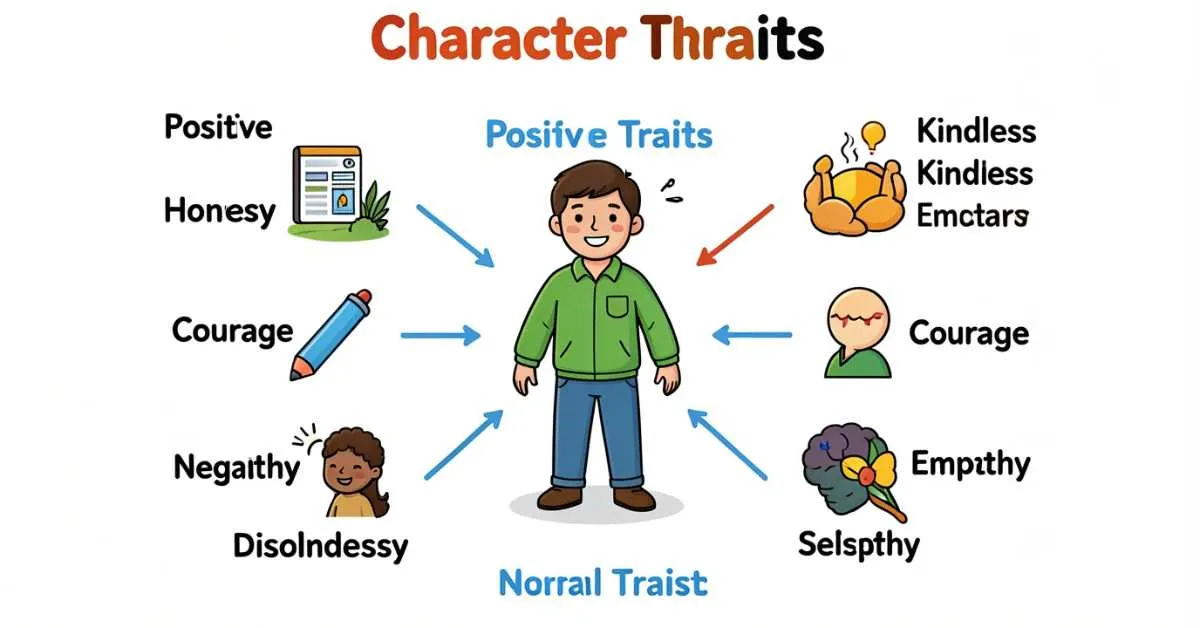
Character traits mean the moral and personal qualities that define how a person thinks, behaves, and treats others. They include good traits like honesty, kindness, courage, and responsibility. They also include bad traits like dishonesty, selfishness, or impatience. These traits affect your friendships, choices, personal growth, and even how characters act in stories.
Have you ever asked, “what does character traits mean?” or noticed why some people are trusted instantly while others are not? Character traits are the qualities that define a person’s moral values and personal behavior.
Understanding character traits is important for personal development, education, and even workplace success. In psychology and education, experts say that teachers, parents. And child development specialists help children learn good character traits. These traits teach kids to be kind, honest, and to get along with others.
In this article, we will explain everything about character traits. We will cover what they are, the types, examples, and how they are different from other traits. You will also learn how they appear in real life and in stories. We added tables, FAQs, and tips to help you understand, find, and improve your own character traits.
Definition of Character Traits
Character traits are the moral and personal qualities that guide a person’s actions, decisions, and interactions. They reflect who a person is at their core. Positive traits like honesty, empathy, and responsibility help build trust and success. Negative traits like dishonesty, laziness, or selfishness can create conflicts and limit growth.
Moral character traits are very important. They help people make good choices and behave well with others. Studies in psychology show that children who learn good character traits early do better in school and get along better with other kids.
Long-tail keywords included:
- character traits definition for kids
- character traits meaning in literature
Types of Character Traits
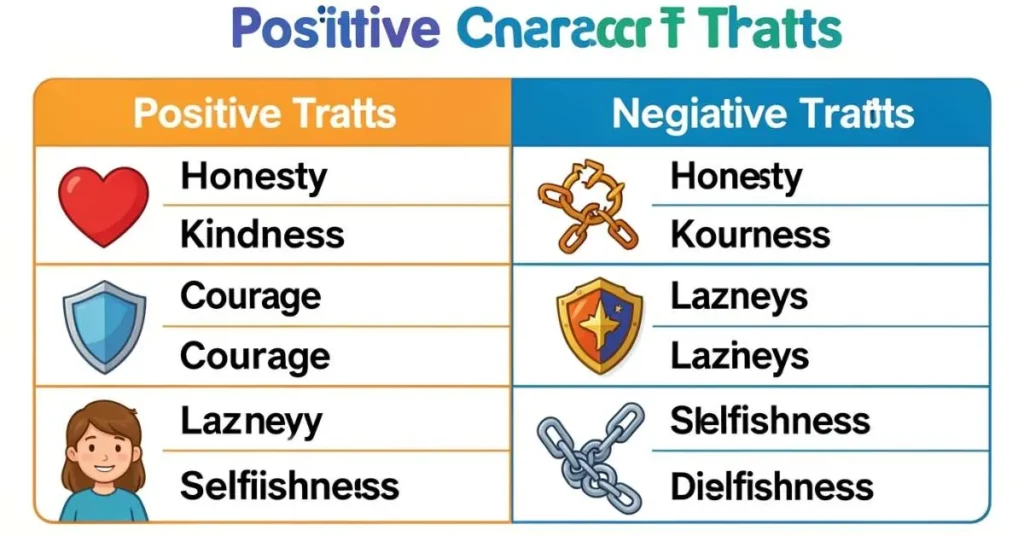
Positive vs Negative Traits Table
| Positive Character Traits | Negative Character Traits |
|---|---|
| Honesty | Dishonesty |
| Kindness | Selfishness |
| Responsibility | Laziness |
| Empathy | Impatience |
| Courage | Arrogance |
| Integrity | Greed |
| Perseverance | Stubbornness |
| Leadership qualities | Irresponsibility |
| Teamwork skills | Manipulativeness |
| Reliability | Negativity |
Positive traits encourage trust, success, and personal growth.
Negative traits hinder relationships, work, and life opportunities.
Character Traits vs Personality Traits Table
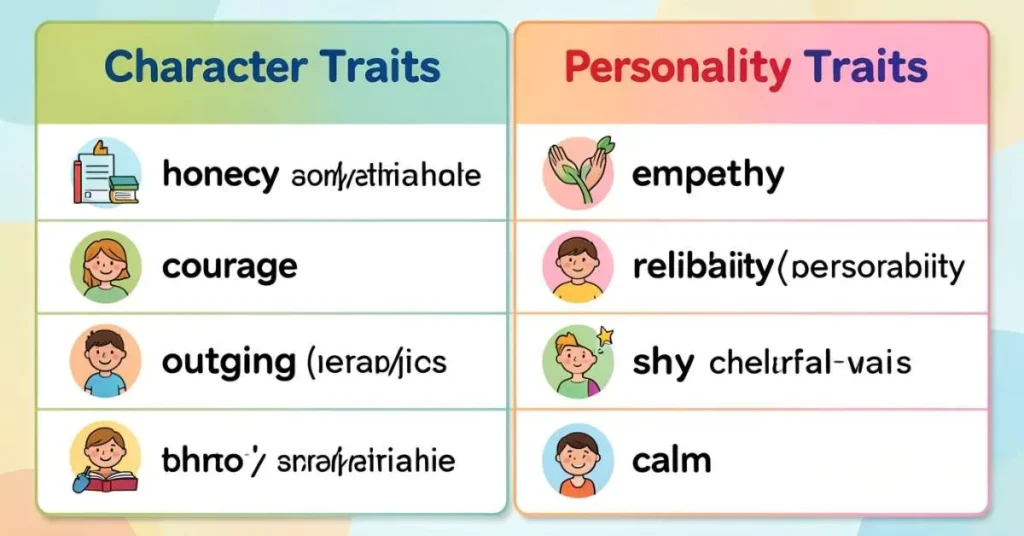
| Character Traits | Personality Traits |
|---|---|
| Show moral values and ethics | Show behavior patterns and style |
| Examples: Honesty, Courage, Empathy | Examples: Outgoing, Shy, Cheerful |
| Influence decisions and trust | Influence social interactions |
| Can be developed consciously | Often innate, shaped by environment |
Why it matters: Many people confuse these two. Personality explains how you behave, while character explains why you behave that way.
Examples of Character Traits in Real Life
Positive Examples:
- A student returning a lost wallet demonstrates honesty and integrity.
- A manager helping a struggling team member shows empathy and teamwork skills.
- Someone facing failure without giving up shows courage and perseverance.
Negative Examples:
- Spreading rumors shows dishonesty.
- Ignoring responsibilities shows irresponsibility.
- Arguing without listening shows arrogance.
Tip: Make a personal list of your traits to improve your self-awareness and growth.
The Science Behind Character Traits: Psychology and Research Insights
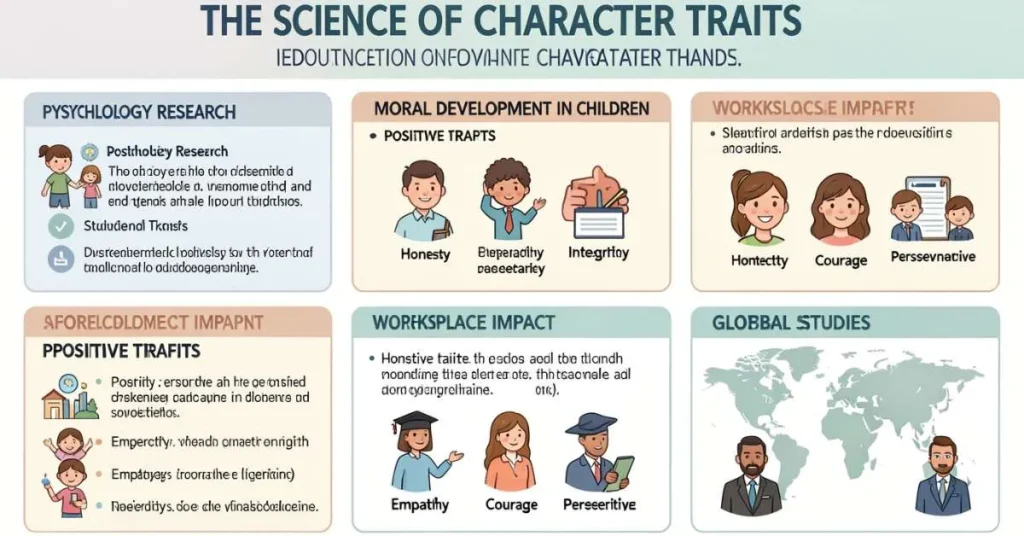
Character traits are not just moral ideas, they are backed by scientific research in psychology and education. Psychologists say that traits like honesty, kindness, hard work, and doing the right thing help people grow and do well in life.
Research Insights
- Personality and Character Studies:
Studies show that positive character traits correlate with higher life satisfaction, better academic performance, and stronger social relationships. For example, a study published in the Journal of Positive Psychology found that students who consistently exhibited traits like kindness and responsibility scored higher on both social and academic outcomes. - Moral Development in Children:
Educational psychologists note that children develop character traits through modeling and reinforcement. Traits like honesty and empathy are strengthened when parents, teachers, and peers consistently reward ethical behavior. - Workplace Impact:
In organizational psychology, research highlights that employees with reliability, teamwork skills, and integrity perform better and are often promoted faster than peers with weaker character traits. Leadership studies show that courage, empathy, and perseverance are predictors of effective leadership success. - Global Studies on Positive Traits:
Cross-cultural studies suggest that some traits, like honesty, kindness, and responsibility, are universally valued, showing their importance for social cohesion worldwide.
How Character Traits Affect Life
Character traits influence relationships, education, work, and personal development.
- Relationships: Traits like honesty, empathy, and kindness strengthen friendships. Negative traits like selfishness or impatience can harm connections.
- School and Work: Being responsible, showing leadership, and being reliable help students and workers earn trust and do well.
- Personal Growth: Traits like courage, perseverance, and integrity enable problem-solving and ethical decision-making.
Even in stories, character traits show lessons and teach how people behave in real life.
How to Identify Your Own Character Traits
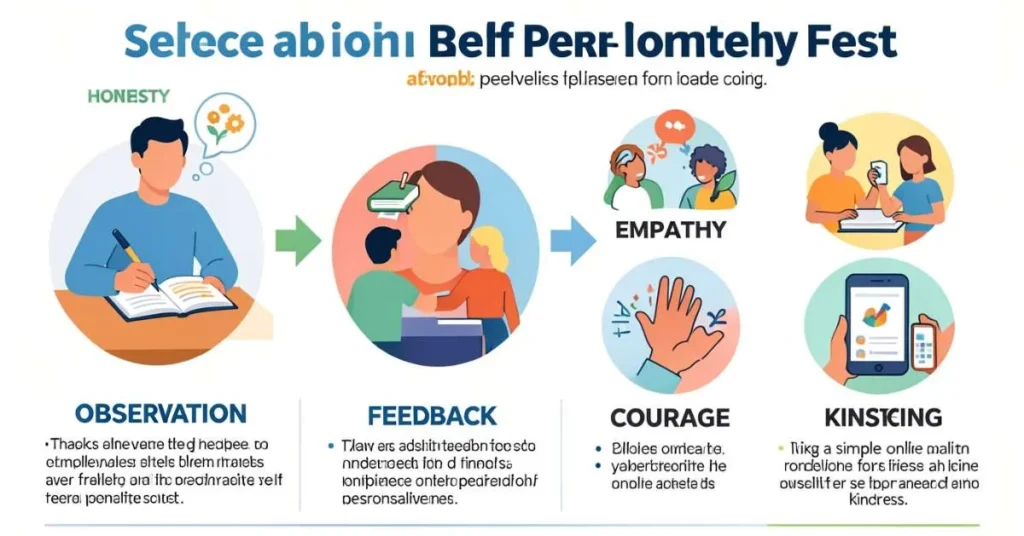
- Self-Reflection: Ask yourself, “Am I honest, patient, or responsible?”
- Feedback: Friends, family, and teachers can point out your strengths and weaknesses.
- Observation: Track your reactions in different situations.
- Tests: Use character and personality quizzes online.
By identifying traits, you can strengthen positive traits and reduce negative ones.
Developing Strong Character Traits
Steps to develop strong traits:
- Set goals: Focus on improving traits like honesty or empathy.
- Daily practice: Make small efforts every day.
- Learn from role models: Observe people with leadership qualities, teamwork skills, or integrity.
- Replace negative traits: Work on selfishness, laziness, or impatience with positive habits.
- Consistency: Positive traits grow stronger with time.
Psychology experts note that intentional practice is key to developing moral character traits.
Character Traits in Literature
Authors and educators use character traits meaning in literature to teach lessons:
- Protagonists often show honesty, courage, and kindness.
- Antagonists show negative traits like greed or arrogance.
- Teachers use stories to help kids understand moral development and ethical behavior.
Expanded FAQs
1. Are character traits learned or inherited?
Both. Genetics influence tendencies, but education and environment shape positive and negative traits.
2. Can a person have both good and bad character traits?
Yes. Everyone has a mix. The key is strengthening good traits and managing negative ones.
3. How do teachers identify character traits in students?
Through observation, feedback, and moral development activities. They watch honesty, teamwork skills, and responsibility.
4. Are character traits the same across cultures?
Some traits like honesty and kindness are universal. Others may vary culturally.
5. How do employers evaluate character traits?
They look for reliability, integrity, leadership qualities, and teamwork skills. Through interviews and behavior assessments.
Conclusion:
Understanding what does character traits mean is the first step to becoming a better person. Traits like honesty, kindness, responsibility, empathy, courage, integrity, and perseverance help you make good choices and act the right way.
Take action:
- Identify your traits using reflection and feedback
- Develop strong traits through practice and habit
- Apply them in daily life, school, work, and social interactions
Strong character shapes your life, improves relationships, and inspires others. Start today, reflect, practice, and grow. Share this guide to help others develop good character traits too!
Click Here To Read About: What Does Cumulative Mean? Easy Explanation & Examples

Hi, I’m Evan Lexor, the voice behind Meanpedia.com. I break down English words, slang, and phrases into clear, simple meanings that actually make sense. From modern internet terms to everyday expressions, my goal is straightforward: help you understand English better, faster, and with confidence, one word at a time.