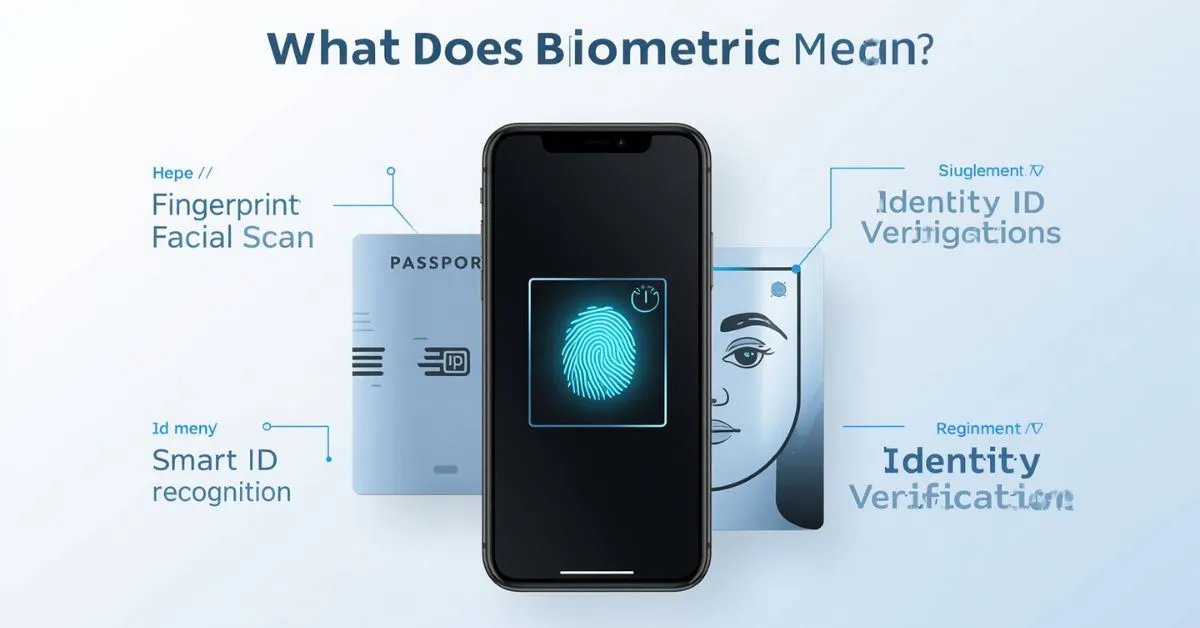
Biometric means using a person’s measurable physical or behavioral traits to recognize them or verify their identity. In simple terms, it includes things like fingerprints, facial recognition, iris scans, and voice patterns used instead of, or alongside, passwords and ID checks.
The word biometric often appears in phone settings, workplace access systems, airport or immigration processes, and digital identity tools.
The reason is simple: biometrics are used to help systems confirm who someone is by measuring traits linked to that person, rather than relying only on something they know, like a password, or something they carry, like a card.
Biometric meaning in simple words
In plain English, biometric refers to body- or behavior-based measurements used for identity. NIST defines biometrics as measurable physical characteristics or personal behavioral traits used to recognize identity or verify a claimed identity.
DHS describes biometrics as automated methods that measure physical and behavioral characteristics and use them in identity systems.
That means a biometric system is not guessing who you are. It is comparing a measurable trait, such as a fingerprint or face pattern, against information already enrolled in a system.
Where people usually see the word biometric
Most readers do not search this phrase because they want a dictionary definition alone. They search it because they saw the word in a real situation, such as:
- a phone asking to enable biometric login
- a visa or passport process asking for biometrics
- a workplace using fingerprint or face entry
- an app using biometric authentication for sign-in
- an identity check system at a secure location
So when a screen or form says biometric, it usually means a system is using a measurable personal trait to verify identity.
Biometric vs biometrics
There is a small difference:
- Biometric usually describes something related to the method or data, such as biometric login or biometric data.
- Biometrics usually refers to the broader field or the methods as a whole.
In everyday search behavior, people often use both words to mean almost the same thing.
Common types of biometrics
Biometrics are usually grouped into physical traits and behavioral traits. NIST materials describe examples of physical biometrics such as fingerprints, facial characteristics, and iris recognition, and behavioral examples such as signature verification and keystroke dynamics.
Physical biometrics
These are based on measurable body features.
- fingerprint
- facial recognition
- iris recognition
- hand or palm-based patterns
Behavioral biometrics
These are based on patterns in how a person acts.
- voice characteristics
- signature dynamics
- keystroke rhythm
Quick-reference table
A helpful way to understand the term is to see what counts as biometric data and what it is used for.
| Biometric type | What it measures | Common use |
|---|---|---|
| Fingerprint | Ridge patterns on a finger | Phone unlock, access control |
| Face | Facial structure and features | Device sign-in, identity checks |
| Iris | Patterns in the iris | Identity verification |
| Voice | Voice characteristics | Voice-based authentication |
| Signature / keystroke | Behavioral pattern | Fraud or identity monitoring |
These examples reflect the common physical and behavioral biometrics described by NIST materials and government identity systems.
How biometric systems work
Most biometric systems follow a basic flow:
- Capture a trait, such as a fingerprint or face image.
- Process the sample to extract distinguishing features.
- Enroll it by creating a stored reference or template.
- Compare a new sample against that stored reference later.
This is one of the biggest things weaker articles skip. The word biometric does not just mean “scan your finger.” It usually refers to a full identity process involving capture, processing, enrollment, and matching.
What is biometric enrollment?
Enrollment is the first time your biometric trait is captured and registered for later comparison.
NIST materials describe biometric authentication as comparing a newly captured sample against a previously registered or enrolled sample.
In simple terms, enrollment is the setup stage. Verification comes later when the system checks whether a new scan matches the enrolled reference.
What is a biometric template?
A biometric system usually does not work by simply looking at a raw image the way a person does.
It processes the captured sample and stores extracted features for later comparison, often referred to as a biometric template or identifier in NIST materials.
That distinction matters because many readers assume biometrics always means “a stored photo” or “a stored fingerprint picture.” In practice, systems often use processed reference data for matching rather than treating the sample like a normal image file.
Identification vs authentication
These two terms are related, but they are not the same.
Biometric authentication
This asks: Are you really the person you claim to be?
Example: your phone checks whether your current fingerprint matches the one you enrolled earlier.
Biometric identification
This asks: Who is this person?
In NIST descriptions, biometric recognition can be used in identification mode, where a system tries to determine identity from a larger set of records rather than comparing against only one claimed profile.
This distinction helps readers understand why biometrics are used in both personal devices and large identity systems.
What does biometric mean on a phone?
On a phone, biometric usually means using your fingerprint or face to unlock the device or approve access.
NIST guidance on mobile biometrics notes that these capabilities are commonly used for screen unlock, that enrollment and verification can occur locally on the device, and that the stored biometric templates are typically kept on the mobile device and typically cannot be exported.
That is why the phrase biometric login on a phone usually means quick local verification, not a full remote identity check by itself.
What does biometric mean in passports, visas, and immigration?
In government and travel contexts, biometrics are used for identity-related processes such as immigration benefits, border management, and identity verification.
DHS explains that biometrics are used in areas including immigration administration and security-related identity services.
So when a form mentions a biometric appointment or asks you to submit biometrics, it generally refers to providing measurable identity traits, often such as fingerprints and facial images, for official verification.
Biometric vs password or PIN
A password or PIN is something you know. A biometric is something you are or do.
NIST’s digital identity guidance distinguishes authentication factors in this way and also notes that biometrics are often used as part of authentication systems rather than as a universal replacement for every other method.
That is why biometrics are best understood as a convenient identity factor, not a magic security solution. In many systems, they work best when combined with other controls.
Why biometrics are useful
Biometrics are widely used because they can make identity checks faster and easier for users while supporting identity and access workflows at scale.
DHS identity systems, for example, are built around compare, store, share, analyze, and verification functions for biometric information.
For everyday users, the practical advantage is convenience: you are less likely to forget your face or fingerprint than a password. For organizations, the practical advantage is that biometrics can support automated verification and access decisions.
Privacy and security concerns readers should understand
Biometric data deserves careful handling because it is tied to identity. NIST materials note that biometric comparison can happen locally on a device or at a central verifier, and that local comparison is preferred because large-scale attacks are a greater concern at central verifiers.
NIST materials also note that while mobile-device biometrics are often stored locally and typically cannot be exported, other biometric architectures can store and compare data differently depending on the system.
Another key issue is revocability. Passwords can be changed easily. Biometric traits are much harder to replace if compromised.
NIST-linked materials on modern biometric authentication approaches explicitly note that a server-side breach of biometric data can be more damaging because changing biometric information is difficult.
What is liveness detection and why does it matter?
One of the biggest real-world risks in biometrics is spoofing, where someone presents a fake biometric sample to a sensor.
NIST explains that liveness detection is designed to counter fake biometrics or spoofs presented at the point of capture.
In simple terms, liveness detection helps a system check whether the biometric sample is coming from a live person rather than a copied or artificial representation.
That is an important reminder that biometric systems are not just about convenience; they are also about resisting fraudulent presentation attacks.
Common misconceptions about biometric meaning
“Biometric means only fingerprint”
No. Fingerprints are one common biometric, but NIST and DHS materials describe biometrics more broadly as physical and behavioral traits used in identity systems.
“Biometric means a background check”
Not exactly. Biometrics can be part of identity verification workflows, but the word itself refers to measurable traits and the systems that use them for recognition or verification.
“Biometric always means a stored photo”
Not necessarily. Biometric systems commonly process captured data into a stored reference or template for matching rather than simply storing the raw sample as a normal image.
“Biometric login is always better than every other method”
Not always. NIST guidance treats biometrics as one factor within broader authentication design, and local versus centralized implementation affects security considerations.
What most articles miss about biometric meaning
Most articles stop after saying biometric means fingerprint or face recognition. That is too shallow. The more useful explanation is this: biometric is a category of identity methods built around measurable human traits, and its practical meaning changes slightly depending on context.
On a phone, it often means local device unlock. In immigration, it often means identity collection and verification. In security systems, it can mean enrollment, matching, access control, and anti-spoofing protections working together.
Another point many pages miss is that biometrics are not automatically simple or risk-free. NIST guidance highlights different storage and comparison models, and official materials on liveness detection show that fake biometric presentation is a real design concern. A better article should explain both convenience and limits, not oversell either one.
FAQ
What is the simple meaning of biometric?
Biometric means using measurable body traits or behavior patterns, such as a fingerprint, face, iris, or voice, to recognize or verify a person’s identity.
Is biometric the same as fingerprint?
No. A fingerprint is one type of biometric. Biometrics can also include facial recognition, iris recognition, voice characteristics, and some behavioral patterns.
What does biometric mean on a phone?
It usually means using a fingerprint or face for local device unlock or app access. NIST notes that mobile biometric enrollment and verification often happen locally on the device.
What is biometric authentication?
Biometric authentication means checking whether a newly captured biometric sample matches an enrolled sample tied to a claimed identity.
What is biometric identification?
Biometric identification means using biometric recognition to determine who someone is, often by comparing against a broader set of stored records.
Why is biometric data sensitive?
Because it is tied to identity and may be difficult to replace if compromised. NIST-linked materials note that biometric data breaches can be more damaging than password breaches because changing biometric information is difficult.
Conclusion
Biometric means using measurable human traits to identify or verify a person. The clearest examples are fingerprints, facial recognition, iris scans, and voice-based patterns. But the fuller meaning is broader: biometrics are part of identity systems that capture, process, enroll, and compare human traits for access, verification, and security.
Click Below And Read More Posts:
What Does RPG Mean? Gaming Meaning, Other Uses
What Does Seeing 1111 Mean? Angel Number, Love, and What to Do
What Does Ese Mean? Slang, Spanish Meaning, When to Use It

Hi, I’m Evan Lexor, the voice behind Meanpedia.com. I break down English words, slang, and phrases into clear, simple meanings that actually make sense. From modern internet terms to everyday expressions, my goal is straightforward: help you understand English better, faster, and with confidence, one word at a time.