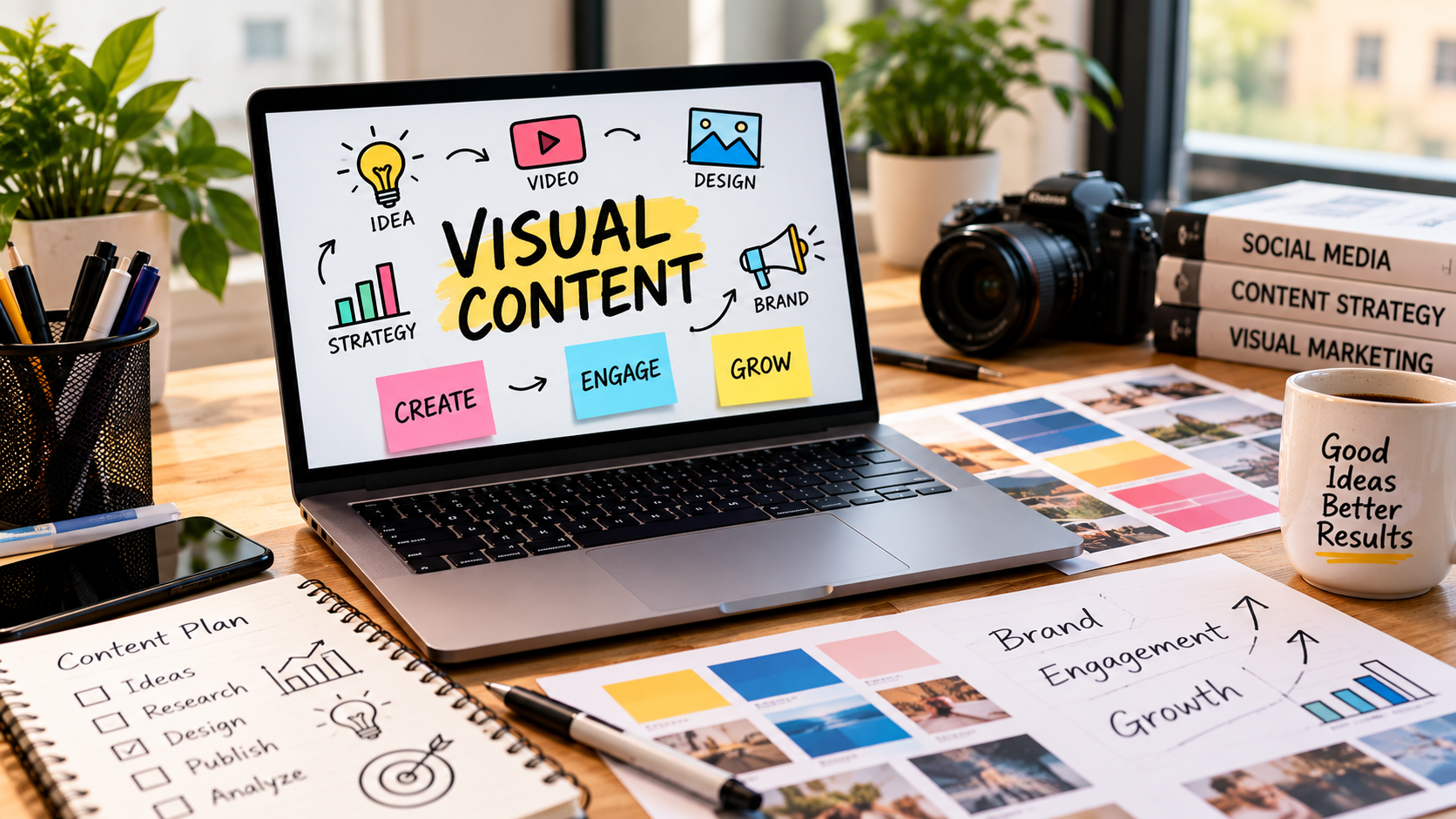
In today’s fast-moving digital environment, grabbing someone’s attention is easy to talk about but much harder to achieve. Every time people open a social media app, browse a website, or check their inbox, they encounter a steady stream of advertisements, images, videos, and promotional messages. For businesses, simply publishing attractive content is no longer enough. The real challenge is creating visuals that encourage people to stop, pay attention, and interact with a brand in meaningful ways.
As we move through 2026, visual content has become an important part of how businesses communicate their values, showcase products, and build relationships with customers. From engaging social media graphics to educational videos and interactive experiences, creative design can make complicated information easier to understand and everyday marketing messages more memorable. However, successful visual marketing isn’t about following every trend. It’s about understanding what your audience genuinely cares about and presenting that information in a way that feels useful, authentic, and visually appealing.
Typography is one of the simplest ways to give visual content a distinctive personality. A thoughtfully designed headline can turn an ordinary announcement into something people actually notice. For example, marketers preparing social media campaigns, promotional banners, or product launches can experiment with AI text effects to create expressive lettering that complements their brand’s visual identity. Whether the goal is to communicate excitement, elegance, or creativity, distinctive text treatments can make key messages more noticeable. The important thing is maintaining readability and ensuring that decorative elements support the content rather than overwhelm it.
1. Create Visual Content That Solves Real Problems
One of the biggest mistakes businesses make is assuming that every piece of visual content needs to promote a product.
In reality, audiences often engage more deeply with content that helps them accomplish something useful.
Educational graphics, practical tutorials, and step-by-step guides can demonstrate expertise while addressing everyday challenges.
For example, a skincare company could create a visual guide explaining the correct order for applying different skincare products.
A financial services business might publish an infographic showing how to organize monthly expenses.
These resources provide immediate value without requiring audiences to make a purchase.
When planning visual content, consider the questions your customers frequently ask.
Customer service conversations, product reviews, and social media comments can reveal topics worth exploring.
Turn those questions into clear, practical visuals that people can save and revisit.
Useful content gives audiences a reason to remember your brand beyond individual promotional campaigns.
2. Develop a Recognizable Visual Identity
Brand recognition grows through consistent experiences.
When customers encounter your content across different platforms, they should notice familiar visual characteristics.
These might include specific colors, typography, illustration styles, photography techniques, or layout patterns.
For example, a wellness company could use soft natural colors and calming photography throughout its marketing materials.
A technology startup might prefer clean geometric layouts, bold contrasts, and modern typography.
Consistency doesn’t mean every post should look identical.
Instead, establish a flexible design system that allows creative variation while preserving the brand’s personality.
A simple style guide can define approved colors, fonts, logo placement, and preferred image treatments.
This becomes especially useful when several employees or external designers create content.
Over time, consistent visuals can make your business easier to recognize, even when customers encounter a post without immediately noticing the company name.
3. Use Short-Form Videos to Capture Attention
Short-form videos offer businesses opportunities to communicate information quickly while showing personality.
Platforms such as Instagram Reels, TikTok, and YouTube Shorts make it possible to share demonstrations, tutorials, customer stories, and behind-the-scenes moments.
However, successful videos don’t always require professional cameras or elaborate production.
A local bakery could film the process of decorating its most popular cake.
A fitness studio might demonstrate three simple exercises suitable for beginners.
A software company could explain a useful feature through a short screen recording.
The most important part is providing viewers with a reason to keep watching.
Start with a clear question, an interesting visual, or a specific benefit.
Avoid lengthy introductions that delay the main message.
Readable captions are also valuable because many people watch videos without sound.
Focus on creating content that your audience finds genuinely interesting rather than attempting to imitate every viral trend.
4. Transform Customer Experiences Into Visual Stories
Customer stories can be more persuasive than traditional promotional messages because they demonstrate how products or services work in real situations.
Instead of simply listing product features, show how customers use them to solve problems or achieve meaningful goals.
For example, a home organization company might share before-and-after photographs from a customer’s storage makeover.
A project management software provider could create a visual case study explaining how a small business improved its workflow.
These stories help potential customers imagine similar results.
Whenever possible, include genuine customer quotes and specific details about the experience.
However, businesses should avoid exaggerating outcomes or presenting unusual results as typical.
Always obtain permission before sharing customer photographs, personal information, or testimonials.
Authentic stories build credibility because they connect marketing messages with real experiences.
5. Design Infographics That People Want to Share
Infographics remain useful because they combine information and design in an accessible format.
A well-organized infographic can simplify complicated topics and make important ideas easier to remember.
For example, a digital marketing agency could illustrate the stages of developing a successful content strategy.
A nutrition education platform might create a visual guide explaining how to build balanced meals.
The strongest infographics focus on one central topic.
Avoid filling the design with excessive statistics, lengthy explanations, or unrelated decorative elements.
Instead, use clear headings, simple icons, and logical visual sequences.
If you include numerical claims, verify their accuracy and provide appropriate sources.
Design infographics in dimensions suitable for the platforms where they will appear.
A detailed graphic intended for a blog may need to be divided into smaller slides for social media.
When information is useful and easy to understand, audiences have more reasons to save or share it.
6. Encourage Customers to Create Content
User-generated content gives customers opportunities to participate in a brand’s story.
Photos, videos, reviews, and creative submissions can provide perspectives that company-produced marketing materials may not capture.
For example, an outdoor clothing brand could invite customers to share photographs from hiking adventures.
A home decor retailer might encourage shoppers to showcase how they style products in their living spaces.
These contributions can make a brand feel more community-oriented.
They also help potential customers see products in everyday environments.
Businesses can encourage participation through themed campaigns, creative challenges, or opportunities to be featured on official social media accounts.
However, customer contributions should remain voluntary.
Always request permission before republishing content and clearly disclose any incentives associated with endorsements.
When managed transparently, user-generated content can strengthen trust and encourage meaningful interaction.
7. Experiment With Interactive Visual Experiences
Interactive content encourages audiences to participate rather than simply consume information.
Quizzes, polls, product configurators, and interactive guides can make digital experiences more memorable.
For example, an online furniture retailer could let visitors preview different colors and materials.
A beauty company might offer a short quiz helping customers explore suitable product categories.
Even simple social media polls can encourage participation.
A restaurant could ask followers to vote on a seasonal menu item, while a clothing brand might invite customers to choose between upcoming designs.
Interactive experiences work best when they offer practical value or enjoyable participation.
Avoid unnecessary features that make websites difficult to navigate.
Mobile compatibility, accessibility, and fast loading times should remain priorities.
The objective is to make engagement easier, not more complicated.
8. Make Behind-the-Scenes Content Part of Your Strategy
People often enjoy learning about the individuals and processes behind the brands they support.
Behind-the-scenes content provides an opportunity to communicate authenticity and show the work involved in delivering products or services.
A handmade jewelry company could share photographs of its design and production process.
A restaurant might introduce its kitchen team or explain how new recipes are developed.
A marketing agency could document a brainstorming session or show how a campaign evolves from concept to completion.
These moments help audiences understand what makes a business unique.
They also offer opportunities to highlight employees and communicate company values through genuine actions.
Behind-the-scenes content doesn’t need to be perfectly polished.
Simple photographs and short videos can feel approachable when they show interesting details.
The goal is to provide a more personal view of the business while maintaining professionalism.
9. Optimize Visual Content for Mobile Devices
A large share of digital content is consumed on smartphones, making mobile-friendly design essential.
Graphics that look attractive on desktop screens may become difficult to read on smaller devices.
Tiny text, crowded layouts, and complicated visual compositions can reduce engagement.
Start by designing important content for mobile viewing.
Use readable typography, sufficient spacing, and clear visual hierarchy.
Ensure that headlines and essential information remain visible without excessive zooming.
Images should also be optimized to load efficiently.
Large files can slow down websites, especially for visitors using limited mobile connections.
Choose appropriate image dimensions and formats while maintaining sufficient quality.
Test content on different screen sizes before publishing.
A mobile-first approach helps businesses deliver consistent experiences across platforms and devices.
10. Measure Engagement and Improve Your Visual Strategy
Creative decisions become more effective when supported by performance data.
Businesses should regularly evaluate how audiences respond to different types of visual content.
Useful metrics may include engagement rates, content saves, shares, video watch time, website visits, and conversions.
However, not every metric carries the same importance.
A social media post with thousands of impressions may generate little meaningful interest.
Meanwhile, an educational graphic with fewer views might attract highly relevant customers who visit your website or request additional information.
The right metrics depend on your marketing objectives.
If your goal is brand awareness, reach and recognition may be important.
If you’re focused on lead generation, website conversions and qualified inquiries deserve greater attention.
Experiment with different layouts, formats, headlines, and visual styles.
Review results over time and use the findings to guide future campaigns.
How to Build a Sustainable Visual Content Marketing Plan
Having creative ideas is useful, but turning them into consistent results requires a realistic strategy.
Begin by identifying your target audience and understanding the topics that interest them.
Review customer questions, industry discussions, and existing content performance to identify opportunities.
Next, define your primary marketing objectives.
You may want to increase brand awareness, encourage social media engagement, generate qualified leads, or improve customer loyalty.
Choose visual formats that support those goals.
For example, educational infographics and tutorials may help demonstrate expertise, while short-form videos and interactive posts can encourage broader participation.
Create a content calendar that balances educational, promotional, and community-focused material.
Develop reusable templates to maintain consistent branding and reduce repetitive design work.
Finally, schedule regular performance reviews.
Identify which content formats produce meaningful results and adjust your strategy accordingly.
A sustainable approach focuses on continuous improvement rather than constant experimentation without direction.
Common Visual Content Mistakes to Avoid
Even businesses with strong creative ideas can weaken their marketing through avoidable design mistakes.
One common problem is overcrowding graphics with too much information.
Excessive text, competing colors, and unnecessary decorative elements can make content difficult to understand.
Another mistake is focusing entirely on appearance while ignoring usefulness.
A visually impressive graphic offers limited value if its message is confusing or irrelevant.
Inconsistent branding can also reduce recognition.
Frequently changing typography, colors, and visual styles may prevent audiences from developing familiarity with a business.
Finally, accessibility should never be overlooked.
Readable text, appropriate color contrast, descriptive image alternatives, and clear navigation help ensure that more people can engage with digital content.
Addressing these issues creates a stronger foundation for effective visual communication.
Conclusion
Visual content marketing in 2026 offers businesses numerous opportunities to attract attention, communicate value, and strengthen customer relationships. From educational graphics and short-form videos to authentic customer stories and interactive experiences, thoughtful visual strategies can make brands more recognizable and engaging.
However, lasting success doesn’t come from following every design trend or producing large amounts of content without a clear purpose.
It comes from understanding audience needs, maintaining consistent branding, and creating experiences that people find genuinely useful.
By combining creativity with authenticity, accessibility, and meaningful performance analysis, businesses can develop visual content strategies that support stronger engagement, greater brand visibility, and sustainable growth.
Hashtags can also support a broader visual content strategy by helping audiences discover relevant social media posts and branded campaigns. Choosing clear, relevant hashtags makes it easier to organize content around topics that interest your audience. For a practical explanation of how hashtags work across social platforms, explore our guide on what a hashtag means and how to use it.