Featured Snippet Answer
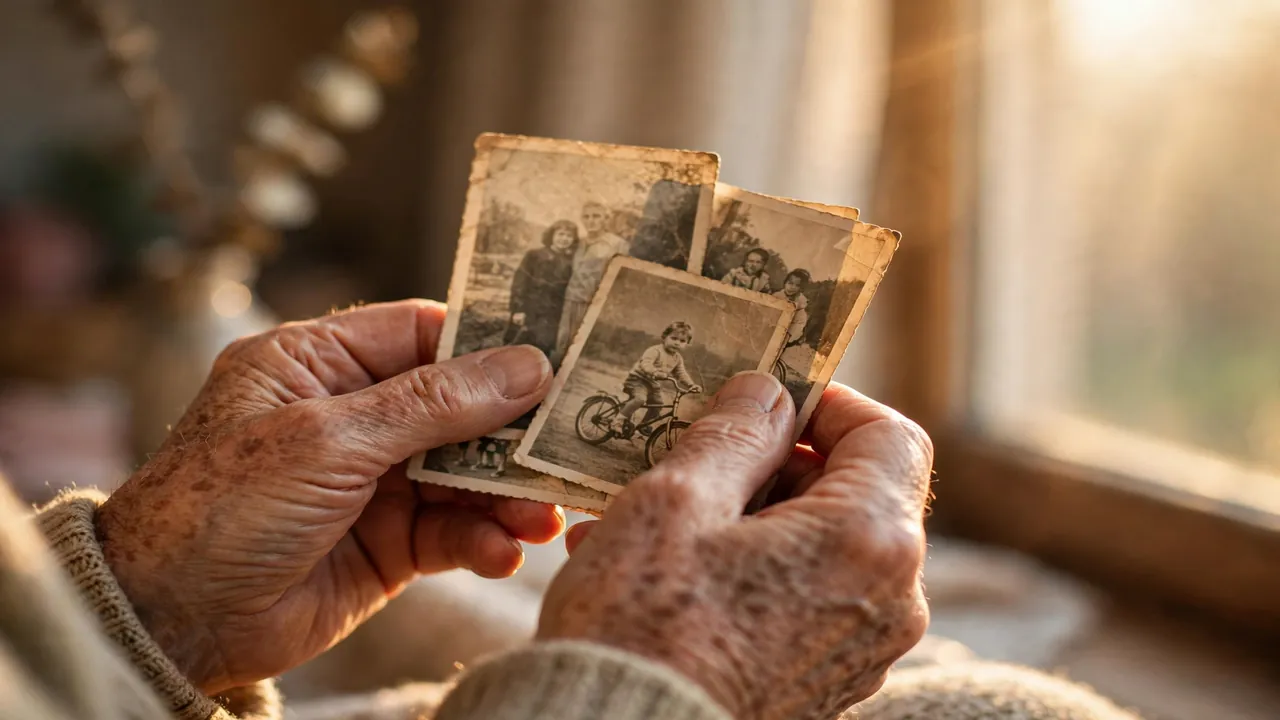
Reminiscing means thinking or talking about past experiences, often with warmth or nostalgia. It is the act of recalling pleasant memories — childhood summers, old friendships, family traditions — and savoring them in the present. Unlike simply remembering a fact, reminiscing is emotional, reflective, and often shared with others.
Key Takeaways
- Reminiscing means recalling past experiences with feeling — it is remembering plus emotion, usually nostalgia.
- Remembering is neutral; reminiscing is warm. Remembering finds your keys; reminiscing relives your childhood.
- “Reminisce about” is the correct form — you reminisce about the past, never “on” it.
- Reminiscence is the noun (the memory itself), and reminiscent is the adjective (something that reminds you of the past).
- Reminiscing is usually healthy, but it can turn negative if it becomes rumination or romanticizing a painful past.
What Does “Reminiscing” Mean?
Reminiscing (pronounced rem-ih-NISS-ing) is the act of thinking back on past experiences and reflecting on them with feeling. It is more than pulling a fact out of your memory — it is reliving the moment, at least a little.
When you reminisce, you are not just recalling that something happened. You are indulging in the memory: picturing the scene, feeling the emotions again, maybe laughing or tearing up.
The word comes from the Latin reminisci, meaning “to remember.” It entered English in the late 1800s.
Everyday examples:
- Old friends at a reunion, laughing about the time they got lost on a road trip.
- A grandmother telling her grandkids about the neighborhood she grew up in.
- Flipping through a photo album and telling the story behind each picture.
- Hearing a song from high school and suddenly remembering Friday night football games.
Reminiscing vs. Remembering: What’s the Difference?
| Remembering | Reminiscing | |
|---|---|---|
| What it is | Recalling a fact or event | Reliving past experiences with feeling |
| Emotion | Neutral | Warm, nostalgic, sometimes bittersweet |
| Example | “I remember where I parked.” | “We spent hours reminiscing about college.” |
| Focus | Accuracy (what happened) | Experience (how it felt) |
In short: remembering is a mental lookup; reminiscing is a mental visit.
The Word Family: Reminisce, Reminiscence & Reminiscent
- Reminisce (verb): the action. “We reminisced about our school days.”
- Reminiscence (noun): a memory itself. “He wrote his reminiscences of the war.”
- Reminiscent (adjective): “The song is reminiscent of the 1980s.” Always followed by of.
Why Do We Reminisce? The Psychology Behind It
It strengthens bonds. Sharing memories is one of the fastest ways humans connect.
It boosts mood and meaning. Recalling fond memories can lift a low mood and reduce loneliness.
It helps us cope. During hard times, people turn to happy memories for comfort.
It preserves identity. Reminiscing helps maintain a coherent life story across decades.
How to Use “Reminisce” in a Sentence
The correct preposition is “about.”
- “They spent the evening reminiscing about their childhood.”
- “She loves reminiscing about her grandmother’s cooking.”
Common mistake: saying “reminisce on.” Always use about.
Is Reminiscing Always a Good Thing?
The bittersweet edge. Reminiscing about someone who has passed away can bring tears with the smiles.
The romanticizing trap. Polishing the past can make the present feel worse by comparison.
Rumination vs. reminiscing. Reminiscing savors; rumination stews. If looking back interferes with living now, talk to a counselor.
FAQs
What does reminiscing mean in simple terms?
Reminiscing means thinking or talking about happy past experiences with warm feelings — like taking a mental trip back to a good memory.
What is the difference between remembering and reminiscing?
Remembering is neutrally recalling a fact. Reminiscing is emotionally reliving past experiences, usually pleasant ones, often shared with others.
Is reminiscing a positive word?
Generally, yes. It carries a warm, nostalgic tone. But excessive reminiscing about a painful past can slide into rumination.
How do you use “reminisce” in a sentence?
Use it with “about”: “We spent hours reminiscing about our road trip.” Avoid “reminisce on.”
What is the difference between reminiscing and reminiscence?
“Reminiscing” is the verb form — the act. “Reminiscence” is the noun — a specific memory.
Conclusion
Reminiscing is one of the most human things we do. It turns scattered moments into stories, strangers into old friends, and ordinary days into the “good old days” we carry with us. Whether you are laughing with friends about the past or quietly flipping through old photos, you are doing something your brain was built for: finding meaning in memory. For the formal dictionary definition, see the full entry for reminisce in the Merriam-Webster dictionary.

Hello! I’m Clara Lexis, creator of Meanpedia.com. I specialize in breaking down words, phrases, and idioms so that anyone can understand and enjoy the beauty of English. My goal? Making language approachable, fun, and meaningful, one word at a time.