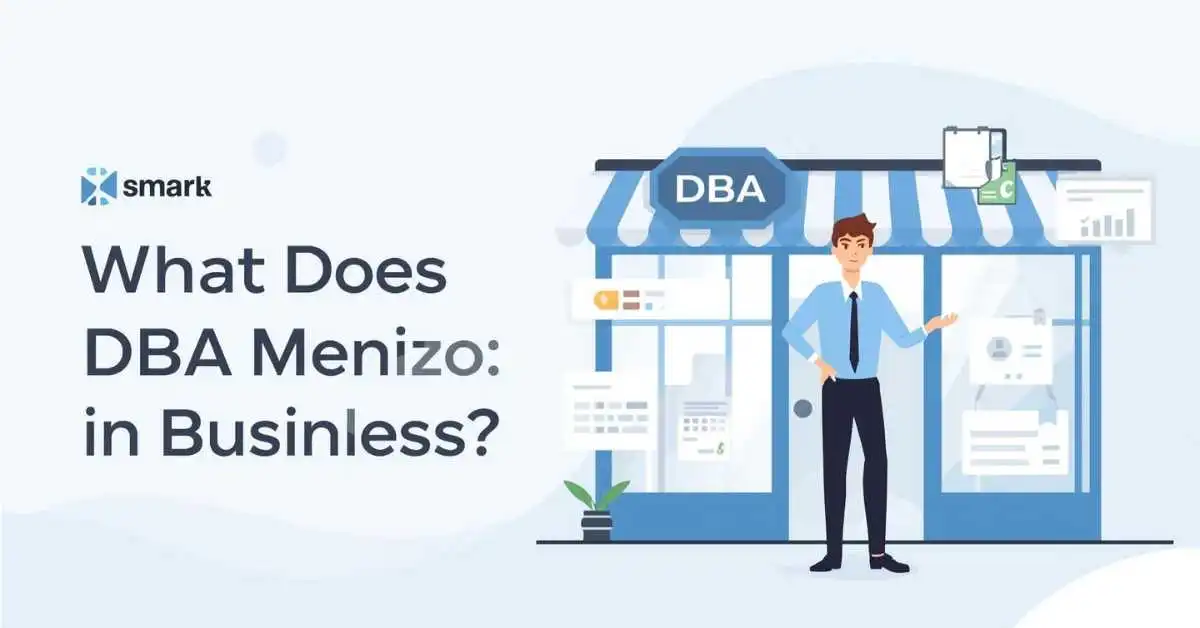
A DBA in business means “doing business as.” It is a public-facing business name that is different from a company’s legal name or an owner’s personal legal name.
A DBA is also called an assumed name, trade name, or fictitious name, depending on the state. It does not create a separate legal entity, does not give liability protection by itself, and does not replace trademark protection.
If you have seen “DBA” on a bank form, state filing page, tax document, or business checklist, you are not alone. Many new owners think a DBA is a type of business structure. It is not. A DBA is a naming registration.
It lets a sole proprietorship, partnership, LLC, corporation, or even an S corporation use a different business name in the market while keeping the same underlying legal entity and tax status.
What does DBA stand for in business?
DBA stands for doing business as. The U.S. Small Business Administration explains that a DBA may be legally required in some situations and is often used when a business wants to operate under a different identity from its personal name or formal entity name. The same SBA guidance also notes that a DBA may be called a trade name, assumed name, or fictitious name.
In simple words, a DBA is the name customers see, even if the legal owner is different.
Example:
- Legal owner: Hassan Ali
- Public business name: Bright Lane Bookkeeping
If Hassan files a DBA for Bright Lane Bookkeeping, he can market and operate under that name. But the legal owner is still Hassan Ali unless he forms a separate legal entity such as an LLC or corporation.
Do you need a DBA?
You may need a DBA when the name you use in public is different from your legal name or your registered entity name. The SBA says you might need to register a DBA with the state, county, or city where your business is located, and that the rules depend on your business structure and location.
Sole proprietors
A sole proprietorship usually starts under the owner’s own legal name. If the owner wants to use a brand name instead, a DBA is often the next step. The SBA specifically notes that a DBA lets you conduct business under a different identity from your own personal name.
Partnerships
A general partnership may also need a DBA if it wants to use a brand that is different from the partners’ names or different from the partnership’s registered name.
Since partnership is a business structure recognized by the IRS, the DBA sits on top of that structure rather than replacing it.
LLCs and corporations
An LLC or corporation can file a DBA too. For example, a company may have a formal legal name for filings and contracts, but use a cleaner brand name on its website, invoices, and signage.
New York’s Department of State states that both corporations and LLCs may conduct business under an assumed name by filing a Certificate of Assumed Name.
When you may not need one
If your business already uses its exact legal name in public, you may not need a DBA.
For example, if your LLC is legally named Blue Cedar Media LLC and you use that exact name everywhere, a DBA may not be necessary. Local rules still control, so the filing office in your jurisdiction is the final check.
Why businesses use a DBA
Most businesses use a DBA for branding, flexibility, and practical business use.
1. Branding
A legal business name is not always the best customer-facing name. A business may be legally formed as Northern Peak Ventures LLC but want to sell services as Peak Web Studio. A DBA helps create a clearer brand without changing the underlying entity.
2. Privacy
For sole proprietors, using only a personal legal name can feel limiting. A DBA lets the owner market under a business name rather than using a personal name in every ad, invoice, or customer interaction.
3. Multiple brands under one entity
The SBA notes that multiple businesses can go by the same DBA in one state, and its example shows one entity using one legal name and another public-facing name.
In practice, one LLC may run different brands without forming a new entity for each one, as long as local rules are followed.
4. Banking and operations
The SBA says that getting a DBA and an EIN can help you open a business bank account. That makes a DBA useful for owners who want the name on customer-facing operations to match the name used in day-to-day business.
DBA vs LLC vs trademark vs business license vs EIN
These terms are related, but they are not the same. The table below reflects the distinctions made by the SBA, IRS, and USPTO.
| Term | What it is | What it does | What it does not do |
|---|---|---|---|
| DBA | A public business name | Lets you operate under a different name | Does not create a legal entity |
| LLC | A legal business structure | Can provide liability separation under state law | Does not replace trademark protection |
| Trademark | Brand protection for goods or services | Can protect a brand identifier | Does not create a business entity |
| Business license | Government permission to perform certain business activities | Helps you operate legally in regulated settings | Does not act as a name registration |
| EIN | Federal tax ID number from the IRS | Identifies your business for tax purposes | Does not create a business entity or protect a name |
DBA vs LLC
A DBA is a name registration. An LLC is a business structure allowed by state statute. The IRS lists sole proprietorship, partnership, corporation, S corporation, and LLC as business structures for tax and legal purposes. A DBA is not one of those structures.
DBA vs trademark
The USPTO explains that a trade name is simply the name of your business, while a trademark identifies the source of goods or services and can provide legal protection for your brand. So a DBA may let you use a name, but a trademark is the tool for stronger brand protection.
DBA vs business license
The SBA separates register your business, get tax IDs, and apply for licenses and permits into different steps. That means a DBA is not the same thing as a business license. A business license is permission to operate certain activities, while a DBA is a business name filing.
DBA vs EIN
The IRS says you generally need a new EIN when ownership or structure changes, not when you simply change the business name. So filing a DBA usually does not mean you need a new EIN.
A DBA does not change your legal entity or taxes
This point matters more than almost anything else. A DBA does not turn a sole proprietorship into an LLC. It does not turn an LLC into a corporation.
It does not change whether your business is taxed as a sole proprietorship, partnership, corporation, or S corporation. Your tax treatment depends on your underlying business structure, not on the public-facing name you use.
The IRS also says you do not need a new EIN just because you change your business name. In general, a new EIN is tied to a change in ownership or structure.
How to register a DBA
The filing process varies, but the pattern is usually simple.
Step 1: Choose the name carefully
Check that the name fits your brand, does not mislead customers, and does not create trademark problems. The SBA recommends checking the official trademark database because a state name filing does not erase trademark risk.
Step 2: Find the correct filing office
The SBA says you may need to register your DBA with the state, county, or city depending on your location and business structure. In many states, this means the Secretary of State, Department of State, or a county clerk.
Step 3: File the proper form
States use different names for the form. New York uses a Certificate of Assumed Name for LLCs and corporations. Texas uses an Assumed Name Certificate on Form 503.
Step 4: Keep your proof of filing
New York states that after filing, the Department of State issues a filing receipt and that the receipt is your proof of filing. Keep that document safe.
Cost, renewal, and state differences
There is no single national DBA system. The SBA says requirements vary by business structure, state, county, and municipality. That includes where you file, what form you use, whether publication is required, how long the filing lasts, and how much it costs.
You can see the variation clearly in official state sources. New York lists a $25 filing fee for a Certificate of Assumed Name for certain entities, with added county fees in some cases. Texas Form 503 allows an assumed name to be used for up to 10 years from the filing date.
That is why one of the best practical rules is this: never assume the DBA rules in one state apply in another. Check your local filing office before you print signs, build a website, or open accounts under the new name.
Real examples of how a DBA works
Example 1: Sole proprietor
Legal name: Aisha Khan
DBA: Aisha Event Design
Aisha wants clients to remember a clear brand name instead of just her personal name. A DBA helps her present the business professionally without creating a new entity.
Example 2: LLC
Legal name: Horizon Creative Solutions LLC
DBA: Horizon Studio
The LLC stays the same legal entity. Taxes and liability rules still follow the LLC. The DBA only changes the public-facing name.
Example 3: Corporation
Legal name: Cedar Point Retail, Inc.
DBA: Cedar Home
A corporation may use an assumed name for a store concept or product line while remaining the same corporation underneath.
New York’s Department of State expressly allows corporations to transact business under an assumed name by filing the proper certificate.
Common mistakes to avoid
Thinking a DBA gives liability protection
It does not. Liability protection comes from the legal structure, such as an LLC or corporation, not from the DBA itself.
Thinking a DBA gives nationwide ownership of a name
It does not. The SBA says a DBA does not provide legal protection by itself, and the USPTO explains that trademark registration is the tool that can secure nationwide ownership rights for a brand.
Thinking a DBA is the same as a business license
It is not. Licensing and name registration are separate steps.
Thinking you need a new EIN for a DBA
Usually, you do not. The IRS says a name change alone does not generally require a new EIN.
Ignoring trademark and domain checks
The SBA treats entity names, trademarks, DBAs, and domain names as legally independent registrations. Using the same wording across them can make branding cleaner, but they do not replace one another.
FAQs
1. What does DBA stand for in business?
DBA stands for doing business as. It is a business name used in public that differs from the legal name of the owner or entity.
2. Is a DBA a legal business entity?
No. A DBA is not a business structure. It is only a name registration used by an existing business or owner.
3. Can an LLC have a DBA?
Yes. Official New York filing guidance shows that LLCs can conduct business under an assumed name by filing a Certificate of Assumed Name.
4. Does a DBA protect my business name?
Not by itself. The SBA says a DBA does not provide legal protection by itself, and the USPTO explains that trademark registration is the route for stronger brand protection.
5. Does a DBA change taxes?
No. Taxes follow the underlying entity, such as a sole proprietorship, partnership, corporation, S corporation, or LLC.
6. Do I need a new EIN for a DBA?
Usually no. The IRS says you generally do not need a new EIN if you only change the business name.
7. Is a DBA the same as a business license?
No. A DBA is a name filing. A business license is permission to perform certain business activities. The SBA treats them as separate business steps.
8. Where do you file a DBA?
It depends on the jurisdiction. The SBA says DBA filings may happen at the state, county, or city level depending on your location and business structure.
Practical takeaway
If you want the simplest answer to what does DBA mean in business, here it is: a DBA is the name your business uses in public when that name is different from your legal name. It helps with branding and business operations, but it does not create a company, does not change your taxes, and does not protect the name the way a trademark can.
Before filing, check your local rules, search for trademark conflicts, and make sure the name fits your long-term brand.
Read More About: What Do Shoes on Power Lines Mean? 9 Real Explanations

Hello! I’m Clara Lexis, creator of Meanpedia.com. I specialize in breaking down words, phrases, and idioms so that anyone can understand and enjoy the beauty of English. My goal? Making language approachable, fun, and meaningful, one word at a time.