Featured Snippet Answer
A coquette is a woman who flirts in a playful, lighthearted way, usually to win admiration or attention rather than to start a serious romance. Pronounced koh-KET, the French-derived word also names the viral “coquette aesthetic” — a 2020s fashion trend built on bows, lace, pastels, and hyper-feminine style.
Key Takeaways
- A coquette is a woman who flirts playfully to win admiration or attention, usually without serious romantic intent.
- It is pronounced koh-KET — stress on the second syllable, with a silent final “e.”
- The word comes from French, from coquet — a diminutive linked to coq (“rooster”): a little bird strutting and showing off its charms.
- Today “coquette” also names a viral fashion aesthetic — bows, lace, pastels, and romantic hyper-femininity — that has nothing to do with flirting.
Coquette Meaning
The dictionary definition of coquette is simple: a woman who flirts lightheartedly with others to win their admiration and affection. The key word is lightheartedly. A coquette teases and charms, but she is not pursuing a serious romance. She enjoys the game of attraction — the glances, the smiles, the playful banter — more than any outcome.
That playfulness is what separates a coquette from heavier words like seductress or vamp. Those words suggest a deliberate, sometimes dangerous pursuit. A coquette is lighter and airier: she flirts the way a dancer moves — for the pleasure of the performance, not necessarily to win a partner. If the attention fades, she moves on, usually unbothered and unembarrassed.
The word is almost always used about women. When someone says, “She’s a bit of a coquette,” the tone is usually knowing and slightly amused — gentle teasing rather than a serious accusation. But context matters: said with a sharp edge, it can imply vanity or insincerity, someone who toys with people’s feelings for sport.
How to Pronounce Coquette
Coquette is pronounced koh-KET — two syllables, with the stress firmly on the second one. Here is the breakdown:
- Co- — sounds like “koh,” like the start of “coat” without the final “t” sound.
- -quette — sounds like “ket,” rhyming with “pet.” The final “e” is silent, as in French.
The single most common mistake is sounding out the final “e” — saying “koh-KET-ee.” Keep it crisp: koh-KET, two beats, done.
The related forms follow the same rhythm: coquettish (koh-KET-ish), coquettishly (koh-KET-ish-lee), and coquetry (KOH-kuh-tree — note that the stress shifts to the first syllable here).
Origin of “Coquette”
“Coquette” is a French borrowing with a delightfully visual story. It is the feminine form of the French coquet, which is a diminutive of coq — the French word for “rooster.” At its root, then, a coquette was imagined as a little strutting rooster: proud, showy, and fond of displaying its charms to anyone watching.
The word entered English in the mid-1600s, borrowed from French at a time when French was the language of fashion, diplomacy, and courtly life across Europe. Interestingly, in its earliest French use the word could describe flirtatious people of either sex. The strictly feminine association developed around 1700, and the masculine use faded from English entirely — today, a flirtatious man is simply called a “flirt.”
For much of its history, the word carried a judgmental edge. In 17th- and 18th-century literature, the coquette was a stock character: the vain young woman toying with her suitors’ hearts, often punished by the plot for her games.
The Coquette Aesthetic: What It Is
If you learned the word “coquette” from TikTok rather than from a dictionary, you are not alone. In the 2020s, the coquette aesthetic became one of the defining style trends of Gen Z — and it means something quite different from the dictionary definition.
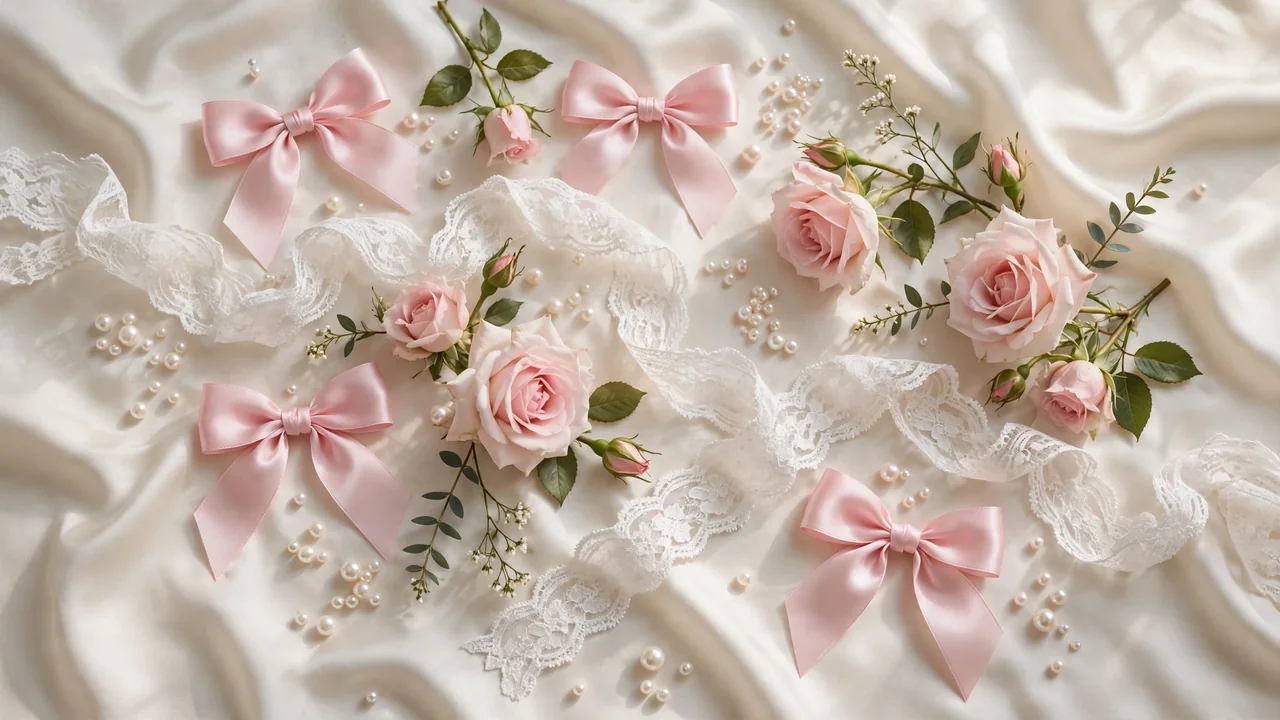
The coquette aesthetic is a fashion and lifestyle style built on hyper-femininity: bows, lace, ruffles, pastel colors, ballet flats, pearl necklaces, floral prints, and soft romantic details. It draws inspiration from the Victorian era, the 1950s and ’60s, Rococo ornament, and Japanese Lolita fashion, remixed with a modern, self-aware twist.
The trend has roots in Tumblr’s early-2010s “coquette” scene and exploded on TikTok around 2021, where the #coquetteaesthetic hashtag has collected billions of views. The singer Lana Del Rey, whose cinematic, romantic imagery shaped the aesthetic’s wistful mood, became its unofficial muse, alongside style figures like Lily-Rose Depp. Designers such as Sandy Liang and Simone Rocha carried the look onto fashion runways.
Crucially, the aesthetic is about style, not flirting. Its supporters describe it as reclaiming girlish, romantic visuals as a source of power and pleasure — femininity worn deliberately and joyfully, without apology or irony. You can dress coquette without being coquettish, and you can be coquettish without ever wearing a bow. The two meanings share a word, not a definition.
Coquette vs. Similar Aesthetics
Coquette is often confused with two adjacent aesthetics:
- Coquette: romantic hyper-femininity — bows, lace, pastels, Lana Del Rey wistfulness.
- Cottagecore: rural prairie nostalgia — gingham, baking, wildflowers, farmhouse simplicity.
- Balletcore: dance-studio wear — wrap tops, leg warmers, leotards, off-duty-dancer polish.
The wardrobes overlap, but the mood references differ: coquette dreams of romance, cottagecore of the countryside, balletcore of the studio.
Coquette the Behavior vs. Coquette the Aesthetic
| The behavior (dictionary) | The aesthetic (fashion trend) | |
|---|---|---|
| Meaning | Flirting playfully to win admiration | Hyper-feminine style: bows, lace, pastels |
| Origin | 17th-century French literature | 2010s Tumblr, 2020s TikTok |
| Key figures | Literary heroines, socialites | Lana Del Rey, Sandy Liang, TikTok creators |
| Tone | Playful, sometimes teasing | Romantic, nostalgic, self-aware |
How to Use “Coquette” in a Sentence
The word works best when the flirtation is obvious but unserious. A few natural examples:
- “Marina is a natural coquette — she charms the whole room and means not a word of it.”
- “Stop being such a coquette and tell him whether you actually like him.”
- “With her vintage dress and coquettish laugh, she looked like she had stepped out of a 1950s film.”
- “He accused her of coquetry, but she was only being friendly.”
Note: the word nearly always describes a woman, and it usually carries a wink — affectionate, amused, or mildly critical, but rarely neutral.
Coquette in Literature and Pop Culture
Long before TikTok, the coquette lived in books. She appears as a recognizable type in classic novels — the charming young woman whose flirtations drive the plot — and the word still turns up in literary criticism to describe such characters. George Eliot even used the image in Middlemarch, praising a touch of the coquette as a kind of feminine artistry.
In modern pop culture, the word’s center of gravity has shifted from behavior to style: when a magazine calls a collection “coquette,” it means lace and bows — not flirting. In older texts, though, assume the original meaning: a woman playing the game of love for its own sake.
Coquette, Coquettish, Coquetry: The Word Family
| Word | Part of speech | Meaning |
|---|---|---|
| Coquette | Noun | A woman who flirts playfully to win admiration |
| Coquettish | Adjective | Behaving like a coquette; playfully flirtatious |
| Coquetry | Noun | The art or practice of flirting lightheartedly |
| Coquettishly | Adverb | In a flirtatious, teasing manner |
| Coquet | Noun (rare) | The masculine French form; almost never used in English |
| Coquette | Verb | To behave as a coquette; to flirt lightheartedly (past: coquetted; -ing: coquetting) — “She coquetted with the guests all evening.” |
Did you know? “Coquette” is also a hummingbird. Several tropical species in the genus Lophornis are called coquettes, named for their ornate, flirtatious-looking neck plumes — a neat parallel to the word’s vanity root.
Is “Coquette” a Compliment or an Insult?
It depends on tone and intent. Said admiringly, “coquette” suggests charm, confidence, and social grace — someone who lights up a room and knows it. Said critically, it implies vanity or manipulation: someone who plays with feelings for entertainment. Among friends, it is almost always affectionate teasing.
One rule of thumb: because the word passes judgment on a woman’s behavior, use it with care. Describing yourself or a fictional character as a coquette is safe. Labeling a real person you barely know can land badly, especially in professional settings. When in doubt, stick to the aesthetic meaning — “coquette style” — which carries no judgment at all.
FAQs
How do you pronounce coquette?
Koh-KET — two syllables, stress on the second, silent final “e.”
What is the coquette aesthetic?
A 2020s fashion trend celebrating hyper-femininity: bows, lace, ruffles, pastels, pearls, and romantic vintage-inspired style. It is about style, not flirting.
Is coquette a bad word?
No — it is not vulgar or offensive. But it can be mildly critical, suggesting someone toys with others’ feelings. Tone decides whether it lands as a compliment or a jab.
What is the male version of coquette?
The direct masculine form is “coquet,” but it is extremely rare — for a man who behaves the same way, simply say “flirt.”
What is the difference between a coquette and a flirt?
A flirt is anyone who flirts. A coquette is specifically a woman whose flirting is playful, artful, and noncommittal — she enjoys the game of attraction more than its outcome.
Is “coquette” old-fashioned?
As a noun for a person, yes — Collins marks it old-fashioned, and today it survives mainly in literature, criticism, and fashion writing. But the word is anything but dead: the coquette aesthetic has made it one of the defining style terms of the 2020s. The behavior sense is vintage; the fashion sense is viral.
Conclusion
So what does “coquette” mean? A woman who flirts playfully to win admiration without serious intent — from French roots that liken her to a strutting little rooster. Pronounced koh-KET, the word has traveled from 17th-century literature to ironic compliments to a full-blown 2020s fashion aesthetic, always circling the same idea: charm, performed with intention. See the Merriam-Webster definition of coquette for more.

Hello! I’m Clara Lexis, creator of Meanpedia.com. I specialize in breaking down words, phrases, and idioms so that anyone can understand and enjoy the beauty of English. My goal? Making language approachable, fun, and meaningful, one word at a time.