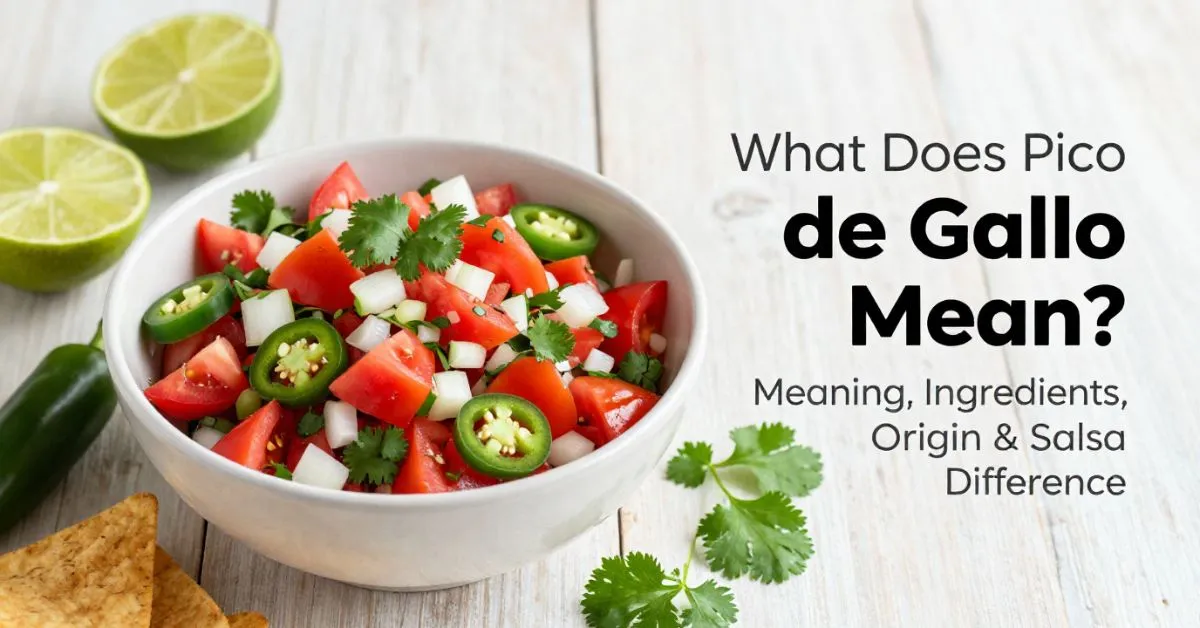
Pico de gallo literally means “rooster’s beak” in Spanish. In food, it refers to a fresh Mexican salsa made with chopped tomatoes, onion, chile peppers, cilantro, lime juice, and salt. It is also known as salsa fresca, salsa cruda, and sometimes salsa mexicana.
If you searched what does pico de gallo mean, you probably want more than a word-for-word translation. You want to know what it means on a menu, what it is made of, why it has that name, how to pronounce it, and whether it is the same as salsa.
That is exactly where many pages fall short. Pico de gallo is both a Spanish phrase and a popular part of Mexican cuisine, so the best answer needs to explain the language, the food, and the cultural use together.
What does pico de gallo mean in English?
The literal English translation of pico de gallo is “rooster’s beak.” In Spanish, pico means beak, and gallo means rooster. But when people use the term in cooking, they usually are not talking about the literal phrase.
They mean a fresh, chopped salsa commonly served with tacos, tortilla chips, burritos, fajitas, nachos, quesadillas, grilled meats, and other Mexican dishes.
Literal meaning vs food meaning
This is the easiest way to understand the term:
| Term | Meaning |
|---|---|
| Literal translation | Rooster’s beak |
| Food meaning | Fresh chopped Mexican salsa |
| Main ingredients | Tomato, onion, chile, cilantro, lime juice, salt |
| Common texture | Chunky, raw, and less liquid than many salsas |
| Other names | Salsa fresca, salsa cruda, salsa mexicana, salsa bandera |
This “double meaning” is why the keyword has mixed search intent. Some users want translation. Others want a food definition. A strong article needs to satisfy both.
How do you pronounce pico de gallo?
A simple English-friendly pronunciation is PEE-koh deh GAH-yoh. Cambridge and SpanishDictionary both provide pronunciation support for the term, which makes this a useful secondary intent to cover in the article.
What is pico de gallo?
Pico de gallo is a raw, fresh salsa used in Mexican cuisine. Merriam-Webster defines it as a sauce made of diced tomato, onion, and chili peppers with lime juice, cilantro, and salt.
Many recipes use serrano pepper for a more traditional bite, though jalapeño is also common, and some versions use habanero for extra heat.
Unlike smooth restaurant salsa, pico de gallo is made from chopped ingredients that stay clearly visible. You can usually see the red tomato, white onion, and green chile or cilantro in every bite.
That fresh look is part of why it is also called salsa bandera, because the colors resemble the Mexican flag. In many contexts, it is also called salsa fresca, salsa cruda, or salsa mexicana.
What is pico de gallo made of?
The classic version usually includes:
- chopped tomatoes
- white onion or red onion
- serrano pepper or jalapeño
- fresh cilantro
- lime juice
- salt
Some cooks add garlic, green onion, cumin, or a little extra chile, but the core idea stays the same: fresh, uncooked ingredients with bright flavor and a chunky texture.
What does pico de gallo taste like?
Pico de gallo tastes fresh, bright, juicy, acidic, savory, and mildly spicy to hot, depending on the chile used. Tomatoes add sweetness and moisture.
Onion gives bite. Lime juice adds sharpness. Cilantro brings a clean herbal note. Serrano pepper tends to taste brighter and hotter than jalapeño, while habanero makes it much hotter.
Why is it called pico de gallo?
The exact origin of the name is not fully settled, and that is important to say clearly. The translation is certain, but the reason the salsa got this name is still debated. Several common explanations appear in food references and culinary writing.
Theory 1: The chile looked like a rooster’s beak
One popular explanation is that a pointed chile, especially a serrano pepper, resembles a rooster’s beak. That shape may have inspired the name in parts of Mexico.
Theory 2: People ate it by pinching it
Another common theory says people once picked it up by pinching it between finger and thumb, making a shape similar to a bird’s beak. This is one of the most repeated explanations in food writing.
Theory 3: The chopped texture may have influenced the name
Some writers suggest the finely chopped, pecked-looking texture may have played a role. There is no single proven origin story, so the safest and most accurate approach is to present the main theories without pretending one is confirmed.
Pico de gallo vs salsa: what is the difference?
One of the most searched questions related to this topic is pico de gallo vs salsa. The short answer is this: pico de gallo is a type of salsa, but not all salsa is pico de gallo.
| Feature | Pico de gallo | Typical salsa |
|---|---|---|
| Texture | Chunky and chopped | Smooth, crushed, or blended |
| Ingredients | Fresh and raw | Raw or cooked |
| Liquid level | Low | Usually higher |
| Appearance | Visible pieces | Often more uniform |
| Common uses | Dip, topping, filling | Dip, sauce, topping |
Pico de gallo usually contains less liquid than many other salsas, so it works especially well as a topping for tacos, fajitas, burritos, and quesadillas.
It can also be served with tortilla chips like a dip. Standard salsa may be raw or cooked, and it can be smooth, roasted, blended, or spoonable.
Is pico de gallo the same as salsa fresca?
Often, yes. In many recipes and menus, pico de gallo and salsa fresca are used almost interchangeably.
You may also see salsa cruda or salsa mexicana used for a very similar mixture. These names overlap, but all point back to the same core idea: a fresh, uncooked salsa built around chopped produce.
Is pico de gallo always tomato-based?
Not always. This is one of the most useful details many weak articles miss. In English-language food content, pico de gallo usually means the tomato-based salsa.
But in some parts of Mexico, the term can also refer to other chopped mixtures, including salads and fruit combinations. Regional versions may include jícama, cucumber, orange, papaya, avocado, tomatillo, mild chiles, lime juice, chile powder, and even chamoy.
That matters for topical depth because the phrase has broader regional use than many people realize. So if someone asks, what is pico de gallo made of, the best answer is the classic tomato version first, then a note that Mexican regional usage can be wider.
How is pico de gallo used?
Pico de gallo is one of the most versatile condiments in Mexican and Mexican-American cooking. It is used as:
- a dip with tortilla chips
- a topping for tacos and nachos
- a fresh finish for fajitas and burrito bowls
- a filling or topping in quesadillas
- a spooned garnish over grilled chicken, steak, seafood, or eggs
Because it is fresh and not very watery, it adds texture as well as flavor. That is one reason it shows up so often in practical recipe pages.
A simple 5-minute pico de gallo recipe
If you want to satisfy the practical side of search intent, here is the basic version most people expect.
Ingredients
- 4 ripe Roma tomatoes, diced
- 1 small white onion, finely chopped
- 1 serrano pepper or jalapeño, finely chopped
- 2 tablespoons chopped cilantro
- juice of 1 lime
- salt to taste
Method
Mix everything in a bowl. Let it sit for 10 to 15 minutes so the flavors blend. Serve fresh with tortilla chips, tacos, nachos, fajitas, burritos, or quesadillas.
Pro tips
Use firm ripe tomatoes so the salsa stays chunky, not watery. Hand-chop the ingredients instead of blending them. Adjust the heat by choosing jalapeño for a milder version or serrano for more bite.
Fresh pico de gallo is best the day it is made, though many recipe sources note it can keep briefly in the fridge.
Common mistakes people make
Thinking pico de gallo is just any salsa
It is a salsa, but it refers to a specific fresh, chopped style. Calling every salsa “pico de gallo” is too broad.
Treating the literal translation as the whole answer
“Rooster’s beak” is only the literal meaning. Searchers also want the food meaning, ingredients, use, and context.
Ignoring the regional variation
The tomato version is the most common meaning online, but regional Mexican uses can include fruit salad or chopped produce mixtures with lime, chile powder, and chamoy.
Confusing pronunciation
People often read it in English without knowing how to say it. Adding the pronunciation improves user satisfaction and captures a real secondary query.
FAQ Section
What does pico de gallo mean literally?
It literally means rooster’s beak in Spanish. In food use, though, it refers to a fresh salsa rather than the literal animal phrase.
What does pico de gallo mean in Spanish?
In Spanish, pico means beak and gallo means rooster. As a culinary term, it refers to a fresh chopped salsa.
What is pico de gallo made of?
Classic pico de gallo is made with diced tomatoes, onion, chile peppers, cilantro, lime juice, and salt. Serrano and jalapeño are the most common pepper choices.
Why is it called pico de gallo?
The exact reason is uncertain. Common theories include the shape of the pepper, the way people pinched it to eat, or the look of the chopped mixture.
Is pico de gallo the same as salsa?
Not exactly. It is a type of salsa, but it is usually fresher, chunkier, and less liquid than many other salsas.
Is pico de gallo spicy?
It can be mild or hot depending on the pepper. Jalapeño is usually milder than serrano, and habanero is much hotter.
How do you pronounce pico de gallo?
A simple pronunciation is PEE-koh deh GAH-yoh.
Is pico de gallo healthy?
It is usually considered a light, fresh condiment because it is built from chopped vegetables, herbs, and lime juice rather than heavy sauces. Recipe sources commonly describe it as fresh and vegetable-based.
Practical takeaway
So, what does pico de gallo mean?
It literally means “rooster’s beak,” but in food it means a fresh Mexican salsa made with chopped tomato, onion, chile, cilantro, lime juice, and salt. It is also called salsa fresca, salsa cruda, salsa mexicana, and sometimes salsa bandera because its colors match the Mexican flag.
And it is chunkier and less liquid than many other salsas, and in some Mexican regions the term can also describe chopped salads or fruit mixtures with ingredients like jícama, cucumber, papaya, orange, chile powder, and chamoy.
Read Also This Post: What Does Camila Mean? Origin, Pronunciation, and Symbolism

Hi, I’m Evan Lexor, the voice behind Meanpedia.com. I break down English words, slang, and phrases into clear, simple meanings that actually make sense. From modern internet terms to everyday expressions, my goal is straightforward: help you understand English better, faster, and with confidence, one word at a time.