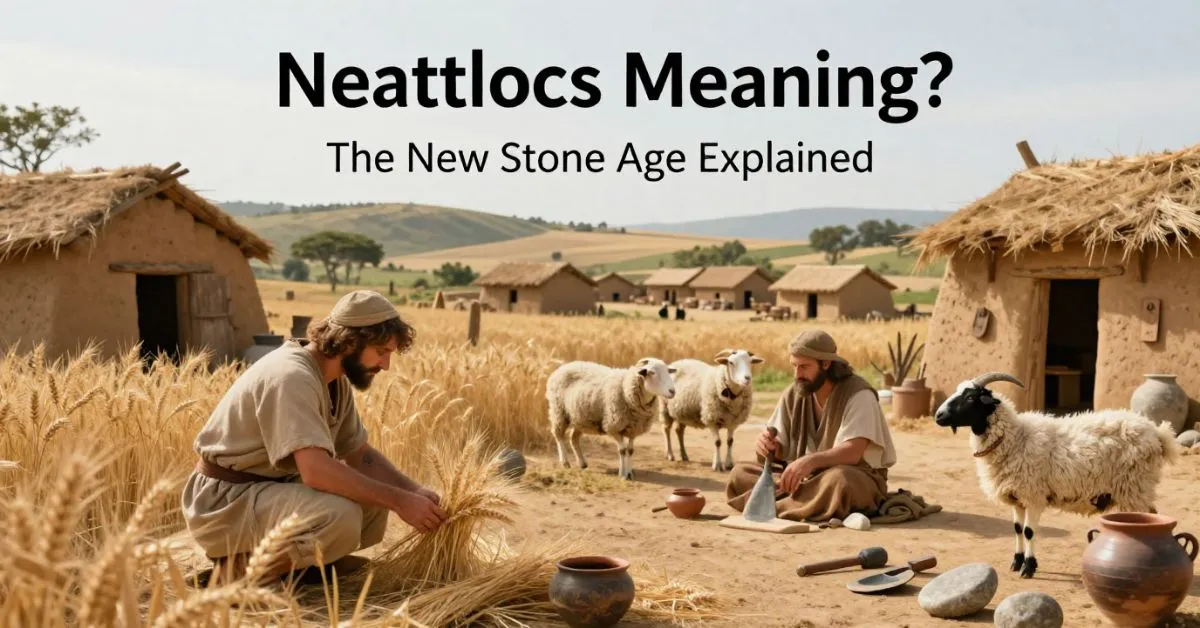
Neolithic means “New Stone Age.” In history, it refers to the later part of the Stone Age when humans began farming, domesticating animals, making polished stone tools, using pottery, and living in settled villages. The Neolithic is important because it marks a major shift from hunting and gathering to more permanent community life.
If you are asking what does neolithic mean, the simplest answer is that it means the New Stone Age. But the word does more than name an old period of history. It describes a turning point in human life.
This stage of prehistory helped shape food systems, homes, trade, social roles, and eventually the rise of more complex societies.
In this guide, you will learn the Neolithic meaning, its key features, real examples, common mistakes, and why the Neolithic period still matters in history and archaeology.
What Does Neolithic Mean in History?
Simple definition of Neolithic
The word Neolithic means New Stone Age. Historians and archaeologists use it to describe the later phase of the Stone Age, when many human groups began to farm, keep domestic animals, and live in permanent settlements.
So, if someone asks, what does neolithic mean in history, a strong simple answer is:
Neolithic means the New Stone Age, a period of prehistory marked by farming, domestication, polished stone tools, pottery, and settled village life.
Literal meaning of the word
The term comes from Greek roots:
- neo means new
- lithic means stone
That is why Neolithic literally means new stone.
Why the term matters
Neolithic is not just a label for something ancient. It points to a major change in how people lived.
Instead of depending only on hunting, fishing, and gathering wild foods, many groups began producing food through agriculture and animal husbandry. That shift changed daily life, work, diet, settlement, and social organization.
When Was the Neolithic Period?
There is no single date for the whole world
A common mistake is thinking the Neolithic began everywhere at the same time. It did not. Different regions entered the Neolithic at different dates.
In general:
- parts of the Fertile Crescent, Levant, and Anatolia saw early Neolithic developments first
- parts of Europe entered the Neolithic later
- South Asia, including sites such as Mehrgarh, also developed important early farming communities
- other parts of the world shifted much later
So the Neolithic is best understood as a stage in cultural development, not one exact year worldwide.
What came before and after?
The Neolithic came after:
- the Paleolithic or Old Stone Age
- in many regions, the Mesolithic or Middle Stone Age
It was followed in many areas by periods linked to metal use, such as the Bronze Age.
Main Features of the Neolithic Age
Farming and agriculture
The most important feature of the Neolithic was the growth of agriculture. People began growing crops instead of relying only on wild food sources.
Common crops included:
- wheat
- barley
- lentils
- peas in some regions
Farming gave communities a more stable food supply and made long-term settlement easier.
Animal domestication
The Neolithic period is also linked to the domestication of animals such as:
- sheep
- goats
- cattle
- pigs
Domesticated animals gave people meat, milk, hides, manure, and in later periods, labor.
Permanent settlements and sedentism
Another major feature was sedentism, or settled life. Many Neolithic people lived in villages instead of moving constantly.
This led to:
- permanent houses
- food storage
- larger communities
- shared labor
- stronger social ties
Polished stone tools
Neolithic people still used stone tools, but their tools often became more refined. Polished stone axes are one of the best-known examples.
Important tools included:
- polished stone axes
- sickles for harvesting
- grinding stones for grain
- blades for cutting and shaping materials
Pottery and weaving
Many Neolithic communities made pottery for storing, cooking, and carrying food. Pottery became useful once people had crops, grain, and surplus food to manage.
Some groups also developed weaving, which helped with clothing, baskets, mats, and household goods.
The Neolithic Revolution: Why It Was a Big Deal
What the Neolithic Revolution means
The phrase Neolithic Revolution describes the major shift from hunting and gathering to farming and settled life. It does not mean everything changed at once, but it does describe one of the biggest turning points in human prehistory.
How life changed
The Neolithic Revolution changed:
- food production
- housing
- family and community life
- population size
- trade
- labor roles
- land use
- social structure
When people could grow food and store surplus food, communities could become larger and more organized.
Neolithic vs Paleolithic vs Mesolithic
Understanding Neolithic is easier when you compare it with other Stone Age periods.
| Period | Meaning | Main lifestyle | Common features |
|---|---|---|---|
| Paleolithic | Old Stone Age | Hunting and gathering | mobile groups, chipped stone tools, cave art |
| Mesolithic | Middle Stone Age | Transitional lifestyles | smaller tools, fishing, some semi-settled life |
| Neolithic | New Stone Age | Farming and village life | agriculture, domestication, pottery, polished tools |
Paleolithic vs Neolithic
In the Paleolithic, people mainly survived by hunting animals and gathering wild plants. Many groups moved often.
In the Neolithic, many groups began farming, raising animals, building homes, and living in settled communities.
Mesolithic vs Neolithic
The Mesolithic often worked as a transition between earlier mobile lifestyles and later farming life. In some places, people mixed fishing, gathering, and seasonal settlement before full farming became common.
What Did Neolithic People Do Every Day?
What they ate
Neolithic diets varied by region, but common foods included:
- grains such as wheat and barley
- legumes
- fruits
- meat
- dairy in some communities
Food production was more stable than before in many places, though farming also required more labor and planning.
What they built
Neolithic people built:
- mud-brick houses
- stone homes in some regions
- storage rooms
- ovens and hearths
- village compounds
- walls in some settlements
Permanent settlements were one of the clearest signs of Neolithic life.
What they made
Neolithic communities made:
- pottery
- grinding stones
- stone axes
- sickles
- beads and ornaments
- woven goods
- carved objects
- ritual items
This shows growing craftsmanship and division of labor.
Famous Examples of Neolithic Sites
Jericho
Jericho is one of the earliest well-known settlements linked to the Neolithic world. It is important because it shows early settlement, construction, and organized community life.
Çatalhöyük
Çatalhöyük, in modern-day Turkey, is famous for its dense settlement, connected houses, wall art, and evidence of everyday life in an early farming community.
Göbekli Tepe
Göbekli Tepe is important because it shows complex ritual building in the early Neolithic world. It suggests that ceremonial life and social coordination were already highly developed.
Mehrgarh
Mehrgarh, in South Asia, is an important early site for understanding farming, animal domestication, and village life beyond the Near East.
Stonehenge and Skara Brae
In later Neolithic Britain, sites such as Stonehenge and Skara Brae show that some communities built lasting monuments and highly organized settlements.
Neolithic Beliefs, Rituals, and Society
More than farming
A weak article often treats the Neolithic as only a farming story. But it also involved culture, ritual, burial customs, and community identity.
Neolithic communities sometimes created:
- burial sites
- ritual spaces
- megaliths
- carved symbols
- communal monuments
Social change
As settlements grew, societies could become more structured. Some communities likely had clearer divisions of labor, stronger leadership patterns, and wider trade networks. This does not mean every Neolithic group looked the same, but social life was becoming more organized in many places.
Common Mistakes About the Meaning of Neolithic
Mistake 1: Thinking Neolithic just means very old
Neolithic does not mean simply ancient. It refers to a specific stage of prehistory.
Mistake 2: Assuming all people became farmers at once
The shift to farming happened at different times in different places. Some communities stayed hunter-gatherers for a long time.
Mistake 3: Mixing Neolithic with Paleolithic
These two terms are related but not identical. Paleolithic means Old Stone Age. Neolithic means New Stone Age.
Mistake 4: Believing Neolithic people were simple in every way
Neolithic communities could build villages, store food, manage crops, domesticate animals, make pottery, weave textiles, and create monuments. Their lives were complex and organized.
Examples of How to Use “Neolithic” in a Sentence
Here are clear examples of natural usage:
- The museum has several Neolithic tools and pottery vessels.
- Archaeologists uncovered a Neolithic village near the river plain.
- The Neolithic period is often linked to farming and animal domestication.
- Neolithic communities in different regions developed at different times.
- Her history teacher explained the difference between Paleolithic, Mesolithic, and Neolithic life.
Quick Facts: Neolithic at a Glance
| Topic | Quick answer |
|---|---|
| Meaning | New Stone Age |
| Time | Later phase of the Stone Age |
| Main shift | Farming and settled life |
| Key tools | Polished stone tools, sickles, grinding stones |
| Main activities | Agriculture, domestication, pottery, weaving |
| Common settlements | Villages and permanent homes |
| Important idea | The Neolithic Revolution |
| Famous sites | Jericho, Çatalhöyük, Göbekli Tepe, Mehrgarh, Skara Brae |
Practical Takeaways
If you want to remember the meaning fast, focus on these key ideas:
- Neolithic = New Stone Age
- it came after the Paleolithic
- it is strongly connected to agriculture
- it includes domesticated animals
- it is linked to villages and settled life
- it often includes pottery, weaving, and polished stone tools
- it marks a major turning point in human prehistory
8) FAQ SECTION
1. What does Neolithic mean literally?
Neolithic literally means new stone. The term comes from Greek and is used to describe the New Stone Age.
2. What does Neolithic mean in history?
In history, Neolithic means the later part of the Stone Age when many people began farming, domesticating animals, making pottery, and living in settled communities.
3. What is the difference between Neolithic and Paleolithic?
The Paleolithic is the Old Stone Age, mainly linked to hunting and gathering. The Neolithic is the New Stone Age, linked to farming and permanent settlements.
4. Why is the Neolithic period important?
The Neolithic period is important because it marks a major shift in human life, including agriculture, food surplus, village life, and early social complexity.
5. What are examples of Neolithic sites?
Well-known Neolithic sites include Jericho, Çatalhöyük, Göbekli Tepe, Mehrgarh, Stonehenge, and Skara Brae.
6. What happened during the Neolithic Revolution?
During the Neolithic Revolution, many communities shifted from hunting and gathering to agriculture, animal domestication, and settled life.
7. Did the Neolithic happen at the same time everywhere?
No. Different regions entered the Neolithic at different times, depending on climate, geography, and local development.
8. What came after the Neolithic?
In many places, the Neolithic was followed by periods associated with metal use, such as the Bronze Age.
Conclusion
So, what does neolithic mean? It means the New Stone Age, a stage of prehistory when many human communities began farming, domesticating animals, making polished stone tools, using pottery, and living in settled villages. The Neolithic matters because it helped transform human life from mobile survival patterns to more stable, organized communities.
Read Also This Post: What Does Ariana Mean

Hi, I’m Evan Lexor, the voice behind Meanpedia.com. I break down English words, slang, and phrases into clear, simple meanings that actually make sense. From modern internet terms to everyday expressions, my goal is straightforward: help you understand English better, faster, and with confidence, one word at a time.