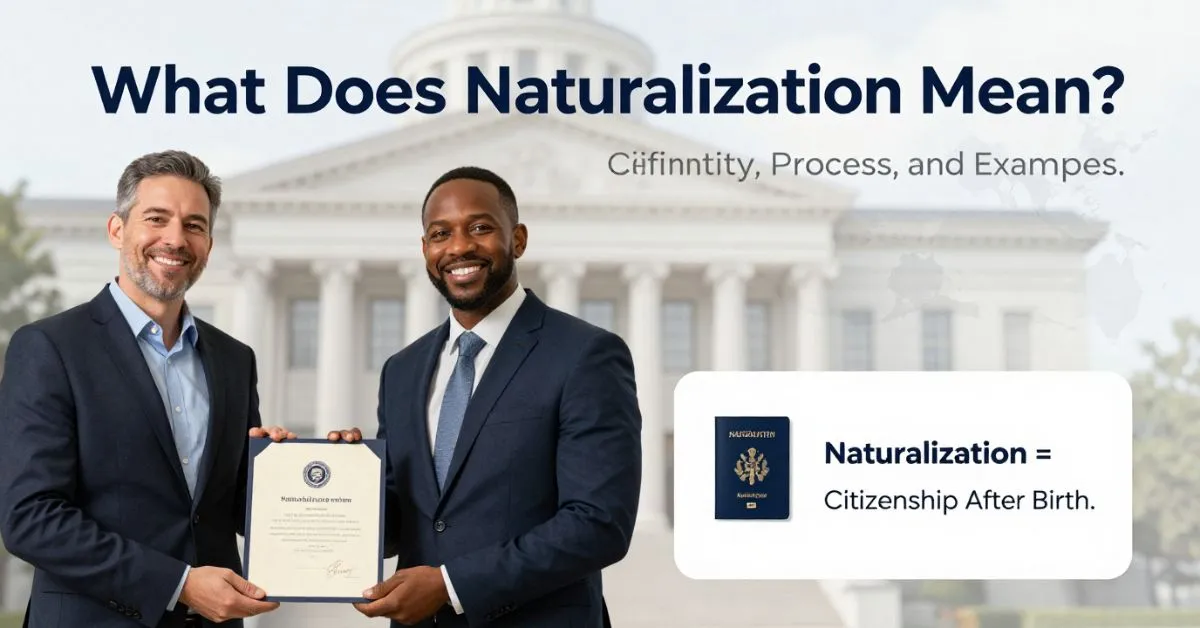
Naturalization means the legal process by which a person becomes a citizen of a country after birth. In most searches, the word refers to citizenship and immigration, not birthright citizenship.
In the United States, USCIS defines naturalization as the process through which U.S. citizenship is granted to a lawful permanent resident who meets the legal requirements.
When people search “what does naturalization mean,” they usually want a simple answer first, then a clearer explanation of how it works in real life.
They often want to know whether naturalization is the same as citizenship, whether a green card holder is already naturalized, and what terms like naturalized citizen, Form N-400, Oath of Allegiance, and Certificate of Naturalization actually mean. This guide explains all of that in plain English.
What does naturalization mean?
At its core, naturalization means becoming a citizen of a country you were not born a citizen of. Cambridge defines it as the process of becoming or making someone a citizen of a country they were not born in. USCIS and USA.gov use the term in the same general way for U.S. citizenship after birth.
In legal terms, naturalization is not just a feeling of belonging or living somewhere for a long time. It is an official change in legal status.
A person applies, proves eligibility, completes the required steps, and is then recognized as a citizen under that country’s law. In the U.S., that path is handled through U.S. Citizenship and Immigration Services, also called USCIS.
What does it mean to be naturalized?
To be naturalized means a person was not a citizen at birth but later became a citizen through the legal naturalization process. That person is called a naturalized citizen.
Merriam-Webster defines a citizen as a native or naturalized person who owes allegiance to a government and is entitled to its protection, which helps explain why “naturalized citizen” is a full citizenship status, not a lesser one.
A naturalized citizen is different from someone who got citizenship automatically at birth. The result is still citizenship, but the path is different. One person is a citizen by birth.
The other is a citizen by naturalization. That distinction matters in immigration forms, legal records, and everyday explanations of status.
Naturalization vs citizenship vs permanent residency
These terms are closely related, but they are not the same.
| Term | Meaning | How it usually happens | Key point |
|---|---|---|---|
| Citizenship by birth | You are a citizen from birth | Birth in a country or through citizen parents, depending on law | No naturalization process is needed |
| Naturalization | You become a citizen after birth | Application, review, approval, and final legal step | Naturalization is a path to citizenship |
| Permanent residency | You can live in a country long term but are not yet a citizen | Immigration approval, such as lawful permanent residence | Permanent residency is not citizenship |
In the U.S., USA.gov explains that naturalization is the process of voluntarily becoming a U.S. citizen, while USCIS explains that it is granted to a lawful permanent resident who meets the legal requirements. That means a green card holder or Permanent Resident Card holder may be eligible for naturalization later, but is not automatically a citizen.
Is naturalization the same as citizenship?
No. Naturalization is the process. Citizenship is the final status. This is one of the most important points for search intent. People often use the words as if they are identical, but they are not. A person can be a citizen by birth or become a citizen by naturalization.
Is permanent residency the same as naturalization?
No. A lawful permanent resident has permission to live in the country long term, but that status is still different from citizenship. In the U.S., naturalization is a later step that may follow permanent residence if the person qualifies and applies.
How naturalization works
The exact process depends on the country, but naturalization usually includes the same broad ideas: living in the country long enough, meeting legal requirements, filing an application, passing any required review or test, and completing a final oath or ceremony.
USCIS policy guidance says naturalization is the conferring of U.S. citizenship after birth, and USA.gov describes it as a voluntary process with formal steps.
A simple U.S. naturalization example
In the United States, a common path starts with lawful permanent resident status. A person then files Form N-400, Application for Naturalization. USCIS says Form N-400 is the form used to apply for naturalization and describes naturalization as the process of becoming a U.S. citizen if you were born outside the United States.
After filing, USCIS may schedule biometrics such as fingerprints, a photo, and a signature. The applicant then prepares for the naturalization interview and the naturalization test.
USCIS explains that during the interview, an officer asks questions about the application and background, and the applicant usually takes an English test and a civics test unless an exemption or waiver applies.
USCIS also explains that the English test includes reading, writing, and speaking, while the civics test covers U.S. history and government.
If the case is approved, the last major step is the naturalization ceremony. USCIS states clearly that a person is not a U.S. citizen until they take the Oath of Allegiance at the ceremony.
After that, the person receives a Certificate of Naturalization, which USCIS describes as a document confirming U.S. citizenship through naturalization.
Why naturalization matters
Naturalization matters because it changes a person’s legal relationship with the country. In the U.S., USA.gov groups naturalization under citizenship and also links it with related topics such as proving citizenship, dual citizenship or nationality, and renouncing citizenship.
That shows naturalization is not just paperwork. It is part of a much bigger legal status called citizenship or nationality.
It also matters because people often confuse the documents involved. A Certificate of Naturalization proves citizenship gained through naturalization, while a Certificate of Citizenship is a different document used in other citizenship situations. USCIS has separate forms and policy guidance for those documents, which is why the distinction is important.
Real-life examples of naturalization
Here are three simple examples that make the meaning easier to understand:
Example 1: Permanent resident to citizen
A woman moves to the United States, becomes a lawful permanent resident, keeps that status for the required period, files Form N-400, completes biometrics, attends the naturalization interview, passes the English and civics requirements, takes the Oath of Allegiance, and becomes a U.S. citizen. That is naturalization.
Example 2: Citizen by birth
A child is born a citizen under the law of the country. That child is a citizen, but not a naturalized citizen. No naturalization process took place. This is citizenship by birth, not citizenship by naturalization.
Example 3: Foreign-born citizen in legal records
A form asks whether a person is a citizen by birth, a naturalized citizen, or not a citizen. If the person became a citizen later through an official legal process, the correct category is naturalized citizen. That is what “what does it mean to be naturalized” usually points to in everyday use.
Common mistakes people make
Mistake 1: Thinking naturalization means the same as immigration
It does not. Immigration means moving to or living in another country under immigration rules. Naturalization is a later citizenship process that may happen after immigration, not the same thing.
Mistake 2: Thinking a green card is citizenship
A green card shows lawful permanent resident status, not citizenship. A green card holder may later apply for naturalization, but the card itself does not make the person a citizen.
Mistake 3: Thinking the oath is optional
In the U.S., USCIS says a person is not a U.S. citizen until taking the Oath of Allegiance at a naturalization ceremony. That is a key final step, not a small formality.
Mistake 4: Thinking every country uses the same rules
The word naturalization has a broad legal meaning across countries, but each country sets its own requirements. Residency periods, language rules, test requirements, and dual nationality rules can differ. The meaning stays similar. The legal details do not.
Other meanings of naturalization
Although citizenship is the main search intent, the word has other meanings too.
In language, Merriam-Webster says naturalize can mean introducing a foreign word into common use.
In biology and ecology, it can mean a non-native plant or animal becoming established as if native in a new place. Those meanings are real, but for this keyword they are secondary to the citizenship meaning.
That is why a strong article should mention these meanings briefly for completeness, but keep the main focus on immigration, citizenship, lawful permanent residence, naturalized citizen status, and the legal naturalization process.
FAQs
What does naturalization mean in simple words?
Naturalization means becoming a citizen of a country after birth through an official legal process.
What is a naturalized citizen?
A naturalized citizen is someone who was not a citizen at birth but later became a citizen through naturalization.
Is naturalization the same as citizenship?
No. Naturalization is the process of becoming a citizen. Citizenship is the final legal status.
Is a green card holder naturalized?
No. A green card holder is usually a lawful permanent resident, not a citizen. Naturalization may come later if the person qualifies and applies.
What is Form N-400?
Form N-400 is the USCIS application used to apply for U.S. naturalization.
What happens at the naturalization interview?
USCIS says the officer reviews the application and background and usually gives the English and civics tests, unless an exemption or waiver applies.
What is the Oath of Allegiance?
It is the final step in the U.S. naturalization process. USCIS says a person is not a U.S. citizen until taking the oath at the naturalization ceremony.
What are naturalization papers?
People often use this phrase to mean the documents connected to the process, such as Form N-400, notices from USCIS, and the Certificate of Naturalization issued after approval.
Key takeaways
Naturalization means becoming a citizen after birth through a legal process. In most cases, that is the meaning people want. It is different from citizenship by birth, different from permanent residency, and closely tied to terms like USCIS, lawful permanent resident, Form N-400, naturalization interview, English test, civics test, Oath of Allegiance, naturalization ceremony, and Certificate of Naturalization in the U.S. context.
If you are building a content cluster around this topic, the best next pages are usually “naturalization vs citizenship,” “what is a naturalized citizen,” “what is a green card,” and “naturalization papers meaning.” That helps readers move from the basic definition to the practical questions they usually ask next.
Read Also This Post: What Does High Protein in Urine Mean?

Hi, I’m Evan Lexor, the voice behind Meanpedia.com. I break down English words, slang, and phrases into clear, simple meanings that actually make sense. From modern internet terms to everyday expressions, my goal is straightforward: help you understand English better, faster, and with confidence, one word at a time.