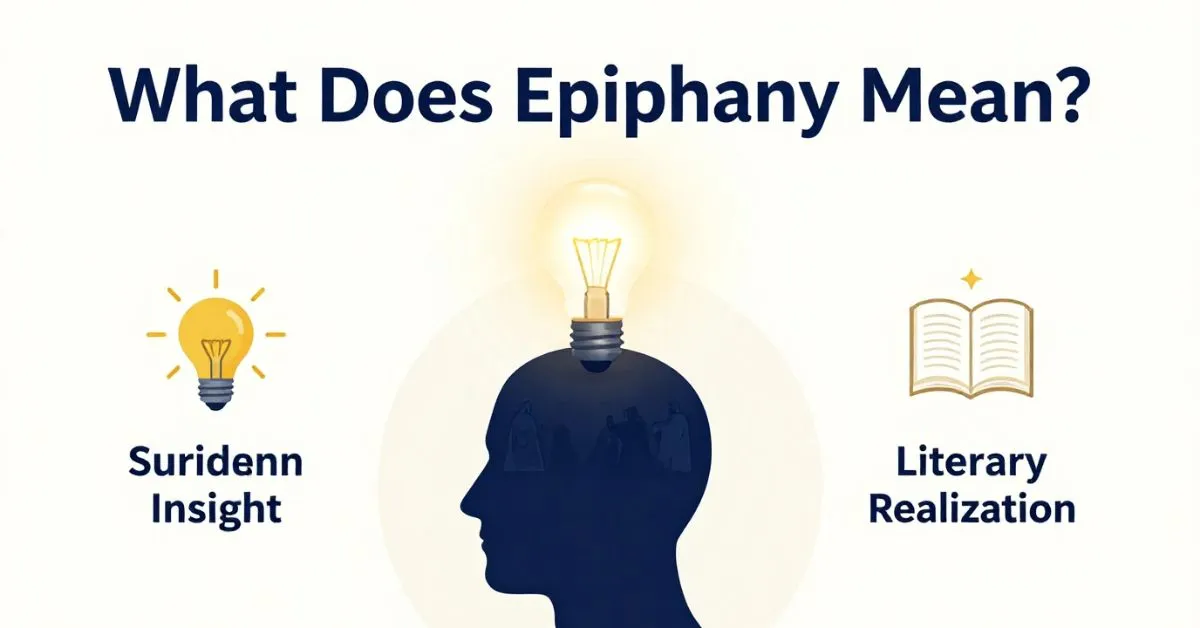
Epiphany means a sudden moment of insight or understanding. In Christianity, Epiphany is the feast that celebrates the manifestation of Jesus Christ, especially through the visit of the Magi and, in many traditions, his baptism. In literature, an epiphany is a moment when a character suddenly sees an important truth.
When people search what does epiphany mean, they usually want a quick, clear answer. But this word has more than one meaning. In everyday English, it often means a breakthrough moment or sudden realization. In religion, Epiphany is a Christian holy day.
And In literature, it describes a powerful moment of recognition, often linked to James Joyce and stories like Dubliners and The Dead. This guide explains all of those meanings in simple language, with examples, comparisons, and usage tips that make the word easy to understand and use correctly.
Epiphany meaning at a glance
Here is the simplest answer:
Epiphany means a sudden understanding of something important.
It can describe:
- a personal breakthrough
- a spiritual experience
- a Christian feast day
- a literary moment of insight
That is why the word appears in everyday speech, church calendars, Bible-related discussions, and literature classes.
How do you pronounce epiphany?
The standard pronunciation is ih-PIF-uh-nee. Cambridge gives it as /ɪˈpɪf.ə.ni/ in both UK and US English.
Quick pronunciation help
Break it into parts:
ih + PIF + uh + nee
If someone asks for the meaning and pronunciation of epiphany, this is usually the form they want.
What does epiphany mean in everyday English?
In common use, an epiphany is a sudden moment when something becomes clear. It is more than a small thought. It feels like a real shift in understanding. Merriam-Webster defines it as a usually sudden perception of the essential nature or meaning of something, and Cambridge describes it as a moment when you suddenly understand something very important.
Simple everyday definition
In normal conversation, epiphany means:
a breakthrough moment that changes how you think
For example, someone may say:
- “I had an epiphany about my job.”
- “She had an epiphany and realized she was solving the wrong problem.”
- “His long walk gave him an epiphany about what he really wanted.”
What makes an epiphany different from a normal idea?
A normal idea is just a thought.
An epiphany is deeper. It often feels sudden, important, and memorable.
A person might have an epiphany about:
- a relationship
- a career choice
- a bad habit
- a personal goal
- a life direction
That is why the word is often linked with terms like realization, awakening, breakthrough, insight, and revelation. Merriam-Webster’s related-word set includes several of these close ideas.
Where does the word epiphany come from?
The word comes from the Greek epiphaneia, meaning appearance or manifestation. That older meaning helps explain why the word later became important in Christian theology and then moved into broader English use. Britannica also traces the Christian term to Greek epiphaneia, meaning manifestation.
Why the origin matters
The original idea of manifestation still lives inside the word today.
- In religion, it refers to the manifestation of Christ.
- In daily life, it points to a truth becoming visible.
- In literature, it means a hidden truth suddenly appearing to a character.
That shared idea gives the word its power across different contexts.
Lowercase epiphany vs capitalized Epiphany
One of the biggest sources of confusion is capitalization. The lowercase and uppercase forms are related, but they are not the same.
| Form | Meaning | Example |
|---|---|---|
| epiphany | a sudden realization or insight | “I had an epiphany during the meeting.” |
| Epiphany | a Christian feast day | “Epiphany is celebrated on January 6.” |
Why this matters
If you are writing about vocabulary, emotions, or personal growth, you usually want epiphany.
If you are writing about Christianity, church history, or the liturgical calendar, you usually want Epiphany.
That one capital letter changes the meaning.
What does Epiphany mean in Christianity?
In Christianity, Epiphany is a feast that celebrates the manifestation of Jesus Christ to the world. Britannica explains that in Western traditions the feast is strongly tied to the Magi, also called the Three Wise Men or Three Kings.
While Eastern traditions often focus on the baptism of Jesus and call the feast Theophany. Britannica also notes a connection with Jesus’ first miracle at Cana in Galilee. The feast is generally observed on January 6.
Key Christian entities linked to Epiphany
Important terms naturally connected with this meaning include:
- Jesus Christ
- Magi
- Three Wise Men
- Three Kings’ Day
- Theophany
- baptism of Jesus
- Jordan River
- Cana in Galilee
- manifestation
- Gentiles
These entities matter because people often search not only what does epiphany mean, but also what does Epiphany mean in Christianity, what does Epiphany mean in the Bible, and what is the Epiphany holiday.
Why Epiphany is important in faith
The religious meaning is about revelation. Christ is shown, or manifested, to the world. In Western tradition, the visit of the Magi represents Christ being revealed to the Gentiles. In Eastern tradition, his baptism reveals his divine identity in a different but related way.
What does epiphany mean in literature?
In literature, an epiphany is a moment when a character suddenly understands something important about life, self, or the world. The term is strongly associated with James Joyce, one of the most influential modern writers.
Britannica notes Joyce’s importance in modern literary methods, and discussion of Joyce’s fiction regularly connects his work with moments of insight, especially in Dubliners. Britannica’s summary of The Dead describes Gabriel’s late-night epiphany about his life and marriage.
James Joyce and literary epiphany
When students ask what does epiphany mean in literature, the answer often leads to:
- James Joyce
- Dubliners
- The Dead
- A Portrait of the Artist as a Young Man
Joyce helped make the literary use famous. In this sense, an epiphany is not just a plot event. It is an inner turning point.
A simple literary example
Imagine a character who spends years chasing status and money. Then, in a quiet moment, he realizes he has built a life that does not make him happy. That sudden truth is an epiphany.
The power comes from the change in understanding.
Epiphany vs realization vs revelation
These words overlap, but they are not exact matches.
| Word | Meaning | Best use |
|---|---|---|
| Epiphany | sudden deep insight | a turning point in thought |
| Realization | becoming aware of something | general awareness |
| Revelation | something revealed, often dramatic | surprising truth or disclosure |
The easiest way to remember the difference
- Realization is broad.
- Revelation can be external or dramatic.
- Epiphany usually feels personal, sudden, and meaningful.
So if someone suddenly understands why they keep repeating the same mistake, that is an epiphany. If a report exposes hidden facts, that is more likely a revelation.
Epiphany examples in real life
Examples make the word easier to understand. Here are some natural cases.
Personal life examples
A student studies hard but keeps getting poor results. Then she realizes her study method is the problem, not her ability. That is an epiphany.
A man keeps saying yes to every request. One day he understands that people-pleasing is draining his time and energy. That is an epiphany.
A parent suddenly sees that children remember attention more than expensive gifts. That can also feel like an epiphany.
Work and learning examples
A manager notices the team is not failing because of laziness but because the instructions are unclear. That is an epiphany.
A writer realizes the article is weak because it answers too slowly and buries the main point. That is an epiphany too.
Epiphany in a sentence
Many readers also want ready-to-use examples.
Everyday sentences
- “I had an epiphany on the drive home and changed my plan.”
- “Her epiphany came after months of stress and confusion.”
- “He described the trip as an epiphany that changed his life.”
Religious sentence
- “Epiphany is celebrated on January 6 in many Christian traditions.”
Literary sentence
- “The final chapter ends with the character’s epiphany.”
Common mistakes people make with this word
A strong meaning guide should also show what to avoid.
Using epiphany for every small thought
Not every new thought is an epiphany. The word works best when the insight feels important.
Forgetting the capital letter
Use Epiphany for the Christian feast day. Use epiphany for the general word.
Confusing it with revelation
A revelation may be something you are told. An epiphany is usually something you suddenly understand.
Ignoring context
If you say “Epiphany” in a church article, readers will think of the holy day. If you say “epiphany” in a self-help article, readers will think of a personal breakthrough.
How to use epiphany correctly in writing
This word works best when the moment involves genuine change in understanding.
Use epiphany when the moment includes
- sudden clarity
- emotional insight
- a shift in perspective
- deeper self-awareness
- a meaningful turning point
Choose a simpler word when needed
Sometimes idea, thought, discovery, or realization is enough. Using epiphany only where it fits makes your writing stronger and more precise.
FAQs
What does having an epiphany mean?
It means having a sudden insight or moment of clarity about something important.
What does Epiphany mean in the Bible?
In Christian use, Epiphany refers to the manifestation of Christ, especially through the visit of the Magi and, in many traditions, the baptism of Jesus.
Is epiphany a positive word?
Usually yes. It often suggests helpful insight, growth, or understanding, though the truth discovered can sometimes be painful.
What does epiphany mean in literature?
In literature, it means a moment when a character suddenly recognizes an important truth. The term is closely linked with James Joyce and stories such as The Dead in Dubliners.
Why is Epiphany capitalized?
It is capitalized when it refers to the Christian feast day. It stays lowercase when it means a general moment of sudden insight.
Is epiphany the same as realization?
Not exactly. A realization is any moment of becoming aware. An epiphany usually feels deeper, more sudden, and more meaningful.
What is another word for epiphany?
Depending on context, close words include insight, breakthrough, awakening, realization, and revelation.
How do you pronounce epiphany?
It is pronounced ih-PIF-uh-nee, written in Cambridge as /ɪˈpɪf.ə.ni/.
Practical takeaway
If someone asks, what does epiphany mean, the best simple answer is this:
Epiphany means a sudden understanding of something important.
In Christianity, Epiphany is the feast of Christ’s manifestation.
In literature, it is a moment of deep recognition, often linked to James Joyce and modern fiction.
That covers the word in everyday English, religion, and literature without confusion.
Click Here To Read About This Post: What Does Epilogue Mean? Definition, Uses, and Example

Hello! I’m Clara Lexis, creator of Meanpedia.com. I specialize in breaking down words, phrases, and idioms so that anyone can understand and enjoy the beauty of English. My goal? Making language approachable, fun, and meaningful, one word at a time.