Did you know that over 4.5 billion people use the internet today? With so much of our life online, the term cyber is everywhere, from cybersecurity to cyberspace and cybercrime. But what does cyber really mean? Many people confuse it with just the internet, yet it is much more. Knowing what cyber means helps you keep your data safe and use the internet safely.
Cyber means anything that has to do with computers, networks, or the online world. You see it in words like cybersecurity, cybercrime, and cyberspace. These words show that something is connected to the digital world. Cyber is everywhere: your emails, online banking, cloud apps, and even your work-from-home tools operate in the cyber world.
This article will show what cyber means, where it came from, how it is used in real life, and why knowing about cyber is important today. You will also learn about cyber threats, cybersecurity, and the future of digital technology, all in an easy-to-read way.
What Does Cyber Mean?
Cyber means anything that uses computers, the internet, or online systems.
The cyber definition includes network systems, data communication, and information technology (IT). When we talk about cyber in computers, it means using digital tools that help people share information, do tasks, and connect online.
For beginners, think of cyber as the digital backbone of our world. Online classrooms, cloud-based apps, and e-commerce platforms all exist because of cyber technology.
Learning what cyber words mean. Where they come from helps us understand words like cyberspace, cybersecurity, and cyber ethics
The Origin of Cyber
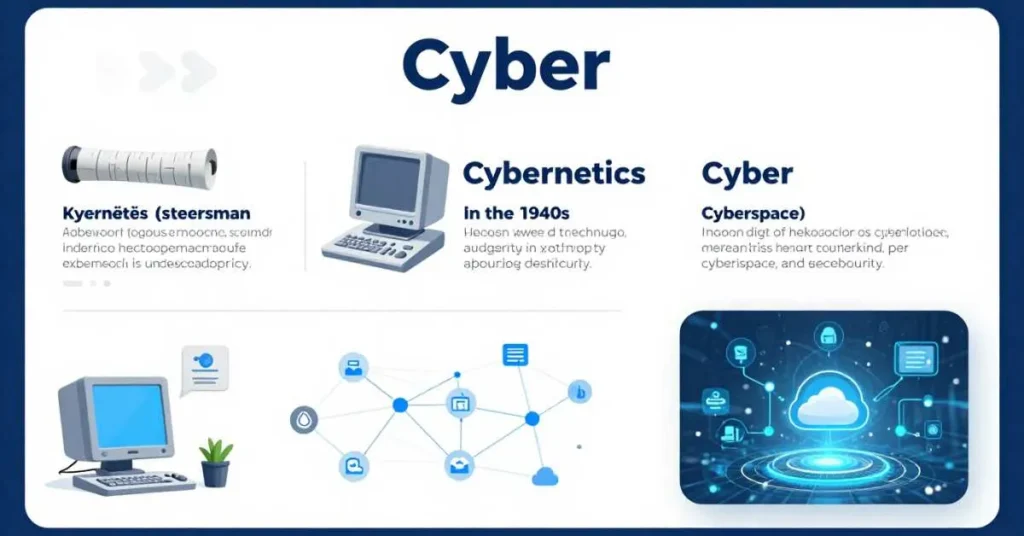
The cyber word origin comes from cybernetics, a field introduced in the 1940s. Originally, cybernetics described communication and control in machines and living beings. The term comes from the Greek kybernētēs, meaning “steersman” or “governor.”
As digital technology developed, the term cyber moved from academic science into everyday use. By the late 20th century, words like cyberspace, cybersecurity, and cybercrime became common.
Today, cyber terminology covers online security, virtual environments, and digital transformation.
How Is Cyber Used Today?
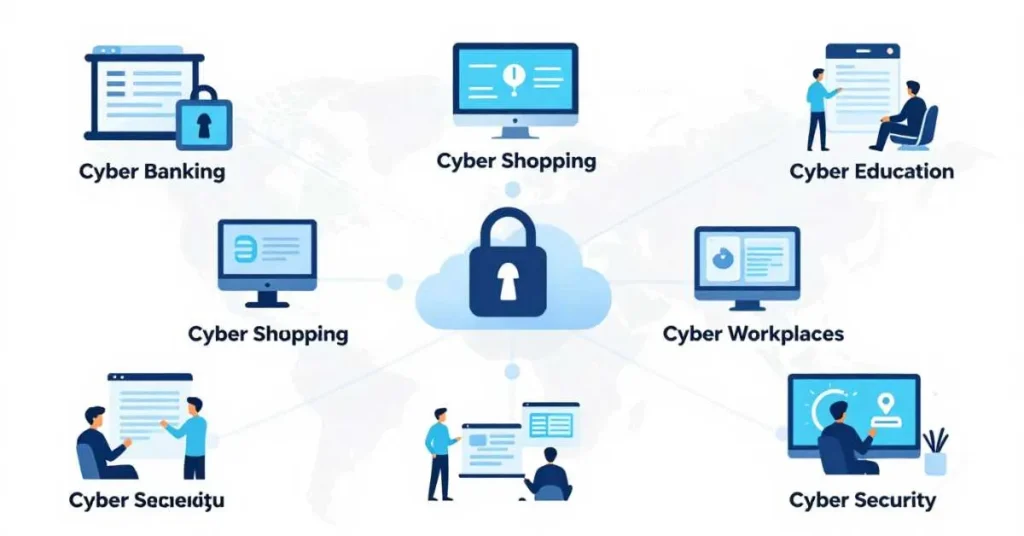
The term cyber has multiple uses:
Cyber in Technology
- Refers to network systems, computer systems, and cloud computing platforms.
- Examples: servers, data centers, software applications.
Cyber in Daily Life
- Cyber banking, cyber shopping, and cyber education.
- Online tools rely on digital technology and information technology (IT) to function efficiently.
Cybersecurity
- Protects from cyber threats, malware, hacking, and phishing.
- Ensures online security and digital safety for individuals and organizations.
Government and Legal Use
- Government cyber laws enforce regulations for safe online behavior.
- Programs like cyber safety awareness programs promote cyber awareness and ethical hacking practices.
Cyber and Cybersecurity
Cybersecurity is one of the most critical aspects of the cyber world. It keeps computer systems, networks, and data safe from cyber attacks and data leaks.
Common threats include:
- Hacking
- Malware
- Phishing
- Cybercrime
Protective measures include firewalls, antivirus software, encryption, and strong passwords. Learning good cyber habits and being careful online helps keep you safe from online dangers.
Common Cyber Terms
Here are some essential cyber terms to know:
- Cybersecurity: Protecting networks and systems from cyber threats.
- Cybercrime: Illegal online activities.
- Cyber attack: Attempts to disrupt digital systems.
- Cyberspace: The virtual environment of online communication.
- Cyber ethics: Rules for responsible online behavior.
- Cyber awareness: Knowledge of risks and safe practices online.
Real-Life Examples of Cyber
Cyber technology touches nearly every part of modern life:
- Cyber Banking: Transfer money and pay bills safely online.
- Cyber Shopping: E-commerce platforms like Amazon or eBay.
- Cyber Education: Online classes and digital libraries.
- Cyber Workplaces: Remote work and cloud collaboration tools.
- Government Cyber Services: Tax payments, permits, and public services online.
These examples show how the cyber world works. It helps people use the internet safely and do things online easily.
Is Cyber the Same as the Internet?
Many people confuse cyber with the internet. While related, they are not the same:
- Internet: A global network connecting computers, allowing communication and data sharing.
- Cyber: Cyber is a big word that means things like computers, networks, cloud systems, and online spaces.
In short, the internet is part of the cyber world, but cyber also includes private networks, data communication systems, and online platforms beyond public access.
Advantages and Disadvantages of Cyber Technology
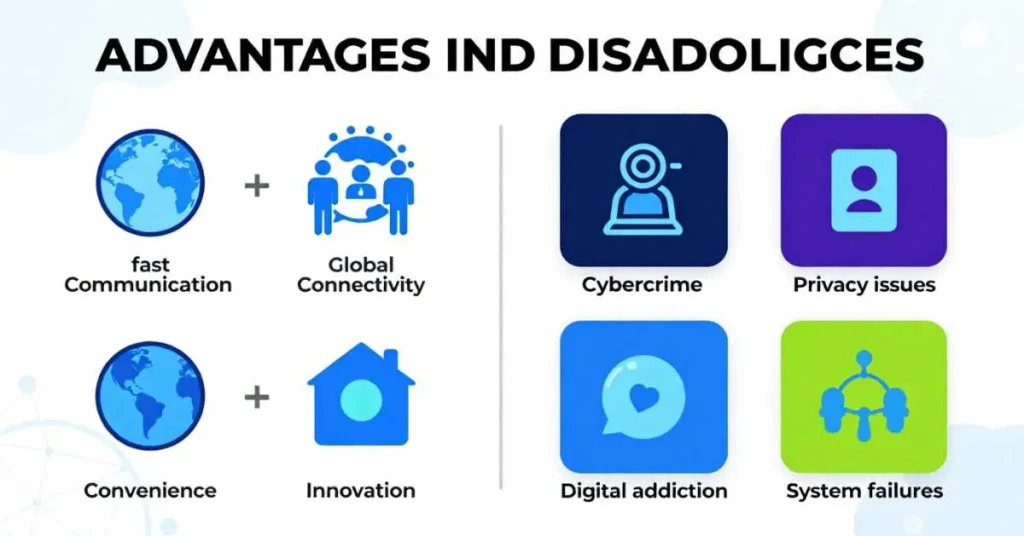
Advantages
- Fast communication: Emails, messaging, and video calls.
- Global connectivity: Cloud collaboration and virtual communication.
- Convenience: Online banking, shopping, and e-learning.
- Innovation: AI, cloud computing, and digital transformation.
Disadvantages
- Cybercrime risks: Hacking, malware, phishing.
- Privacy issues: Data breaches and misuse of personal info.
- Digital addiction: Excessive online activity impacts health.
- System failures: Network issues and cyber attacks can disrupt services.
Why Cyber Matters in the Modern World
Cyber is vital for digital connectivity, efficiency, and online safety. It drives digital transformation, virtual communication, and cloud computing.
With growing online threats, cyber awareness and digital literacy are essential for everyone. Cyber shapes education, work, commerce, and governance, making it central to the digital era.
The Future of Cyber Technology
The future of cyber looks exciting:
- AI and machine learning will improve cyber systems.
- IoT devices will expand cyberspace in homes and cities.
- Cybersecurity measures will evolve to protect against advanced cyber attacks.
- Digital transformation will continue in education, work, and business.
Understanding cyber now ensures safe and efficient participation in the online world tomorrow.
Frequently Asked Questions
Q1: What does cyber mean in simple words?
Cyber relates to digital systems, networks, and online environments.
Q2: Is cyber only about security?
No, it also includes technology, digital services, and virtual environments.
Q3: Is cyber the same as the internet?
No. The internet is part of cyber, but cyber covers all digital systems and virtual environments.
Q4: What is cyber used for?
Cyber is used in education, banking, commerce, cybersecurity, and online communication.
Q5: Why is cyber important?
Cyber is the foundation of digital transformation, online safety, and modern technology.
Conclusion:
In conclusion, understanding what does cyber mean is essential in today’s digital era. Cyber represents the backbone of modern technology, network systems, and virtual environments.
Cyber is part of many things in life. It helps keep online data safe, stops online crimes, teaches people online, and supports cloud technology and new digital tools.
By learning about cyber safety, following good online rules, and keeping their information safe. People and businesses can use the cyber world safely and easily. Cyber is more than a word; it is a concept that defines how the modern world communicates, works, and learns online.
Click Here To Read More About: What Does It Mean to Be Underbanked? A Simple Guide

Hi, I’m Evan Lexor, the voice behind Meanpedia.com. I break down English words, slang, and phrases into clear, simple meanings that actually make sense. From modern internet terms to everyday expressions, my goal is straightforward: help you understand English better, faster, and with confidence, one word at a time.