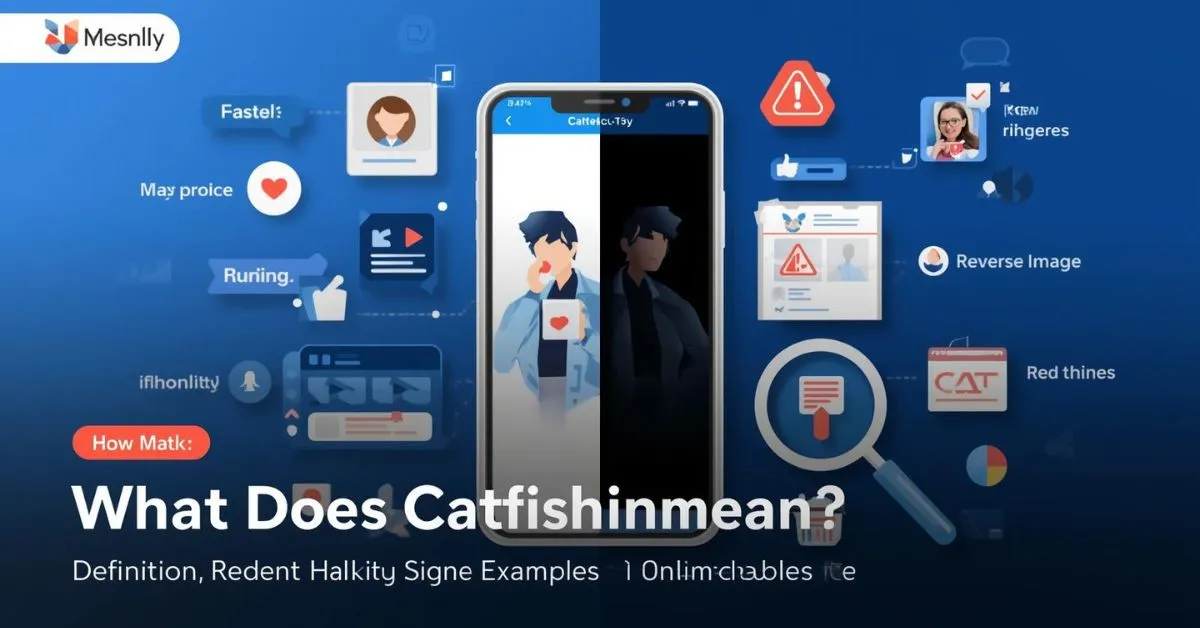
Catfishing means using a fake online identity to deceive another person. A catfish may use stolen photos, a false name, fake job details, or even AI-generated profile pictures to build trust, start a relationship, or scam someone for money, attention, personal information, or intimate images.
If you searched what does catfishing mean, you probably want a clear answer first. In simple words, catfishing happens when someone pretends to be another person online. It often happens on dating apps, social media, gaming platforms, and messaging apps.
Sometimes the goal is emotional manipulation. Sometimes it is fraud. In more serious cases, it overlaps with romance scams, impersonation, sextortion, identity theft, or blackmail.
What does catfishing mean?
Catfishing is the act of creating or using a fake online persona to trick someone. That fake persona may include false photos, a made-up background, a fake age, a fake location, or a whole invented life story.
In dating, catfishing usually means someone is pretending to be a more attractive, more successful, or completely different person to gain trust and control the relationship.
So, what does it mean to be catfished? It means you believed you were talking to a real person, but the identity was false or heavily manipulated. The connection may feel real, but the person behind the screen is not who they claimed to be.
Where the term catfishing comes from
The term became widely known after the 2010 documentary Catfish and later the MTV series, which helped turn the word into a common internet term. Today, “catfish” is widely used in dictionaries and online safety guidance to describe someone who sets up a deceptive online profile.
That is why people now ask questions like:
- what is catfishing
- catfishing meaning
- what does catfish mean in dating
- what does it mean to be catfished
All of those searches point back to the same core idea: a fake online identity used to deceive another person.
How catfishing works online
Building a believable fake profile
A catfisher usually starts with a profile that looks normal at first glance. They may steal photos from Instagram, Facebook, or LinkedIn, and may use edited images, stock-style pictures, or AI-generated faces.
They often create a believable backstory, such as working overseas, being in the military, traveling for business, or dealing with a family crisis. These stories are often designed to explain why they cannot meet or video chat.
Creating trust quickly
After the profile is set up, the next step is trust. A catfish often messages often, remembers small details, and mirrors your interests. They may use love bombing, fast emotional closeness, and constant attention to make the relationship feel intense very quickly. In scam cases, this trust-building stage comes before requests for money, gifts, financial help, or private images.
Moving from attention to manipulation
Once a victim feels attached, the fake profile becomes a tool for control. The catfish may ask for money, request explicit photos, push the chat onto a private app, or make excuses to avoid live verification. Some cases stay emotional. Others turn into romance scams, identity misuse, or sextortion.
Signs someone may be catfishing you
They refuse video calls or keep canceling plans
One of the biggest warning signs is a person who always avoids live contact. If they refuse video calls, never answer the phone, or keep postponing meeting in person, that is a major red flag.
Their profile looks thin, polished, or too perfect
Many fake profiles have very little history, very low engagement, few tagged photos, and a suspiciously perfect look. Some have only glamorous images and almost no everyday content. Others feel brand new even though the person claims to have a long online history.
Their story keeps changing
A catfish often slips up over time. Their city changes, their job details do not match, their photos seem unrelated, and their timeline stops making sense. A real person may forget a detail once, but a fake identity usually breaks down in patterns.
They fall hard and fast
If someone you barely know is already talking about fate, deep love, or a future together, be careful. Rapid emotional intensity is common in fake online relationships because it lowers your guard and speeds up trust.
They ask for money, gift cards, crypto, or financial help
This is one of the clearest danger signs. The FTC warns that romance scammers create fake profiles on dating sites, apps, and social media, build trust, and then ask for money. Payment requests may come through gift cards, bank transfers, payment apps, or cryptocurrency.
They ask for private photos or videos
Some catfishers are after intimate content, not romance. They may pressure someone into sharing images or videos and later use them for blackmail or sexual extortion, also called sextortion.
Catfishing vs kittenfishing vs romance scams
These terms are related, but they are not exactly the same.
| Term | Meaning | Main goal | Example |
|---|---|---|---|
| Catfishing | Using a fake or stolen identity online | Deception, attention, control, fraud | Fake profile with stolen photos and false life story |
| Kittenfishing | Making yourself look better online with smaller lies | Attract attention | Old photos, fake height, fake age, edited looks |
| Romance scam | A fake relationship used to steal money or information | Financial gain | “I love you, but I need money for an emergency” |
| Identity theft | Stealing and misusing someone’s real identity | Fraud or impersonation | Using another person’s photos and personal details |
Catfishing is the broad deception. A romance scam is often the money-focused version of that deception. Kittenfishing is lighter misrepresentation, but it can still damage trust. Identity theft is more serious because it uses a real person’s information without permission.
Real examples of catfishing
Online dating app example
Someone matches with a very attractive profile on Tinder, Bumble, or another dating app. The conversation becomes intense fast. The person always has a reason they cannot video chat. A few weeks later, they say they are stuck abroad, had a medical emergency, or need urgent travel money. This follows the classic romance scam pattern.
Social media example
A fake Instagram, Facebook, or Snapchat account starts with harmless conversation. The account looks real enough, but there are few friends, few tags, and almost no original history. Over time, the person tries to collect personal details, move to a private chat, or request intimate content.
AI-enhanced catfishing example
Modern catfishing is no longer limited to stolen selfies. Some fake accounts now use AI-generated faces, AI-written bios, and even synthetic voice or video tricks. That makes reverse checking and live verification more important than ever.
How to tell if someone is catfishing you
The best approach is to verify early before you get emotionally invested.
Do a reverse image search
Upload the person’s profile picture to Google Images, Google “About this image,” Bing Visual Search, or TinEye. If the same photo appears under another name or on unrelated sites, that is a strong red flag. Online safety guidance specifically recommends reverse image search as a practical way to check whether a photo has been reused for catfishing.
Check their wider online presence
Search their full name, username, and profile images across platforms. A real person usually has a more consistent digital footprint. A fake profile often exists only in one place or looks recently created.
Ask for live proof
A quick live video call is often the simplest test. A catfish may dodge it again and again. If a person always has an excuse, believe the pattern, not the promise.
Common mistakes to avoid
Many victims are not careless. They are manipulated. Still, these mistakes make catfishing easier:
- trusting emotion before verification
- ignoring repeated excuses
- sending money to someone never verified
- sharing personal information too early
- sending intimate images
- keeping the relationship secret
- overlooking mismatched details
- assuming attractive or professional-looking profiles are real
These are exactly the patterns that online safety and scam-prevention guidance warns people about.
What to do if you think you are being catfished
First, stop sharing money, personal details, passwords, or images. Take screenshots and save the conversation. Run a reverse image search and check whether the story matches public facts.
Report the account to the platform. If you sent money, contact your bank or payment provider quickly. If threats, blackmail, impersonation, or extortion are involved, report the case to the appropriate authorities in your area.
It also helps to tell a trusted friend or family member. People outside the situation often spot red flags sooner because they are not emotionally involved.
Is catfishing illegal?
Catfishing by itself is not always a crime in every jurisdiction. But it can become illegal when it involves fraud, identity theft, stalking, harassment, blackmail, extortion, child exploitation, or financial deception.
In real life, many catfishing cases cross into other harmful acts that do have legal consequences.
That is why the better question is not only “is catfishing illegal?” but also “what else is happening with it?” If the fake profile is being used to steal money, manipulate consent, threaten someone, or impersonate a real person, the situation is much more serious.
Practical safety tips for dating apps and social media
Use recent photos on your own profile, but avoid sharing too much personal detail. Be careful with images that also appear on your public social media, because they can reveal more about you through reverse image search.
Verify people before meeting, video chat early, and never send money to someone you have not confirmed in real life.
A smart rule is this: trust consistency, not chemistry. Real people can still be charming, but they do not need endless excuses to avoid being verified.
FAQs
What does catfish mean in dating?
In dating, a catfish is someone who pretends to be another person online to start a false romantic connection, often for attention, manipulation, or money.
What does it mean to be catfished?
It means you were misled by a fake or heavily false online identity and believed the relationship or person was genuine.
Is catfishing the same as a romance scam?
Not always. Catfishing is the fake identity part. A romance scam is when that fake relationship is used to steal money or personal information.
How do you know if someone is catfishing you?
Look for refusal to video chat, a thin online history, inconsistent stories, fast emotional attachment, and requests for money or private photos.
Can someone catfish using AI?
Yes. Some scammers now use AI-generated profile pictures, AI-written bios, or other synthetic content to make fake profiles look more convincing.
What is kittenfishing?
Kittenfishing is a milder form of online misrepresentation, such as using old photos or exaggerating details, rather than creating a fully fake identity.
Is catfishing illegal?
It is not always illegal on its own, but it can become illegal when tied to fraud, identity theft, harassment, stalking, blackmail, or extortion.
What should I do if I get catfished?
Stop contact, save evidence, do a reverse image search, report the profile, protect your accounts, and contact your bank or authorities if money, threats, or blackmail are involved.
Conclusion
So, what does catfishing mean? It means someone is pretending to be someone else online to deceive another person. That deception may involve fake photos, false identities, emotional manipulation, romance scams, sextortion, impersonation, or identity theft.
The safest response is to verify early, use reverse image search, question excuses, and act fast when the story stops adding up.
Click For Read About: What Does Unity Mean? Simple Definition and Examples

Hello! I’m Clara Lexis, creator of Meanpedia.com. I specialize in breaking down words, phrases, and idioms so that anyone can understand and enjoy the beauty of English. My goal? Making language approachable, fun, and meaningful, one word at a time.