Have you ever wondered, “what does alliance mean?” Simply put, an alliance is when two or more people, groups, or organizations join forces to achieve a common goal.
“Alliances are not only for countries or businesses. They also happen in politics, history, the military, companies, and daily life.”
Alliances are built on trust, cooperation, collaboration, and shared goals. They help people, organizations, and countries achieve things they cannot do alone.
Some alliances are formal, like treaties, coalitions, or joint ventures. Others are informal, like friends helping each other or communities working together on projects.
In this article, we will cover:
- Definition of alliance and its meaning
- Types of alliances
- Famous examples from history and today
- Benefits of alliances
- How alliances work
- Common mistakes to avoid
By the end, you will understand how alliances work, why they matter, and how you can use them in your personal or professional life.
What Is an Alliance?
An alliance is when two or more people or groups work together and help each other. Alliances can be formal with rules or informal based on trust.
Difference Between Alliance and Partnership
- Partnerships: Typically involve legal or financial responsibilities, like profit-sharing.
- Alliances: Focus on cooperation, teamwork, and shared goals, not necessarily money.
Everyday Examples:
- Students form study groups to succeed together.
- Communities collaborate on charity drives or events.
- Colleagues team up for projects at work.
Alliances help combine skills, resources, and knowledge, creating more opportunities for success.
Types of Alliances
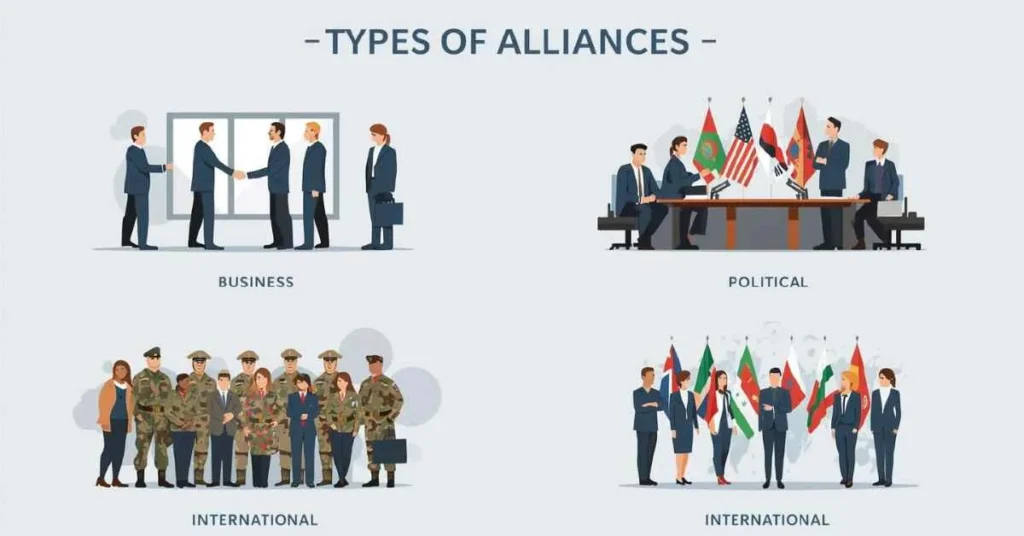
Alliances can be grouped into four main categories: business, political, military, and international. Understanding the type helps you choose the right strategy.
1. Business Alliances
A business alliance happens when companies work together to share resources, save money, reach new markets, or create new ideas.
Examples:
- Spotify & Uber: Riders get personalized music during rides.
- Coca-Cola & McDonald’s: A decades-long collaboration in supply and sales.
- Apple & IBM: Joint venture to provide enterprise solutions.
Benefits of Business Alliances:
- Access to new customers and markets
- Shared expertise and resources
- Risk reduction in new ventures
2. Political Alliances
Political alliances allow parties or nations to increase power, influence, or protection.
Examples:
- NATO (North Atlantic Treaty Organization): Collective defense for member nations.
- European Union coalitions: Countries work together on trade, finance, and policy decisions.
Political alliances often involve negotiations, treaties, and agreements to align interests.
3. Military Alliances
Military alliances are agreements between nations for mutual defense and strategic advantage.
Examples:
- Allied Powers in World War II: Countries joined forces to defeat Axis powers.
- NATO members: Committed to defending each other in case of attacks.
Military alliances often involve formal treaties and coordination of forces, strengthening security.
4. International Alliances
International alliances are more than politics and the military. They help with trade, money, and social problems.
Examples:
- ASEAN (Association of Southeast Asian Nations): Promotes regional economic cooperation.
- Countries in the United Nations work together to help the planet, protect people, and respond to disasters.
Visual Table Suggestion:
| Alliance Type | Example | Goal |
|---|---|---|
| Business | Spotify & Uber | Customer experience |
| Political | NATO | Collective defense |
| Military | Allied Powers (WWII) | Victory in war |
| International | UN | Global cooperation |
Why Alliances Matter – Benefits

Alliances are powerful because they combine strengths and resources, leading to mutual benefits.
1. Business Benefits
- Enter new markets easily
- Share knowledge and technology
- Reduce financial risks
Example: Corporate partnerships like Apple & IBM allow companies to innovate faster.
2. Political and Military Benefits
- Increase security and influence
- Share intelligence and strategies
- Form strong coalitions for global goals
Example: NATO ensures that an attack on one member is an attack on all, creating a strong defense network.
3. Social and Community Benefits
- Communities working together achieve bigger results
- Shared goals create trust and stronger relationships
Alliances help achieve more together than alone.
Famous Alliances in History
History shows that alliances have changed the world:
- Allied Powers in WWII: Countries united to defeat Axis powers.
- NATO Formation (1949): Strengthened Western defense during the Cold War.
- Coca-Cola & McDonald’s: Helped global expansion of both brands.
- United Nations Initiatives: Collaboration for peace, health, and environment.
Alliances help people stay safe, grow, and succeed in business, politics, the army, and world affairs.
How Alliances Work – Key Principles
Successful alliances follow six key principles:
- Trust & Transparency: Be honest and reliable.
- Shared Goals: Align objectives to ensure cooperation.
- Clear Roles: Define responsibilities to avoid conflict.
- Effective Communication: Regular updates and feedback.
- Adaptability: Alliances must adapt to change and challenges.
- Formal Agreements: Contracts or treaties reduce confusion in formal alliances.
Example: A business alliance may have one company manage production and the other marketing to achieve shared success.
Alliance in Everyday Life
Alliances exist outside businesses and governments:
- Students: Study groups or project teams
- Communities: Local charity events, clean-ups
- Workplaces: Teams collaborate on projects
- Personal Life: Friends and families support each other
Key Idea: Alliances make goals easier to achieve and relationships stronger.
Common Mistakes in Alliances
Even strong alliances fail if:
- Trust is missing
- Goals are not aligned
- Communication is poor
- Roles are unclear
- Parties are inflexible
Tip: Schedule regular check-ins and clarify responsibilities.
Top Modern Corporate Alliances

Some of the most successful modern alliances include:
- Microsoft & LinkedIn: Leveraging platforms for business growth
- Starbucks & PepsiCo: Expanding beverage distribution
- Disney & Pixar: Creative collaboration for blockbuster movies
Lesson: Strong corporate alliances create mutual benefits, innovation, and global reach.
Conclusion
An alliance is a cooperative relationship based on trust, shared goals, and teamwork. Alliances exist in business, politics, military, international affairs, and everyday life.
Successful alliances require:
- Trust and transparency
- Shared objectives
- Clear roles and communication
- Adaptability
Strong alliances help you reach goals faster, make better friends, and succeed together.
Call-to-Action: Think about your life, business, or community. Who can you form an alliance with today to reach a shared goal?
FAQ Section
Q1: What is an alliance in simple words?
A: Two or more parties working together to achieve shared goals.
Q2: What are the main types of alliances?
A: Business, political, military, and international alliances.
Q3: How is an alliance different from a partnership?
A: Partnerships usually involve money or legal responsibilities. Alliances focus on collaboration and teamwork.
Q4: Can alliances fail?
A: Yes, if trust, communication, or roles are not clear.
Q5: Why are alliances important?
A: Alliances combine strengths, reduce risks, and achieve goals faster.
Click Here To Read About: What Does “Be There or Be Square” mean: Meaning Uses & Tips

Hi, I’m Evan Lexor, the voice behind Meanpedia.com. I break down English words, slang, and phrases into clear, simple meanings that actually make sense. From modern internet terms to everyday expressions, my goal is straightforward: help you understand English better, faster, and with confidence, one word at a time.