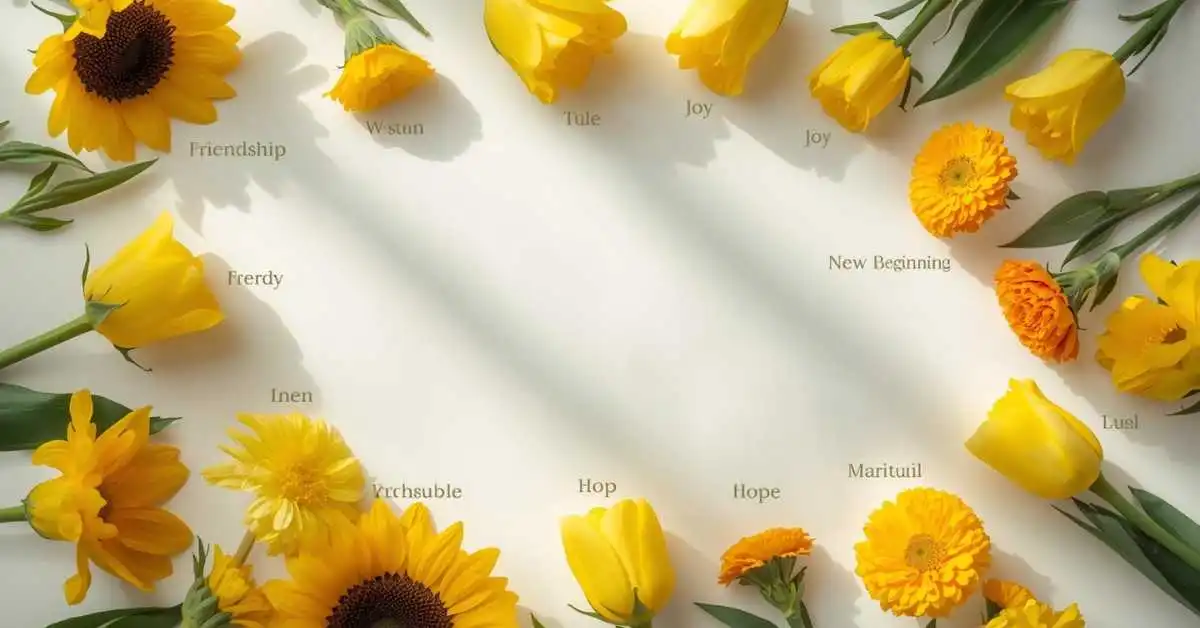
Quick answer: Yellow flowers usually mean friendship, joy, happiness, hope, and new beginnings. In modern flower language, they often send a bright, caring message. But the exact meaning can change by flower type. A yellow rose, sunflower, daffodil, chrysanthemum, or marigold can each say something a little different.
Yellow flowers feel warm and cheerful. That is why many people ask what do yellow flowers mean before they buy a bouquet. Most of the time, these blooms are linked with friendship, good wishes, positive energy, and happy news.
Still, flower meaning is not always one-size-fits-all. Some yellow flowers are best for a friend. Some fit a get-well gift. Some work for a new job, a birthday, or a thank-you note. A few even carry old or cultural meanings that are more complex.
This guide uses the most common modern florist meanings first. It also points out where older flower language or cultural tradition changes the message. That gives you a clearer and more useful answer than a simple one-line definition.
What Do Yellow Flowers Mean?
The simple meaning
The most common yellow flower meaning today is easy to remember. Yellow flowers usually stand for friendship, happiness, joy, lightheartedness, and fresh starts.
That is why they are often used in bright bouquets for friends, family, coworkers, and people who need encouragement.
Why yellow feels so positive
Yellow is the color of sunlight. So people often connect it with warmth, energy, and hope. In flower language, that sunny look helps explain why yellow blooms are often chosen for cheerful gifts and happy events.
The short list of core meanings
When people search what do yellow flowers mean, they are usually looking for one or more of these ideas:
- friendship
- joy
- happiness
- optimism
- encouragement
- new beginnings
- thankfulness
- positive energy
These meanings are the ones you will see most often in modern florist guides.
Yellow Flower Meaning by Flower Type
Flower type matters a lot. A yellow bouquet does not always send the same message. This is why the best answer is not just “yellow means happy.” It is better to match the bloom to the moment. The table below gives a fast overview.
| Yellow flower | Common meaning | Best for |
|---|---|---|
| Yellow rose | Friendship, joy, well wishes | Friends, birthdays, thank-you gifts |
| Sunflower | Happiness, warmth, loyalty, adoration | Encouragement, summer gifts, happy milestones |
| Yellow tulip | Cheerful thoughts, hope | Spring gifts, fresh starts, uplifting bouquets |
| Daffodil | Rebirth, renewal, new beginnings | New job, move, recovery, spring events |
| Yellow lily | Thankfulness, joy, friendship | Thank-you flowers, family gifts |
| Yellow daisy | Optimism, cheer, friendship | Casual gifts, feel-better bouquets |
| Yellow chrysanthemum | Joy, optimism | Fall bouquets, bright celebrations |
| Marigold | Affection, grace, deep cultural meaning | Cultural or seasonal use, fall displays |
Meanings can shift by history and culture, but these are the most common modern readings.
Yellow roses meaning
Yellow roses are one of the clearest signs of friendship in modern flower language. They are often used to say “thank you,” “I’m thinking of you,” or “I’m glad you are in my life.” They also carry joy and well wishes. That makes them a smart choice for a best friend, a sibling, or a kind coworker.
Yellow roses are not usually the first pick for deep romance. If you send them to a partner, they may read as friendly unless the rest of the bouquet adds a more romantic tone.
Sunflower meaning
Sunflowers have a big, bold look, and their meaning fits that look. They are linked with warmth, happiness, adoration, loyalty, and long life. Because they face the sun, many people also see them as a sign of light, strength, and steady support.
Sunflowers work well when you want a bouquet to feel bright and strong. They are great for summer birthdays, congratulations, housewarmings, and encouragement gifts. They also make a room feel lively right away.
Yellow tulips meaning
Yellow tulips are soft, clean, and fresh. They are often linked with cheerful thoughts, hope, and sunshine. That is why they are a lovely choice for spring bouquets and simple gifts that feel kind but not too formal.
If you want flowers that say “better days are ahead,” yellow tulips are a strong pick. They suit new starts, Easter, a fresh season, or a light, happy bouquet for a friend.
Daffodil meaning
Daffodils are one of the strongest signs of rebirth, renewal, and new beginnings. They bloom early in spring, so they are often tied to the end of winter and the start of something better.
That makes daffodils perfect for a new home, a new job, a recovery gift, or any big life change. If your message is “this is a new chapter,” daffodils say it clearly.
Yellow lilies meaning
Yellow lilies usually mean thankfulness, joy, and friendship. They are a good choice when you want a bouquet to feel warm and polished. They fit a thank-you gift especially well.
Compared with daisies or tulips, yellow lilies can look a little more formal. So they work well for parents, teachers, hosts, or work contacts when you want to show gratitude with style.
Yellow daisies meaning
Yellow daisies are simple, bright, and easy to love. They often stand for joy, optimism, friendship, and cheerfulness. Their look feels playful and gentle, so they suit easy, everyday gifting.
A bouquet of yellow daisies can be great for a friend who needs a lift, a small birthday gift, or a bouquet that simply says “have a happy day.”
Yellow chrysanthemums meaning
Yellow chrysanthemums, also called yellow mums, often symbolize optimism and joy in modern flower guides. Their golden look also fits the broad yellow-flower idea of happiness and light.
Still, chrysanthemums can have different meanings in different places and traditions. So they are fine for bright everyday gifting, but they may carry stronger cultural meaning in some settings.
Marigold meaning
Marigolds are a special case. In one guide, marigolds are linked with affection and grace. But they also carry deep cultural meaning in Mexico and India, where they are tied to major holidays, weddings, altars, and remembrance.
In Mexico, marigolds are closely tied to Day of the Dead. In India, marigold garlands are widely used for Diwali, weddings, and religious festivals. So marigolds can feel bright and festive, but also spiritual, respectful, and ceremonial.
When Should You Send Yellow Flowers?
For friendship
Yellow flowers are one of the safest choices for friendship. Yellow roses, yellow daisies, and yellow tulips all carry warm but non-romantic meaning. They are great when you want to show care, support, or appreciation without sending a love message.
For get-well wishes
Because yellow blooms are tied to joy and positive energy, they work well as get-well flowers. Daisies, tulips, and sunflowers can all brighten a room and feel hopeful. Yellow flowers are often chosen when the goal is comfort, not drama.
For thank-you gifts
Yellow lilies are one of the best flowers for thanks. Yellow roses also work well when the thank-you note is friendly and warm. These blooms say “I appreciate you” in a clear and easy way.
For new beginnings
If the occasion is a new start, daffodils are hard to beat. Yellow tulips also fit this feeling because they carry cheerful thoughts and hope. These flowers make sense for a move, a fresh job, a new school year, or a new season in life.
For birthdays and happy news
Sunflowers, yellow roses, and mixed yellow bouquets fit birthdays, graduations, and congratulations well. They bring a happy mood and a strong visual lift. That is a big part of why yellow flowers stay popular in modern bouquet design.
When Yellow Flowers May Not Be the Best Choice
For strong romance
Yellow flowers can be used in romantic bouquets, but they do not usually lead with romance. Yellow roses, in particular, are widely read as friendship flowers. If you want the bouquet to say passion or deep love, red, pink, or mixed colors may work better.
In old flower language
This is where many people get confused. In Victorian floriography, yellow flowers could carry more negative meanings. Yellow roses, for example, could suggest suspicion, infidelity, or unfaithfulness. That older meaning still shows up in some articles today.
In some cultural settings
Flower meanings are not fixed across every place. Marigolds are a good example. In one setting, they may look festive and joyful. In another, they may be linked with spiritual practice, remembrance, or a major cultural event. That is why context matters.
How to Choose the Right Yellow Bouquet
Match the flower to the message
A simple rule can help:
- Choose yellow roses for friendship
- Choose sunflowers for happy energy and support
- Choose yellow tulips for hope and cheer
- Choose daffodils for new beginnings
- Choose yellow lilies for thank-you gifts
- Choose yellow daisies for casual joy
- Choose marigolds when cultural meaning matters
This is the easiest way to send the right message without overthinking the bouquet.
Think about the person
A best friend may love yellow roses. A parent may enjoy yellow lilies. A person starting over may connect most with daffodils. A bright, bold person may love sunflowers. The best bouquet is not only about flower language.
It is also about the person who gets it. This is an inference based on the common meanings attached to each flower and how florists position them for gifting.
Use mixed colors with care
If you want the bouquet to feel softer, mix yellow with white. If you want more energy, pair yellow with orange.
If you want a touch of romance, add pink or red so the message does not lean too hard toward friendship. This is practical bouquet advice based on common flower-color meanings rather than a fixed rule.
Best Yellow Flowers for Each Occasion
This quick table makes the choice easier. It is based on the most common modern meanings and the cultural notes above.
| Occasion | Best yellow flower | Why it fits |
|---|---|---|
| Friendship gift | Yellow rose | Clear friendship meaning |
| Get well soon | Yellow daisy | Cheerful and gentle |
| New job or move | Daffodil | Symbol of renewal |
| Thank-you gift | Yellow lily | Strong thankfulness meaning |
| Birthday | Sunflower | Big, happy, bright energy |
| Spring bouquet | Yellow tulip | Cheerful and hopeful |
| Cultural holiday display | Marigold | Deep ceremonial meaning |
FAQ:
Do yellow flowers mean friendship?
Yes. In modern flower language, friendship is one of the most common meanings of yellow flowers, especially yellow roses and yellow daisies.
Do yellow flowers mean love?
Sometimes, but not usually deep romance. Most of the time, yellow flowers mean friendly care, warmth, joy, and support more than passion.
What do yellow roses mean?
Yellow roses usually mean friendship, happiness, thanks, and well wishes. They are one of the most popular flowers for a friend.
What do yellow tulips mean?
Yellow tulips usually mean cheerful thoughts, hope, and sunshine. They are a bright pick for spring and fresh starts.
Do yellow flowers ever mean jealousy?
They can in older flower language. Victorian floriography often gave yellow roses a negative meaning like suspicion or infidelity. But in modern use, yellow flowers are usually positive.
Conclusion
So, what do yellow flowers mean? In most modern settings, they mean friendship, joy, happiness, hope, and new beginnings. But the full message depends on the flower type. Yellow roses lean toward friendship. Sunflowers bring warmth and loyalty. Daffodils point to renewal. Yellow tulips suggest cheerful thoughts. Yellow lilies show thanks. Marigolds can carry deeper cultural meaning linked to celebration and remembrance.
That is why the best answer is both simple and specific. Yellow flowers are bright and positive, but the best bouquet comes from matching the bloom to the person, the occasion, and the message you want to send.
Click Here For Read More About: What Does Entity Mean? Simple Definition & Examples

Hello! I’m Clara Lexis, creator of Meanpedia.com. I specialize in breaking down words, phrases, and idioms so that anyone can understand and enjoy the beauty of English. My goal? Making language approachable, fun, and meaningful, one word at a time.