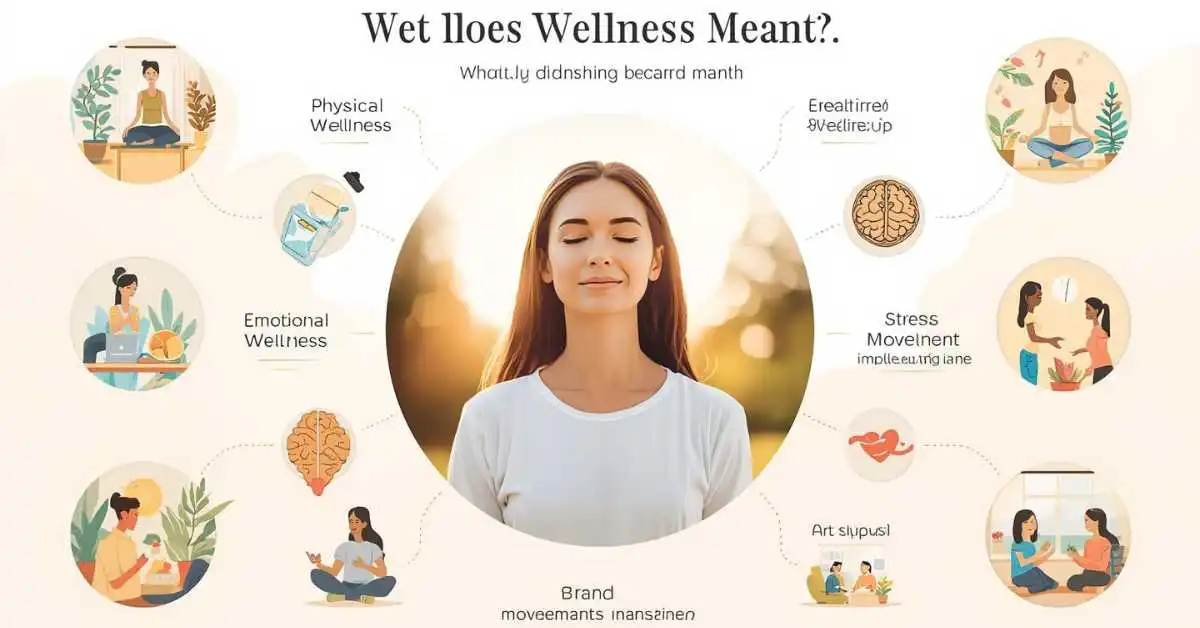
If you have ever asked what is wellness, what does wellness mean, or searched for the wellness definition, you are not alone. Many people hear the word in health blogs, gyms, schools, and workplaces, but they still want a clear answer.
Wellness in simple words means caring for your whole life, not only your body. It includes sleep, nutrition, movement, mental well-being, emotional wellness, social wellness, work-life balance, and purpose.
This guide explains the meaning of wellness, shows the dimensions of wellness explained, and shares simple ways to improve it every day.
Featured Snippet Paragraph
What does wellness mean? Wellness means actively making choices that support your body, mind, emotions, relationships, and daily life. It is not just the absence of illness.
The meaning of wellness is living in a way that helps you feel well, function well, and build long-term balance through healthy habits, self-care, stress management, and purpose.
Public-health and wellness sources describe wellness as a holistic and ongoing process, not a one-time goal.
What Does Wellness Mean?
Wellness in Simple Words
Wellness in simple words means living in a healthy and balanced way. It is about the choices you make each day. These choices affect your energy, mood, sleep, relationships, and quality of life. A wellness routine can be small, like drinking more water, walking after dinner, sleeping on time, or taking a short break to calm stress.
Wellness Definition From Experts
The wellness definition used by the Global Wellness Institute says wellness is the active pursuit of activities, choices, and lifestyles that lead to holistic health.
WHO defines health as complete physical, mental, and social well-being, not only the absence of disease. Together, these ideas show that wellness is active, whole-person, and ongoing. It is not about being perfect. It is about building habits that support your life.
Wellness vs Health vs Well-Being
Quick Comparison Table
| Term | Simple meaning | Easy example |
|---|---|---|
| Health | Your overall physical, mental, and social condition | You recover well, sleep enough, and can do daily tasks |
| Wellness | The daily choices that support health | You walk often, manage stress, and eat balanced meals |
| Well-being | How well your life feels overall | You feel safe, connected, calm, and satisfied |
This is why wellness vs health is an important topic. Health is the state. Wellness is the process. Well-being is the wider life experience.
A Simple Example
A person may have a medical condition and still practice good wellness. They may sleep well, stay active, follow preventive health advice, eat healthy food, and keep strong social support.
Another person may look healthy on the outside but live with burnout, poor sleep, stress, and isolation. That is why wellness looks at the full picture.
Dimensions of Wellness Explained
The 8 Main Dimensions
Many health and wellness models describe eight main dimensions. These are physical, emotional, social, intellectual, spiritual, occupational, financial, and environmental wellness. They are linked. When one area is weak, other areas often feel the strain too.
| Dimension | What it means | Simple example |
|---|---|---|
| Physical wellness | Caring for the body through movement, sleep, food, hydration, and preventive care | Walking daily and sleeping 8 hours |
| Emotional wellness | Understanding feelings and coping in healthy ways | Journaling instead of bottling up stress |
| Social wellness | Building healthy, supportive relationships | Calling a friend and setting kind boundaries |
| Intellectual wellness | Learning, thinking, and staying curious | Reading, taking a class, or solving problems |
| Spiritual wellness | Living with meaning, values, and purpose | Prayer, reflection, gratitude, or time in nature |
| Occupational wellness | Finding balance and purpose in work or study | Managing workload and protecting work-life balance |
| Financial wellness | Handling money in a steady and informed way | Budgeting, saving, and reducing money stress |
| Environmental wellness | Creating safe, healthy spaces around you | Clean air, less clutter, and safer daily surroundings |
This table covers the dimensions of wellness explained in a simple way. It also shows why what is holistic wellness is such a common question. Wellness is made of many connected parts.
Body Wellness: Sleep, Food, and Movement
Physical wellness is often the easiest place to start. Good sleep, regular movement, healthy meals, hydration, and preventive care support energy and daily function. Small self-care habits matter here.
A short walk, a balanced breakfast, and less late-night screen time can help more than extreme routines that do not last.
Mind Wellness: Stress, Emotions, and Mental Well-Being
Mental well-being and emotional wellness help you handle life better. WHO says mental health is a state of well-being that helps people cope with stress, learn, work, and take part in community life.
Stress management, mindfulness, rest, and support from others are part of real wellness, not extras.
Life Wellness: People, Purpose, Money, Work, and Place
Social wellness, spiritual wellness, occupational wellness, financial wellness, and environmental wellness shape daily life in big ways.
A calm home, supportive relationships, safe work conditions, healthy boundaries, and less money stress all affect quality of life. WHO also notes that health is shaped by social, economic, and physical conditions, not only by personal choices.
Why Is Wellness Important?
It Helps You Feel Better Now
If you want the simple answer to why is wellness important, here it is: wellness helps daily life feel easier.
Good wellness habits can support sleep, focus, mood, energy, and resilience. When you eat better, rest enough, move your body, and lower stress, you often feel the change quickly.
It Helps Protect Your Future
Wellness also supports long-term health. Preventive health habits can lower risk, improve recovery, and make it easier to handle life changes.
This includes routine care, social connection, stress control, and a healthy lifestyle built on small, repeatable actions. Wellness is not magic. It is steady care.
What Is Holistic Wellness?
Holistic Wellness Means the Whole Person
What is holistic wellness? It means looking at the whole person, not just one symptom or one habit.
Holistic health includes body, mind, emotions, relationships, environment, and purpose. If one part is out of balance, the others can feel it too. That is why a good wellness plan is broader than diet and exercise alone.
A Real-Life Example
Think about someone who sleeps badly because of money stress. Soon they may feel tired, anxious, less patient with family, and less focused at work. One problem touches many areas. The same works in a positive way.
Better sleep, smarter budgeting, and strong social support can improve mood, focus, and physical wellness at the same time.
Examples of Wellness in Daily Life
At Home
Here are easy examples of wellness at home:
- going to bed at the same time
- eating more whole foods
- drinking water through the day
- stretching in the morning
- keeping your home clean and calm
- taking screen breaks
- practicing gratitude or prayer
These simple steps support physical wellness, emotional wellness, and environmental wellness together.
At Work or School
Wellness at work or school can include:
- taking short movement breaks
- setting work-life balance limits
- planning tasks in order
- asking for help when stress builds
- making time for learning and curiosity
- protecting lunch and rest time
These habits support occupational wellness, intellectual wellness, and mental well-being.
In Relationships and Community
Wellness also grows through other people. Social wellness can look like:
- spending time with supportive friends
- joining a group or class
- listening with care
- setting healthy boundaries
- helping others in your community
NIH notes that relationships and community affect health and well-being in real ways.
How to Improve Wellness
Start Small, Not Perfect
If you are searching how to improve wellness, start small. Pick one habit you can keep for a week. Do not try to fix everything in one day. Wellness grows through consistency, not pressure.
Build a Simple Wellness Routine
Use this easy routine:
| Habit | Why it helps |
|---|---|
| Sleep on a steady schedule | Supports energy, mood, and focus |
| Move for 20–30 minutes | Helps body strength and stress relief |
| Eat regular balanced meals | Supports energy and stable mood |
| Take 5 minutes to breathe or reflect | Supports mindfulness and emotional wellness |
| Reach out to one person | Builds social wellness and support |
| Review spending once a week | Helps financial wellness and lowers stress |
These are realistic ways to build a wellness routine with self-care habits, stress management, and preventive health in mind.
Track Progress in a Kind Way
You do not need a perfect planner or an expensive app. You can track wellness with a simple note on your phone or a paper checklist.
Ask: Did I sleep enough? Did I move? And Did I eat well? Did I connect with someone? DDid I do one thing that supports my peace? That is a strong start.
Common Myths About Wellness
Myth 1: Wellness Means Perfection
No. Wellness does not mean feeling happy all the time or doing everything right. It means staying aware and making supportive choices more often. You can still work on wellness while dealing with stress, illness, or a hard season of life.
Myth 2: Wellness Is Only About Fitness
No. Fitness is one part of physical wellness, but wellness is bigger. It also includes mental health, emotional balance, social connection, purpose, money habits, and your environment. That is the heart of what is wellness and what is holistic wellness.
Myth 3: Wellness Has to Be Expensive
No. Many of the best wellness habits are free or low cost. Walking, stretching, sleeping on time, breathing slowly, spending time in nature, cooking simple food, and talking with a trusted friend all support health.
FAQ
What does wellness mean in simple words?
Wellness means caring for your whole self through healthy daily choices. It includes your body, mind, emotions, relationships, and lifestyle. That is the plain meaning of wellness.
What is wellness?
What is wellness? It is the active process of building habits that support holistic health. It is not only about avoiding disease. And it is about living well in many areas of life.
What is the difference between wellness and health?
In the wellness vs health discussion, health is your condition and wellness is the process that supports it. Wellness includes actions like better sleep, movement, nutrition, mindfulness, and stronger relationships.
Why is wellness important?
Why is wellness important? Because it affects how you feel now and how you function later. It supports quality of life, resilience, stress control, and a healthier lifestyle over time.
How to improve wellness every day?
If you want to know how to improve wellness, begin with small steps: sleep on time, move each day, eat balanced meals, manage stress, and stay connected to supportive people. Keep it simple and repeat it often.
Conclusion
So, what does wellness mean? It means living in a way that supports your whole life. The best wellness definition is not about perfection or trends. It is about steady habits that help your body, mind, emotions, and relationships stay strong.
Now you know what is wellness, the meaning of wellness, the dimensions of wellness explained, examples of wellness, why is wellness important, and how to improve wellness in real life. In short, wellness is a simple, active path toward better balance, holistic health, and lasting well-being.
Click Here To More About: What Does the Name Peter Mean? Origin, Bible Meaning & More

Hello! I’m Clara Lexis, creator of Meanpedia.com. I specialize in breaking down words, phrases, and idioms so that anyone can understand and enjoy the beauty of English. My goal? Making language approachable, fun, and meaningful, one word at a time.