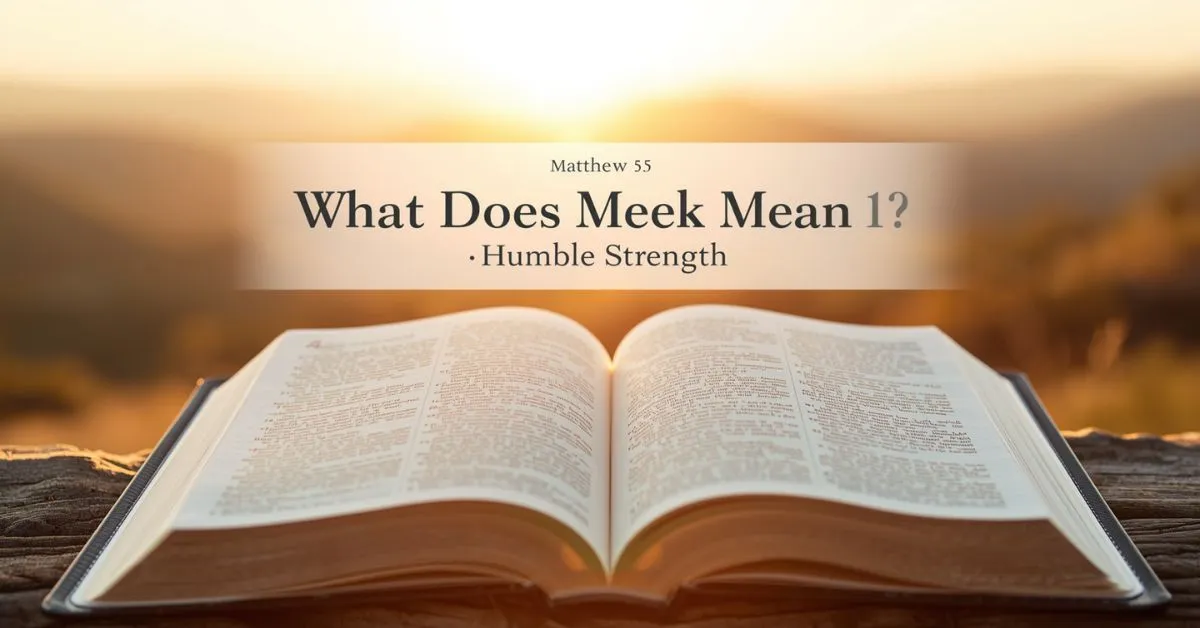
In the Bible, meek means humble, gentle, teachable, and under God’s control. It does not mean weak, timid, or powerless. In passages like Matthew 5:5, meekness describes strength guided by humility, self-control, and trust in God rather than pride, anger, or force.
Many people ask, what does meek mean in the Bible, because the word can sound confusing in modern English. Today, some people use meek to describe a person who is quiet, shy, or easy to overpower. But in Scripture, the meaning is much richer. Biblical meekness is not weakness. It is strength under control.
This matters because Jesus Christ said, “Blessed are the meek” in the Beatitudes during the Sermon on the Mount. That makes meekness an important part of Christian character, discipleship, and spiritual maturity. To understand the biblical meaning of meek, we need to look at key verses, the original Bible languages, and real examples from the lives of Jesus, Moses, and other servants of God.
What does meek mean in the Bible?
In the Bible, meek means humble, gentle, patient, and willing to submit to God’s will. A meek person does not have to control everything, win every argument, or prove their importance. Instead, they trust God, treat others with gentleness, and use their strength wisely.
A simple way to define meekness is this:
Meekness is strength under control.
That phrase captures the heart of biblical meekness. A meek person may have power, wisdom, authority, or influence, but they do not use it in a proud, harsh, or selfish way. Their life is marked by humility, obedience, gentleness, and self-control.
Meek does not mean weak
This is the biggest misunderstanding. Weakness is a lack of strength. Meekness is the right use of strength.
A weak person may not be able to respond. A meek person can respond with force but chooses patience, wisdom, and godliness instead. That is why biblical meekness is a sign of maturity, not passivity.
What does “Blessed are the meek” mean in Matthew 5:5?
The most famous verse about meekness is Matthew 5:5:
“Blessed are the meek, for they shall inherit the earth.”
This verse is part of the Beatitudes, the opening section of the Sermon on the Mount. Jesus was teaching His disciples and the crowd what life in the kingdom of heaven looks like. The blessed life is not built on pride, self-promotion, or aggression. It is built on dependence on God.
What Jesus meant by “meek”
In Matthew 5:5, Jesus was not praising people who are fearful or easily pushed around. He was describing people who live with humble trust in God. The meek do not grab power through force. They wait on God, walk in righteousness, and leave room for God’s justice.
“They shall inherit the earth” meaning
This part of the verse echoes Psalm 37:11, which says that the meek shall inherit the land. In both the Psalm and the Beatitude, the idea is that God honors those who trust Him rather than acting in pride, violence, or selfish ambition.
So when people search meek shall inherit the earth meaning, the answer is not that weak people get rewarded for doing nothing. The point is that God gives lasting blessing to those who live under His rule.
Greek and Hebrew meaning of meek in the Bible
Understanding the original Bible languages helps explain the biblical meaning more clearly.
Greek meaning of meek
In the New Testament, the word translated as meek in Matthew 5:5 is related to the Greek term praus. It carries the sense of gentleness, mildness, humility, and controlled strength. It does not suggest cowardice. Instead, it points to a person who is calm, balanced, and not ruled by anger or arrogance.
A related Greek word, prautes, is often translated as gentleness or meekness. This idea appears in Christian teaching about character, relationships, correction, and spiritual fruit.
Hebrew meaning of meek
In the Old Testament, the Hebrew word often connected to meekness is anav or anaw. It can describe humility, lowliness, and dependence on God. It often refers to people who do not trust in themselves but in the Lord.
This is why the Hebrew idea of meekness is closely linked to:
- humility
- surrender to God
- waiting on the Lord
- freedom from pride
- righteous living
Key Bible verses about meekness
Here are some of the most important Bible passages connected to meekness.
| Bible Verse | What it teaches about meekness |
|---|---|
| Matthew 5:5 | The meek are blessed and will inherit the earth |
| Psalm 37:11 | The meek receive peace and blessing from God |
| Numbers 12:3 | Moses is described as very meek |
| Matthew 11:29 | Jesus says He is meek and lowly in heart |
| Galatians 5:22–23 | Gentleness, closely tied to meekness, is part of the fruit of the Spirit |
| Ephesians 4:1–2 | Believers are called to walk with humility, gentleness, and patience |
| James 1:21 | God’s Word should be received with meekness |
| 1 Peter 3:15 | Believers should defend their faith with gentleness and respect |
Why these verses matter
These passages show that meekness is not a minor Bible idea. It appears in teaching about:
- the character of Jesus Christ
- the example of Moses
- the fruit of the Spirit
- Christian relationships
- receiving God’s Word
- responding to conflict
- living in humility
Bible translation comparison of Matthew 5:5
Bible translations help show how the meaning of meekness overlaps with gentleness and humility.
| Translation | Matthew 5:5 wording |
|---|---|
| KJV | Blessed are the meek |
| NIV | Blessed are the meek |
| ESV | Blessed are the meek |
| NASB | Blessed are the gentle |
| CSB | Blessed are the humble |
| NLT | God blesses those who are humble |
What this comparison shows
Different translations use meek, gentle, or humble because these ideas are closely related. Together, they show that biblical meekness includes:
- humility before God
- gentleness toward people
- self-control in action
- quiet trust instead of self-assertion
Meekness vs weakness, humility, and gentleness
This is one of the best ways to understand the term clearly.
| Term | Meaning | What it is not |
|---|---|---|
| Meekness | Strength under control, humble obedience to God | Fear, passivity, powerlessness |
| Weakness | Lack of strength or courage | A virtue by itself |
| Humility | A low view of self-importance and a right view of God | Self-hatred or pretending you have no worth |
| Gentleness | Kind, careful, non-harsh behavior | Avoiding truth or correction |
How these ideas work together
Humility is often the inner attitude. Meekness is the posture that grows from that attitude. Gentleness is how meekness often shows up in speech and action.
So, when someone asks what is meekness in the Bible, the answer includes all three ideas: humility, gentleness, and strength under control.
Examples of meekness in the Bible
The meaning becomes clearer when we see meekness in real people.
Jesus Christ
Jesus is the perfect example of meekness. In Matthew 11:29, He says He is “meek and lowly in heart.” Yet Jesus was never weak. He taught with authority, confronted hypocrisy, cleansed the temple, and remained fully obedient to the Father.
Jesus had power, but He used it in holiness, truth, love, and submission to God. That is biblical meekness.
Moses
Numbers 12:3 says that Moses was very meek, more than all people on the earth. That is striking because Moses was a leader, lawgiver, and prophet. He stood before Pharaoh, led Israel through the wilderness, and handled serious conflict.
Moses was called meek not because he lacked courage, but because he lived in dependence on God.
David
David did not always act meekly, but at key moments he showed it. When he had chances to harm Saul, he chose not to seize the throne by sinful force. He waited for God’s timing.
Paul’s teaching
The apostle Paul often connected gentleness, humility, patience, and unity. In passages like Ephesians 4:1–2, meekness is part of the believer’s daily walk.
What meekness looks like in daily Christian life
Biblical meekness is not only about famous Bible figures. It shows up in everyday life.
In speech
A meek person speaks truth without cruelty. They do not use words to shame, crush, or dominate others.
In correction
A meek believer can correct error without pride. They care about truth, but they do not enjoy humiliating people.
In conflict
A meek person is not driven by revenge. They can stay calm, listen, and answer wisely.
In leadership
Meek leadership is not weak leadership. It is strong leadership without pride, ego, or harsh control.
In teachability
A meek heart receives correction from Scripture. It is willing to learn, repent, and grow.
Common mistakes about meekness in the Bible
Many articles miss these points, but they matter for true understanding.
Mistake 1: Thinking meek means timid
Meekness does not mean someone is scared or silent by nature.
Mistake 2: Thinking meek people avoid truth
Biblical meekness does not remove courage. Jesus and Moses were meek, but both confronted sin and error.
Mistake 3: Confusing meekness with people-pleasing
Meekness submits to God, not to every human demand.
Mistake 4: Treating meekness as a personality type
Some people are naturally quiet. That does not automatically make them meek. Meekness is a spiritual quality, not just a natural temperament.
How to grow in meekness according to the Bible
Meekness can grow as part of Christian discipleship.
Trust God more deeply
The more you trust God’s justice and timing, the less you feel the need to force outcomes.
Practice self-control
Meekness often appears in the moment before reaction. Pause before speaking. Pray before answering.
Receive Scripture with humility
James 1:21 teaches believers to receive God’s Word with meekness. A teachable heart is essential.
Follow the example of Jesus
Look at how Jesus spoke, led, corrected, and endured suffering. He is the clearest model of meekness.
Walk in the Spirit
Since meekness is closely tied to the fruit of the Spirit in Galatians 5:22–23, real growth comes through the work of the Holy Spirit, not just behavior improvement.
Practical takeaway: the clearest biblical meaning of meek
If you want the simplest answer to what does meek mean in the Bible, here it is:
Meek means humble strength, gentle character, and self-control that comes from trusting God.
It is not weakness, it is not cowardice, it is not being easy to control and it is power submitted to God.
FAQ:
1. What does meek mean in the Bible in simple words?
In simple words, meek means gentle, humble, and under God’s control. It does not mean weak.
2. Does meek mean weak in the Bible?
No. Biblical meekness means strength under control, not lack of courage or power.
3. What does “Blessed are the meek” mean?
It means God blesses people who trust Him, live humbly, and do not act through pride, anger, or force.
4. Why was Moses called meek?
Moses was called meek because he had great authority but remained humble and dependent on God.
5. What is the Greek meaning of meek in Matthew 5:5?
The Greek word points to gentleness, humility, and controlled strength rather than fear or passivity.
6. What is the Hebrew meaning of meek in the Old Testament?
The Hebrew idea includes humility, lowliness, trust in God, and freedom from pride.
7. Is meekness part of the fruit of the Spirit?
Yes. In many translations, gentleness in Galatians 5:22–23 reflects the same core idea as meekness.
8. How can Christians practice meekness today?
Christians practice meekness by trusting God, controlling anger, speaking gently, accepting correction, and following the example of Jesus.
Conclusion
The biblical meaning of meek is deeper and stronger than many people think. In Scripture, meekness describes a person who is humble, gentle, teachable, and ruled by God rather than pride. That is why Jesus Christ calls the meek blessed in Matthew 5:5. From Psalm 37:11 to Numbers 12:3 to the fruit of the Spirit, the Bible presents meekness as a mark of true spiritual maturity.
If you are building a faith-based content site, this topic also connects naturally with humility, gentleness, the Beatitudes, Sermon on the Mount, self-control, and Christian character.
Read Also This Post: What Does Passive Mean? Definition, Uses, and Examples

Hi, I’m Evan Lexor, the voice behind Meanpedia.com. I break down English words, slang, and phrases into clear, simple meanings that actually make sense. From modern internet terms to everyday expressions, my goal is straightforward: help you understand English better, faster, and with confidence, one word at a time.