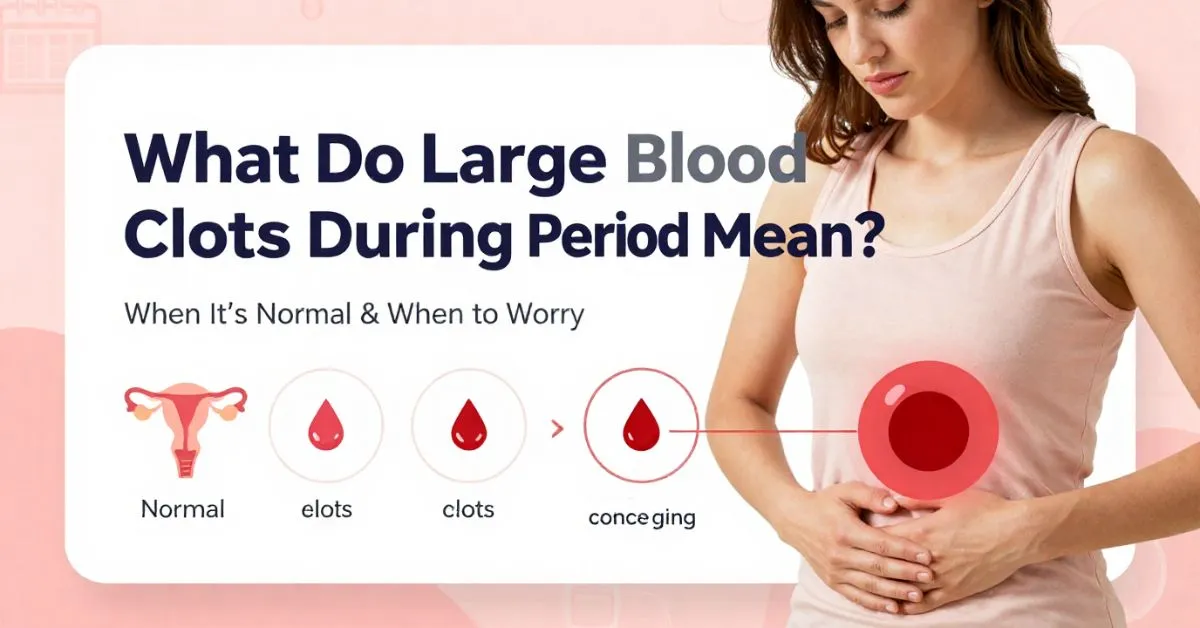
Large blood clots during a period really mean the bleeding is heavier than normal. Small clots can be common on the heaviest days, but clots bigger than a grape, larger than about 2.5 cm, or quarter-sized clots that happen more than once or twice may point to heavy menstrual bleeding, also called menorrhagia, or another underlying condition.
Seeing a big blood clot in your period can be alarming. Sometimes it happens because blood is leaving the uterus quickly and your body does not have enough time to keep it thin. But if the clots are large, frequent, painful, or come with very heavy flow, they may be a sign of fibroids, adenomyosis, polyps, hormone imbalance, abnormal uterine bleeding, a bleeding disorder such as von Willebrand disease, or a pregnancy-related problem.
The most important question is not only “Are clots present?” but also “How heavy is the bleeding, how long does it last, and what other symptoms are happening?” That is what helps tell the difference between a common heavy day and something that deserves medical evaluation.
When are period blood clots normal, and when are they not?
Small period clots are often normal, especially on day one or two when flow is heaviest. Menstrual blood contains blood, endometrial tissue from the uterine lining, mucus, and proteins. That is why period clots can look jelly-like, dark red, bright red, or maroon.
Large or repeated clots are more concerning when they happen with heavy menstrual bleeding. Mayo Clinic advises medical care if you pass clots bigger than a grape.
NHS says clots larger than about 2.5 cm can be a sign of heavy periods. Cleveland Clinic says quarter-sized clots that happen more than once or twice should also be checked.
Quick guide: Normal vs concerning clot patterns
| Pattern | More likely to be common | More likely to need medical care |
|---|---|---|
| Clot size | Small, occasional clots | Bigger than a grape, about 2.5 cm, or quarter-sized and repeated |
| Flow | Heavy for a short time but manageable | Soaking pads or tampons every 1 to 2 hours |
| Duration | Usual cycle length | Bleeding longer than 7 days |
| Timing | Only on the heaviest days | New pattern, most cycles, or worsening over time |
| Other symptoms | Mild cramps only | Severe cramps, fatigue, dizziness, shortness of breath, pelvic pressure |
These thresholds are based on guidance from Mayo Clinic, NHS, and Cleveland Clinic for heavy menstrual bleeding.
What causes large blood clots during a period?
Heavy menstrual bleeding
The most common meaning of large period clots is simple: the flow is heavy enough that blood pools and clots before leaving the body.
Heavy menstrual bleeding is not just “a bad period.” ACOG defines it as bleeding that disrupts physical, social, emotional, or material quality of life.
Uterine fibroids
Fibroids are noncancerous growths in the uterus and are one of the best-known causes of heavy periods with clots. They can also cause pelvic pressure, fullness, more cramping, back pain, and longer periods.
Adenomyosis
Adenomyosis happens when tissue similar to the endometrium grows into the muscular wall of the uterus. It is linked with heavy bleeding, painful periods, blood clots, and an enlarged or tender uterus.
Endometrial polyps and endometriosis
Polyps in the uterus can make bleeding heavier or more irregular. Endometriosis is better known for pain, but it can also be associated with heavy bleeding in some people.
Hormone imbalance, PCOS, and irregular ovulation
When ovulation does not happen regularly, the endometrium may build up more than usual. That can lead to a thicker lining and heavier shedding.
ACOG and MedlinePlus list problems with ovulation, PCOS, and hormone changes among causes of abnormal uterine bleeding and heavy periods. Thyroid disorders can also play a role.
Bleeding disorders
Some people have heavy periods because their blood does not clot normally. ACOG notes that heavy menstrual bleeding can be a major sign of a bleeding disorder, including von Willebrand disease.
This is especially important if periods have been very heavy since the beginning, or if there is easy bruising, frequent nosebleeds, or a family history of bleeding problems.
Medicines and devices
Blood thinners such as warfarin, apixaban, rivaroxaban, or enoxaparin can increase menstrual bleeding. Some non-hormonal contraceptive methods can also make bleeding heavier in some people.
Pregnancy-related bleeding
If there is any chance of pregnancy, heavy bleeding with large clots should be taken seriously. Miscarriage and ectopic pregnancy can both cause bleeding and pain. Heavy bleeding with clots is not something to assume is “just a late period” if pregnancy is possible.
Rare but important causes
Less often, abnormal bleeding can be linked to endometrial hyperplasia, precancerous changes, or cancer of the uterus or cervix.
These are less common than fibroids or hormone causes, but they matter, especially if the pattern is new, persistent, or happens outside your normal cycle.
What other symptoms matter with large clots?
Large blood clots during a period are more likely to need medical attention when they come with:
- soaking through a pad or tampon every hour for several hours
- needing two period products together
- bleeding through clothes or bedding
- periods lasting more than 7 days
- severe pelvic pain or cramping
- fatigue, weakness, dizziness, or shortness of breath
- pelvic pressure or a feeling of fullness
- bleeding between periods or after sex
- a late period with heavy bleeding and pain
Those symptoms fit the clinical picture of heavy menstrual bleeding or abnormal uterine bleeding and can also suggest anemia, fibroids, adenomyosis, pregnancy loss, or another underlying issue.
When should you worry about blood clots during your period?
You should book a medical appointment if large clots are happening often, if your periods are clearly getting heavier, or if your cycle is affecting work, school, exercise, sleep, or daily life. NHS and Cleveland Clinic both stress that heavy periods deserve treatment when they interfere with normal life.
Get urgent medical care if:
- you are soaking through one or more pads or tampons every hour for many hours
- you feel faint, weak, or short of breath
- you have severe pain
- you may be pregnant
- you have heavy bleeding with one-sided pelvic pain, shoulder pain, or dizziness
Those can be signs of severe blood loss, miscarriage, or ectopic pregnancy.
Could large period clots cause anemia?
Yes. Heavy periods can lead to iron deficiency anemia over time. Mayo Clinic notes that iron deficiency anemia is common with heavy periods, and symptoms can include tiredness, weakness, dizziness, and shortness of breath.
If you have large clots plus fatigue or breathlessness, that combination should not be ignored.
How doctors find the cause
Doctors do not diagnose large period clots based on clot size alone. They usually look at your full menstrual pattern, symptoms, medical history, age, pregnancy risk, medications, and exam findings.
Common evaluation steps may include:
- a pelvic exam
- blood tests for anemia, thyroid problems, or bleeding disorders
- a pregnancy test when needed
- pelvic ultrasound to check the uterus and ovaries
- sometimes hysteroscopy, sonohysterography, MRI, Pap testing, or endometrial biopsy depending on the pattern and your risk factors
These are standard tools used to evaluate abnormal uterine bleeding, fibroids, adenomyosis, polyps, ovarian issues, and endometrial problems.
How large period clots are treated
Treatment depends on the cause, not just the clot itself.
Medicines
Common treatments for heavy menstrual bleeding include NSAIDs such as ibuprofen or naproxen, hormonal birth control, oral progestins, and tranexamic acid.
MedlinePlus and Mayo Clinic both list tranexamic acid as a treatment option for heavy menstrual bleeding, and hormonal IUDs can also reduce blood loss in many patients.
Iron for anemia
If testing shows iron deficiency anemia, your doctor may recommend iron treatment along with treating the heavy bleeding itself.
Procedures
When medicines do not help enough, treatment may include hysteroscopy, removal of polyps, myomectomy for fibroids, uterine artery embolization, endometrial ablation, or hysterectomy in selected cases. The best option depends on the cause, symptoms, age, and future fertility goals.
Real-life examples of what large clots can mean
Example 1:
You have a regular 5-day period and pass one or two small jelly-like clots on day two, but you are not soaking through products and your cramps are typical. That may still be within normal range.
Example 2:
You pass several quarter-sized clots, bleed through a pad every hour or two, and feel tired and dizzy. That pattern strongly suggests heavy menstrual bleeding and possible anemia.
Example 3:
Your period is late, then you start heavy bleeding with clots and strong pelvic pain. That is not a watch-and-wait situation if pregnancy is possible.
Common mistakes to avoid
One mistake is assuming large clots are normal just because other family members had heavy periods. Sometimes that family pattern is actually fibroids, adenomyosis, or a bleeding disorder.
Another mistake is focusing only on the clots and ignoring the bigger pattern. The real issue is often the amount of blood loss, period length, pain level, and impact on daily life.
A third mistake is ignoring signs of anemia such as weakness, fatigue, or shortness of breath. Heavy periods can drain iron stores over time.
The last big mistake is treating possible pregnancy bleeding like a routine period. If pregnancy could be involved, heavy bleeding with clots needs prompt evaluation.
What to track before you see a doctor
It helps to write down:
- how many days your period lasts
- how often you change pads, tampons, or empty a menstrual cup
- how many large clots you pass
- the size of the clots
- whether bleeding wakes you at night
- pain level, pelvic pressure, back pain, fatigue, dizziness, or shortness of breath
- whether bleeding happens between periods
- whether pregnancy is possible
- medicines you take, especially blood thinners or hormones
This kind of tracking makes it easier for a gynecologist or primary care clinician to tell whether the pattern fits heavy menstrual bleeding, abnormal uterine bleeding, fibroids, adenomyosis, a hormone problem, or a bleeding disorder.
FAQs
Are blood clots normal during a period?
Small clots can be normal, especially on the heaviest days. Large clots or frequent clots are more concerning because they often happen with heavy menstrual bleeding.
How big is too big for a period clot?
Medical sources use slightly different wording, but clots bigger than a grape, larger than about 2.5 cm, or quarter-sized clots that happen more than once or twice should be checked.
Can fibroids cause large blood clots during a period?
Yes. Fibroids are a common cause of heavy periods and can lead to large clots, longer periods, and pelvic pressure.
Can PCOS cause blood clots during a period?
PCOS can lead to irregular ovulation and hormone imbalance, which may make the uterine lining build up and shed more heavily, sometimes with clots.
Do large clots mean miscarriage?
Not always. Many heavy periods cause clots. But if pregnancy is possible, heavy bleeding with clots should be evaluated promptly.
When should I go to the ER for period clots?
Go urgently if you are soaking through pads or tampons every hour for many hours, feel faint, have severe pain, or have heavy bleeding during pregnancy or with ectopic pregnancy symptoms.
Can heavy periods with clots cause anemia?
Yes. Ongoing heavy bleeding can lower your iron and cause iron deficiency anemia, which may make you tired, weak, dizzy, or short of breath.
What doctor should I see for large period clots?
A gynecologist or primary care clinician can start the evaluation. They may order blood tests, a pregnancy test, and pelvic ultrasound, then refer you for further care if needed.
Bottom line
So, what do large blood clots during period mean? In most cases, they mean your menstrual flow is heavier than normal. Small clots can happen during a normal period, but large or repeated clots can point to heavy menstrual bleeding, fibroids, adenomyosis, abnormal uterine bleeding, hormone imbalance, PCOS, thyroid disease, a bleeding disorder like von Willebrand disease, or a pregnancy-related problem. If the clots are large, frequent, painful, or paired with very heavy flow, anemia symptoms, or pregnancy concerns, it is time to get checked.
A good next step is to track your symptoms for one or two cycles and book a visit with a gynecologist if the pattern keeps happening.
Click Here To Read About: What Does Getting Sendy Mean? TikTok Slang Guide

Hello! I’m Clara Lexis, creator of Meanpedia.com. I specialize in breaking down words, phrases, and idioms so that anyone can understand and enjoy the beauty of English. My goal? Making language approachable, fun, and meaningful, one word at a time.