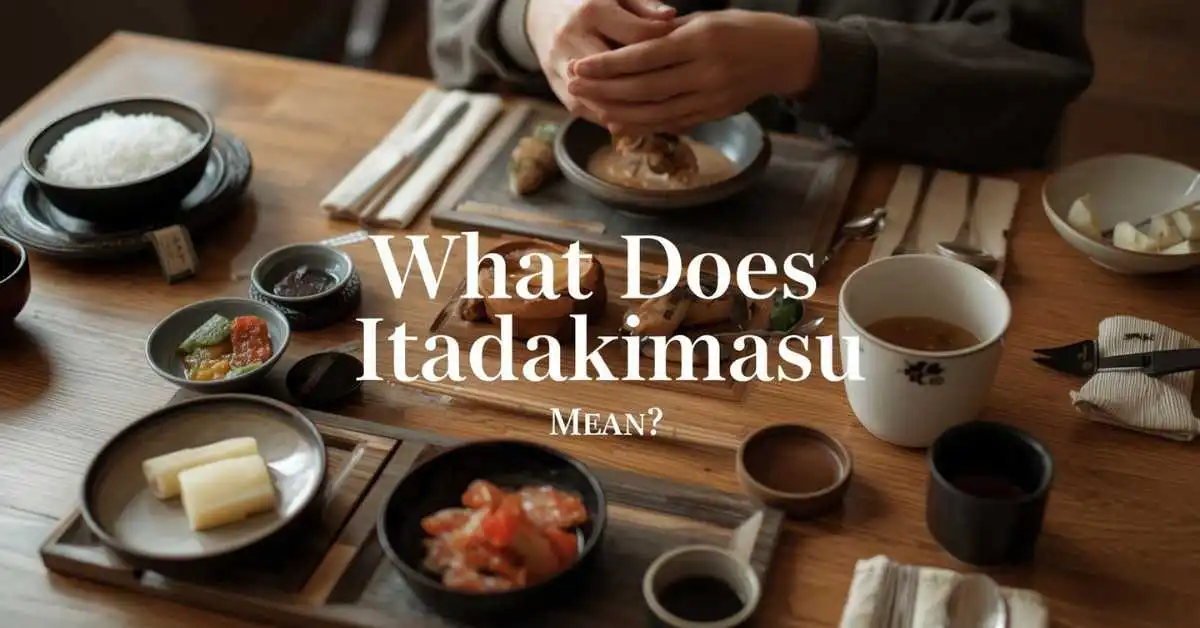
The short answer is simple. It is a Japanese phrase people say before eating. A common meaning is “I humbly receive.” In daily life, it also carries the feeling of “thank you for this meal.”
If you have heard the phrase itadakimasu in anime, at a Japanese restaurant, or in a travel video, you may ask: what does itadakimasu mean?
In Japan, the phrase shows gratitude for the food and respect for the people and living things that made the meal possible. That is why itadakimasu is more than a translation word. It is part of Japanese culture, table manners, and mindful eating.
Quick Answer
Itadakimasu means “I humbly receive.” Japanese people say it before a meal to show thanks for the food and respect for everyone involved in bringing that food to the table.
Official Japan travel guidance describes it as a phrase said before eating, with a meaning close to “I am glad to receive this meal.”
Itadakimasu at a Glance
| Term | Script | Simple meaning | When used |
|---|---|---|---|
| Itadakimasu | いただきます | I humbly receive | Before eating |
| Gochisousama deshita | ごちそうさまでした | Thank you for the meal | After eating |
| Itadaku | いただく / 頂く | To receive, in a humble way | Base verb |
The first phrase comes before the meal. The second comes after it. The base verb itadaku helps explain why the phrase has the sense of receiving food with humility.
What Does Itadakimasu Mean in Japanese?
Literal meaning
The literal meaning of itadakimasu comes from itadaku, a humble Japanese verb that means to receive. Many language guides explain the phrase as “I humbly receive.” This is the most direct meaning and the best place to start.
Natural meaning in English
A direct translation is helpful, but it is not the full story. In real life, the phrase often feels closer to:
- thank you for the food
- I gratefully receive this meal
- let’s eat, said with respect
The problem is that no short English phrase fully matches the Japanese meaning. Itadakimasu carries humility, gratitude, and etiquette all at once.
Why the meaning feels deeper
Japanese official travel guidance says the phrase shows appreciation for the food and for the people and living things behind it. That includes farmers, workers, cooks, plants, and animals. So when someone asks what does itadakimasu mean, the best answer is not just a dictionary line. It is also a cultural answer.
How Japanese People Use Itadakimasu
When people say it
Japanese people say itadakimasu right before they start eating. It is part of Japanese dining etiquette. Official Japan travel guides list it as one of the key phrases used at the table.
Common real-life examples
Here are simple examples:
- At home, a family sits down for dinner and says itadakimasu before the first bite.
- At school, children may say it together before lunch.
- At a restaurant, diners may say it quietly before eating.
- In anime and manga, characters often say it before meals because it is normal in daily life.
These examples help readers understand that the phrase is not rare or formal-only. It is a normal part of mealtime language in Japan.
How it is often said
People often say it in a calm voice. Some place their hands together before eating, though this is a custom and not a strict rule. The key point is respect and timing: say it just before the meal begins. Official guidance focuses on its place in table manners rather than on a fixed dramatic gesture.
The Cultural Meaning of Itadakimasu
Gratitude for more than food
The phrase does not only thank the cook. It can also reflect gratitude for:
- the person who prepared the meal
- the farmers who grew the food
- the workers who moved and sold it
- the plants and animals that became the meal
Japan’s official travel materials connect itadakimasu to mindful consumption and respect for life.
Link to Japanese values
This is why itadakimasu is often linked to ideas like:
- gratitude
- humility
- Japanese table manners
- Japanese dining etiquette
- mindful eating
- respect for food
- mottainai, the idea of not wasting what has value
These related ideas strengthen the deeper meaning of the phrase and make the article more complete for readers and search engines.
Is it religious?
The phrase is not simply a prayer, but official Japanese cultural guidance says it has roots in Buddhism and reflects appreciation for life and food. In modern use, it is also a daily custom. So it is best understood as both cultural and spiritual in background, while still being normal in everyday life.
Itadakimasu vs Gochisousama Deshita
The simple difference
These two phrases are often taught together because they belong to the same meal.
| Phrase | Meaning | Time |
|---|---|---|
| Itadakimasu | I humbly receive | Before eating |
| Gochisousama deshita | Thank you for the meal | After eating |
Official Japan travel guidance explains this before-and-after pattern clearly.
Easy example
A simple meal flow looks like this:
- Food arrives.
- You say itadakimasu.
- You eat.
- You finish.
- You say gochisousama deshita.
This is one of the easiest ways to remember the difference.
Why this comparison matters
Many users searching what does itadakimasu mean also want to know the phrase said after meals. Covering both terms helps satisfy search intent better than a thin one-word definition page.
Script, Pronunciation, and Language Details
How it is written
You will usually see the phrase written as いただきます in hiragana. The base verb can also appear with kanji as 頂く, and some learning sources mention that form when explaining the grammar behind the phrase.
Romaji spelling
In romaji, it is written as itadakimasu. This is the spelling most English readers search for online.
How to pronounce it
A simple English-friendly pronunciation is:
ee-tah-dah-kee-mah-soo
Some guides shorten the ending sound in fast speech, but learners can start with the full pronunciation above. MATCHA and other learner-focused sources give similar beginner-friendly guidance.
The role of humble language
The base verb itadaku is a humble form. That matters because it adds politeness and respect. In Japanese, humble language is part of keigo, the system used to show politeness and social awareness. You do not need to master keigo to use itadakimasu, but knowing this helps explain why the phrase feels more respectful than a plain “let’s eat.”
When Not to Use Itadakimasu
Not a general greeting
Do not use itadakimasu like hello or thank you in every situation. It belongs mainly to food and receiving a meal.
Not after the meal
After eating, the better phrase is gochisousama deshita, not itadakimasu. This is a very common learner mistake.
Not just for anime scenes
Many people first hear the phrase in anime. But it is not only an anime word. It is part of real Japanese life. Treating it like a cartoon-only phrase can make your understanding too shallow.
Common Misunderstandings About Itadakimasu
“It only means let’s eat”
Not quite. That translation is easy, but it leaves out humility and gratitude. Official travel guidance gives a meaning closer to “I am glad to receive this meal.”
“It only thanks the cook”
That is only part of the meaning. Japanese cultural guidance expands the phrase to include appreciation for farmers, workers, plants, and animals too.
“Foreigners must say it”
No. Japan’s official FAQ says visitors are not required to say itadakimasu, even though it is common in Japan.
“It is exactly the same as saying grace”
Not exactly. Both come before a meal, but itadakimasu is a wider cultural habit and etiquette phrase, even though it can have spiritual roots.
Why Itadakimasu Matters for Japanese Culture
It teaches mindful eating
The phrase slows the meal down for a moment. It reminds people to notice the food and not treat it as something automatic. This links well with Japanese ideas about respect and avoiding waste.
It shows social respect
Food is not only private. It often involves family, hosts, restaurant staff, and shared manners. Saying itadakimasu shows respect in a social setting and fits naturally into Japanese etiquette.
It explains why the phrase stays memorable
That is why this phrase stands out so much for language learners, travelers, and anime fans. It is short and easy to learn, but it carries big ideas: gratitude, humility, community, food culture, and respect for life.
Practical Examples for Beginners
Example 1: At home
Your host puts dinner on the table. Everyone sits down. Before anyone eats, they say:
Itadakimasu.
Then the meal starts.
Example 2: At a restaurant
Your food arrives. You pause for a moment and say:
Itadakimasu.
You eat. When you finish, you say:
Gochisousama deshita.
Example 3: In a Japanese class
A teacher explains:
- Itadakimasu = before eating
- Gochisousama deshita = after eating
- Itadaku = humble way to receive
This simple pattern helps learners remember the phrase.
FAQ
What does itadakimasu literally mean?
It literally means “I humbly receive.” The phrase comes from the humble verb itadaku, meaning to receive.
What does itadakimasu mean in English?
The closest simple English meanings are “I humbly receive,” “thank you for this meal,” or sometimes “let’s eat.” But no one short English phrase gives the full meaning.
Do Japanese people say itadakimasu every day?
It is commonly used before meals in Japan and is part of everyday dining etiquette. Official guidance presents it as a normal mealtime phrase.
Is itadakimasu rude if a foreigner says it?
No. Visitors are not required to say it, but using it respectfully is generally fine. Japan’s official FAQ says tourists do not have to say it, even though it is customary.
What do you say after itadakimasu?
After the meal, people often say gochisousama deshita. It is the matching after-meal phrase.
Conclusion
So, what does itadakimasu mean? The best simple answer is this: itadakimasu means “I humbly receive,” and Japanese people say it before eating to show gratitude, respect, and awareness of the meal. It is a key part of Japanese dining etiquette, Japanese culture, and the values behind food.
It also connects to related ideas like itadaku, keigo, gochisousama deshita, mottainai, and mindful eating. Once you know that, the phrase becomes more than a translation. It becomes a small lesson in how language and culture work together.
Read Also This Post: What Does It Mean When You Dream of Someone? Complete Explanation

Hello! I’m Clara Lexis, creator of Meanpedia.com. I specialize in breaking down words, phrases, and idioms so that anyone can understand and enjoy the beauty of English. My goal? Making language approachable, fun, and meaningful, one word at a time.