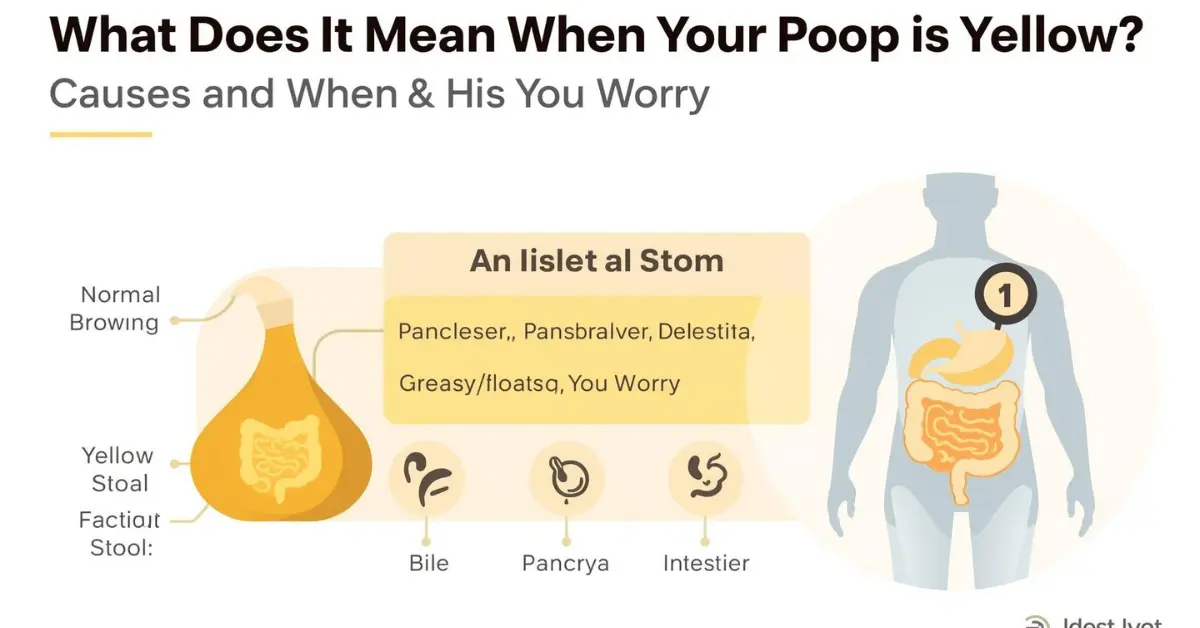
Yellow poop usually means stool moved through your digestive tract too quickly, so bile did not have enough time to turn it fully brown.
It can also happen with diarrhea, fat malabsorption, celiac disease, pancreas problems, Giardia infection, bile acid diarrhea, or food intolerance. It matters more when it keeps happening or comes with greasy stool, floating stool, weight loss, pain, dark urine, or jaundice.
Most stool is some shade of brown, so seeing yellow stool can be alarming. In many cases, one yellow bowel movement is not a medical emergency.
But if your poop stays yellow for several days, looks greasy, smells unusually bad, floats, or appears with diarrhea or stomach pain, the color change may be a clue that your body is not digesting fat well or that stool is moving through the gut too fast.
Why poop is normally brown
Your stool color is strongly affected by bile, a yellow-green fluid made by the liver and stored in the gallbladder. Bile helps digest fats.
As bile moves through the intestines, enzymes and normal digestive processes change its color from yellow-green to brown. When this process is interrupted or sped up, stool may look yellow or yellow-green instead of brown.
That is why yellow poop often points to one of two broad issues: either the stool passed too quickly through the intestines, or fat was not broken down and absorbed properly. Those two pathways explain many of the most common causes.
Common causes of yellow poop
1. Diarrhea and fast gut transit
One of the most common reasons for yellow poop is diarrhea. NIDDK defines diarrhea as loose, watery stools three or more times a day, and Mayo Clinic notes that faster transit can leave stool looking less brown because bile has had less time to change color.
Viral gastroenteritis, food poisoning, short-term digestive upset, and medicine side effects can all trigger this pattern.
This is why people often search for terms like yellow diarrhea, bright yellow stool, or why is my poop yellow all of a sudden. If the stool is loose and the episode is short, fast transit is often the simplest explanation.
2. Fat malabsorption and steatorrhea
If your body is not absorbing fat properly, stool may turn yellow, pale yellow, greasy, oily, bulky, foul-smelling, or hard to flush.
This is called steatorrhea, which means fatty stool. NIDDK lists loose, greasy, foul-smelling bowel movements and weight loss as signs of malabsorption.
This matters because many people describe yellow greasy stool, yellow floating stool, or mustard yellow poop when the real issue is not just color but fat in the stool. The texture and smell often matter more than the shade itself.
3. Celiac disease
Celiac disease can damage the small intestine and interfere with nutrient absorption. NIDDK lists chronic diarrhea, bloating, gas, nausea, abdominal pain, and loose, greasy, bulky, bad-smelling stools among its symptoms.
Some people with celiac disease also develop lactose intolerance because of small-intestine damage, which can worsen diarrhea and stool changes.
So if someone has recurring yellow poop along with bloating, weight loss, fatigue, or stool that smells worse than usual, celiac disease becomes part of the conversation.
One important rule: do not start a gluten-free diet before testing, because NIDDK says that can affect results and make diagnosis harder.
4. Pancreas problems, including exocrine pancreatic insufficiency
The pancreas makes digestive enzymes that help break down fat, protein, and carbohydrates. If enzyme production is too low, food is not digested properly.
NIDDK says exocrine pancreatic insufficiency, or EPI, can cause bloating, cramps, diarrhea, weight loss, and loose, greasy, bad-smelling stools. Chronic pancreatitis is a common cause of EPI.
This is one reason people search for yellow poop pancreas problems or yellow stool and pancreatic insufficiency.
If yellow stool is persistent and greasy, especially with weight loss, a doctor may order a stool elastase test. NIDDK says stool elastase is the most commonly used stool test for EPI.
5. Giardia and other infections
Giardia is a parasite that can cause diarrhea, gas, stomach cramps, nausea, dehydration, and smelly, greasy poop that can float.
It is especially relevant after contaminated water exposure, travel, camping, daycare exposure, or poor sanitation.
That means yellow poop with bad smell, yellow stool that floats, or yellow diarrhea after travel can sometimes point to Giardia rather than a simple stomach bug.
6. Bile acid diarrhea and yellow stool after gallbladder removal
Bile acid malabsorption can cause chronic watery diarrhea when bile acids are not handled properly and pass into the colon, where they trigger urgency and loose stools.
Mayo Clinic describes bile acid malabsorption as an underrecognized cause of chronic diarrhea, and bile acid diarrhea is also linked with IBS-D in some patients.
After gallbladder removal, some people develop diarrhea. Mayo Clinic notes that this may happen because more bile acids reach the large intestine and act as a laxative. In most people it improves, but sometimes it lasts longer.
7. Food intolerance, lactose intolerance, and IBS-D
NIDDK says lactose intolerance can cause bloating, diarrhea, and gas after dairy, and food intolerances are common causes of chronic diarrhea.
IBS can also cause repeated abdominal pain and changes in bowel movements, including IBS-D, where stools are often loose or watery.
Because Mayo Clinic explains that faster transit can keep stool from turning fully brown, conditions that cause frequent loose stools, such as IBS-D, food intolerance, or antibiotic-related diarrhea, can indirectly make stool look more yellow.
That is an inference based on how stool color changes with transit time and how these conditions cause diarrhea.
Yellow poop vs pale stool vs greasy stool
Many readers confuse yellow stool with pale or clay-colored stool, but they are not the same thing.
| Stool pattern | What it often suggests | Why it matters |
|---|---|---|
| Bright or mustard yellow stool | Fast transit, diarrhea, irritation, bile not fully changed | Often short-term if symptoms are mild |
| Yellow greasy floating stool | Fat malabsorption or steatorrhea | More concerning if it keeps happening |
| Pale, clay-colored, gray, or whitish stool | Too little bile reaching the intestine | Can point to liver, bile duct, gallbladder, or pancreas problems |
| Yellow diarrhea after gallbladder removal | Bile acid-related diarrhea | Often improves, but ongoing symptoms need review |
MedlinePlus says pale or clay-colored stool may be due to problems in the biliary system, which includes the liver, gallbladder, bile ducts, and pancreas.
So if the stool is truly pale, putty-colored, or gray rather than simply yellow, think less about routine diarrhea and more about bile flow problems.
Yellow poop with other symptoms: what each clue can mean
If your yellow poop is greasy, foul-smelling, or floating, think more about malabsorption, steatorrhea, celiac disease, Giardia, or pancreatic insufficiency.
If it comes with mucus, urgency, cramping, or repeated loose stools, diarrhea-related causes move higher on the list. Mayo Clinic lists mucus, belly pain, and urgency among symptoms that can come with diarrhea, while IBS can also cause mucus in stool.
If you also have weight loss, poor appetite, bloating, or nutrient deficiency symptoms, doctors think more seriously about malabsorption, celiac disease, or EPI.
If yellow or pale stool appears with dark urine, yellow eyes, jaundice, or very light stools, it may point to a bile flow problem rather than simple yellow diarrhea. MedlinePlus and NHS guidance on cholestasis note that dark urine and pale stool are warning signs that need medical review.
If you are pregnant and have itching, dark urine, pale stool, or jaundice, speak with a clinician promptly because cholestasis of pregnancy can cause those symptoms.
What yellow poop means in babies vs adults
In breastfed newborns, yellow mushy stool is usually normal. Mayo Clinic says yellow, mushy stool is perfectly healthy for breastfed babies. That is very different from ongoing yellow diarrhea in older children or adults.
In adults, yellow poop is more likely to be interpreted through the lens of diarrhea, fat malabsorption, food intolerance, celiac disease, pancreatic insufficiency, infection, or bile-related problems. Age changes the meaning.
What to do if your poop is yellow
If it happens once and you otherwise feel well, watch it for a day or two. Acute diarrhea often improves on its own. NIDDK recommends replacing lost fluids and electrolytes with water, broths, sports drinks, or oral rehydration solutions.
Keep track of these details:
- Is the stool loose or watery?
- Is it greasy or floating?
- Does it happen after dairy, certain meals, antibiotics, or travel?
- Are you having pain, fever, mucus, weight loss, dark urine, or jaundice?
Do not make these common mistakes:
- assuming yellow always means liver disease
- ignoring repeated greasy, floating stool
- starting a gluten-free diet before celiac testing
- waiting too long when diarrhea is causing dehydration
When to see a doctor
Mayo Clinic says adults should seek medical care if diarrhea lasts more than two days without improvement, or if there is severe pain, dehydration, black or bloody stool, or fever.
You should also book a medical visit if yellow stool keeps coming back, if you have yellow greasy stool, floating stool, unexplained weight loss, repeated stomach pain, persistent nausea, or signs of malabsorption.
For children, NIDDK warns that diarrhea can lead to dehydration faster, especially in younger children.
How doctors find the cause
Doctors usually start with symptom history, stool appearance, travel, medicines, diet triggers, recent infections, and weight change.
NIDDK says tests for diarrhea may include stool tests, blood tests, hydrogen breath tests, diet changes, and sometimes endoscopy.
If celiac disease is suspected, doctors usually use blood tests and sometimes a small-intestine biopsy.
If exocrine pancreatic insufficiency is suspected, stool elastase is commonly used. And If pale stool, jaundice, or dark urine is present, liver, gallbladder, bile duct, and pancreas evaluation may be needed.
FAQs
Is yellow poop normal?
Sometimes. One yellow bowel movement can happen with short-term diarrhea or fast transit. Persistent yellow stool is more important, especially if it is greasy, floating, foul-smelling, or comes with pain or weight loss.
What causes yellow poop in adults?
Common causes include diarrhea, malabsorption, celiac disease, pancreatic insufficiency, Giardia infection, food intolerance, IBS-D, and bile acid diarrhea after gallbladder removal.
Why is my poop yellow and floating?
Floating stool can happen from gas, but yellow floating stool that is greasy or foul-smelling raises concern for steatorrhea, Giardia, celiac disease, or pancreatic insufficiency.
Can stress or IBS make poop yellow?
IBS itself causes changes in bowel habits, especially diarrhea in IBS-D. Because fast transit can leave bile less altered, IBS-D can indirectly make stool look more yellow. That link is an inference based on IBS-related diarrhea and how stool color changes with transit time.
Can yellow poop happen after antibiotics?
It can. NIDDK says antibiotics can cause acute diarrhea, and diarrhea can speed stool through the intestines before bile turns it brown.
Is yellow stool normal in babies?
In breastfed babies, yes, yellow mushy stool is usually normal. In older children and adults, repeated yellow stool is more likely to need explanation.
When should I worry about yellow poop?
Worry more if it lasts more than a couple of days, keeps returning, or comes with dehydration, severe pain, fever, blood, black stool, dark urine, jaundice, or weight loss.
What tests might a doctor order?
Doctors may use stool tests, blood tests, celiac blood work, breath tests, endoscopy, or a stool elastase test if pancreatic insufficiency is suspected.
The bottom line
So, what does it mean when your poop is yellow? Most often, it means stool moved through your gut too quickly and bile did not turn fully brown. But if yellow poop is greasy, floating, foul-smelling, frequent, painful, or linked with weight loss, it may point to malabsorption, celiac disease, Giardia, bile acid diarrhea, or pancreatic insufficiency.
Pale or clay-colored stool is a different warning sign and may suggest a bile flow problem. If the change keeps happening, get it checked instead of guessing.
Read Also This Post: What Does == Mean in Python? Equality Operator Explained

Hello! I’m Clara Lexis, creator of Meanpedia.com. I specialize in breaking down words, phrases, and idioms so that anyone can understand and enjoy the beauty of English. My goal? Making language approachable, fun, and meaningful, one word at a time.