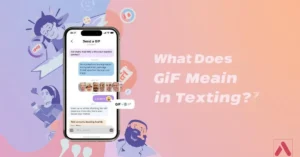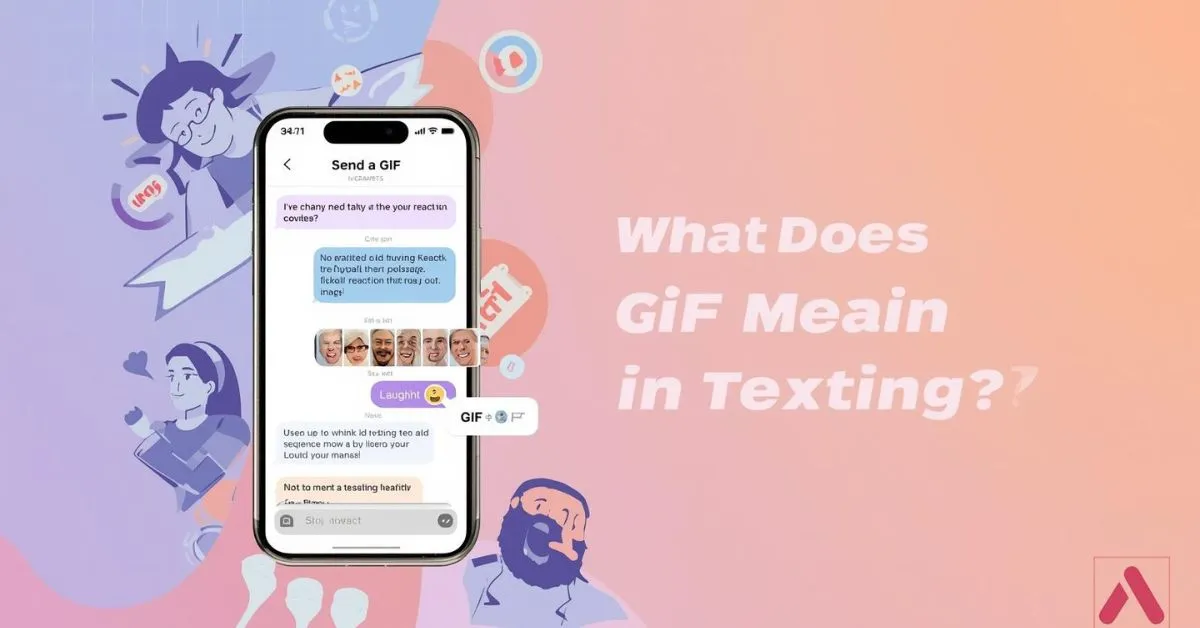
In texting, GIF usually means a short animated reaction image people send to show emotion, humor, or mood. The letters GIF stand for Graphics Interchange Format, but in everyday messages, people usually mean the moving image itself, not the technical file format name.
Dictionaries and social media glossaries reflect both meanings: the file format and the image used in online communication.
If someone says “send a GIF,” “this needs a GIF,” or simply types “GIF” in chat, they usually mean that a visual reaction would say more than plain text. That usage shows up in current explainers and in real online discussion where people use “gif” as shorthand for “reply with a reaction GIF.”
What GIF means in a text message
In a text message, GIF means an animated image used as a reaction. People send one when they want to show laughter, shock, excitement, sarcasm, awkwardness, support, or disbelief without typing a long reply.
GIF platforms themselves frame GIFs as tools that make conversations more expressive, and dictionaries now recognize GIF as both the format and the image people share.
So in normal texting, GIF is less about computer terminology and more about conversation tone. It is visual shorthand for “this is how I feel” or “this is the vibe of my reply.” That is why GIFs are so common in messaging, social reactions, and comment threads.
What does GIF stand for?
GIF stands for Graphics Interchange Format. Cambridge, Merriam-Webster, and Hootsuite all describe it as a computer file format that can contain a still or moving image, while everyday usage often points to the animated reaction image people share online.
That distinction matters because many readers search this keyword after seeing the word in a message, not because they want a technical file-format lesson.
In real-world texting, the practical meaning comes first: a GIF is the moving reaction image.
What does it mean when someone types “GIF” in chat?
This is where many weaker articles fall short.
When someone literally types “GIF” as a reply, they often mean one of these things:
- “Send a GIF here.”
- “This moment is best answered with a GIF.”
- “I have a reaction, but a GIF would explain it better than words.”
That shorthand shows up in real online use and in current texting explainers. It is not an official acronym-within-an-acronym. It is more like a conversational shortcut.
For example:
Friend: I just dropped my birthday cake.
Reply: GIF
Meaning: “I need a dramatic reaction image for this.”
Or:
Post: He said “on my way” an hour ago.
Comment: gif
Meaning: “This deserves a reaction GIF.”
So if you see GIF typed by itself, the person usually is not defining the term. They are signaling that a visual reaction fits the moment better than text.
How people use GIFs in texting
People use GIFs because they add something plain text often lacks: tone. Merriam-Webster even notes that emoji, emoticons, and GIFs can instantly signal whether a message is sincere, joking, or sarcastic.
To react without typing a full sentence
Instead of writing “That is hilarious,” someone may send a laughing GIF.
Instead of writing “I cannot believe this,” they may send a shocked reaction GIF.
To make humor or sarcasm clearer
A short message can sound flat or ambiguous. A GIF can make the tone obvious.
To show mood quickly
GIFs are often used for:
- excitement
- awkwardness
- celebration
- eye-rolling
- support
- disbelief
To reference a familiar moment
Many GIFs come from movies, shows, interviews, sports clips, or viral internet moments. That shared reference can make the reply feel more specific and more expressive.
Platforms like GIPHY and Tenor are built around helping users find animated GIFs and videos that convey exactly what they mean in conversation.
Real texting examples
Here are simple, realistic examples of how people use GIFs in messages:
Example 1
Friend: I got the job.
Reply: happy dancing GIF
Meaning: “I’m excited for you.”
Example 2
Friend: He changed the plan again.
Reply: eye-roll GIF
Meaning: “Of course he did.”
Example 3
Friend: I just sent the email to the wrong person.
Reply: dramatic facepalm GIF
Meaning: “That is painfully awkward.”
Example 4
Friend: We leave in 10 minutes.
Reply: thumbs-up GIF
Meaning: “Got it.”
These examples work because a GIF compresses emotion, reaction, and tone into one fast visual response. That is why reaction GIFs are still so common in messaging and social conversations.
GIF vs emoji vs meme vs sticker vs short video
This is one of the biggest confusion points, so it helps to separate them clearly.
| Term | What it usually is | Best use in texting |
|---|---|---|
| GIF | A short animated image used as a reaction | Showing emotion, humor, or a fuller response |
| Emoji | A small symbol or icon | Quick tone, mood, or emphasis |
| Meme | A broader joke format or internet reference | Sharing humor or a familiar online idea |
| Sticker | A graphic reply element, often stylized | Cute, playful, decorative reactions |
| Short video / clip | Moving media that may include audio | More detailed or content-heavy reactions |
A practical rule is this: emoji is quickest, GIF is more expressive, meme is more idea-based, sticker is more stylized, and a short video is heavier than all of them.
One reason people get confused is that some platforms mix GIFs, stickers, and clips in the same search experience. GIPHY, for example, surfaces GIFs, stickers, and clips together, while Tenor describes itself as a place to find animated GIFs and videos for conversation.
Are all moving reactions actually GIFs?
Not always.
In everyday speech, people often use GIF as a loose label for any short moving reaction. But technically, not every moving reaction is a classic GIF file.
Some are stickers, some are clips, and some are short videos surfaced inside the same keyboard or search tool. That is part of why the word feels broader in texting than it does in technical definitions.
So if someone says “send a GIF,” they often mean “send a short moving reaction”, even if the app is technically serving a different media type behind the scenes. That is normal everyday usage.
When sending a GIF makes sense and when it does not
GIFs usually work best when the conversation is casual, playful, or reaction-driven. They can be great for:
- joking with friends
- celebrating good news
- reacting in a group chat
- softening a short reply
- making sarcasm or excitement clearer
They are less useful when the message needs to be direct, serious, or sensitive. In those situations, a GIF can feel dismissive, confusing, or out of place.
That is an important nuance: the meaning of a GIF in texting is not just about the image itself. It is also about context, tone, and relationship. A funny GIF can feel warm in one conversation and rude in another.
How people actually send GIFs in texts
Many people now send GIFs straight from their keyboard or messaging tools. Google’s Gboard documentation says users can enter text and use images such as emojis and GIFs, and Tenor notes that its GIF Keyboard powers GIF search for Gboard and other products.
That matters for this keyword because when people ask “what does GIF mean in texting,” they are often asking about something they saw in a real messaging interface, not just a random internet term. GIFs are built into the way many modern chat tools work.
What Most Articles Miss About This Topic
Most articles answer the acronym and stop there.
What users actually need is the social meaning, not just the technical one.
Here is the key clarification many pages miss:
- In texting, GIF usually means the reaction image, not the file format lesson.
- If someone types “GIF” by itself, they may mean “reply with a GIF” or “a GIF would fit here.”
- Not every moving reaction is technically a GIF, but everyday users still call many of them GIFs.
- The real value of a GIF in chat is not motion alone. It is tone, emotion, and shared context.
That is what makes the term easy to understand in real conversations.
FAQ
What does GIF mean in a text message?
In a text message, GIF usually means a short animated reaction image someone sends to show emotion, humor, or mood.
What does GIF stand for?
GIF stands for Graphics Interchange Format.
What does it mean if someone types “GIF” in chat?
It usually means they want a reaction GIF, or they think a GIF would express the moment better than plain text. That shorthand shows up in current texting explainers and online discussion.
Is a GIF the same as a meme?
Not exactly. A GIF is usually the moving image itself. A meme is a broader internet joke, format, or reference. Some GIFs can also be used as memes, but the terms are not identical.
Can GIFs have sound?
Classic GIFs are generally treated as soundless. Some modern apps also show clips or videos in the same discovery tools, which is one reason people mix the terms up.
Are GIFs only used on social media?
No. GIFs are also commonly used in texting, messaging apps, and chat tools. Gboard, Tenor, and GIPHY all position GIFs as part of everyday digital conversation.
Conclusion
So, what does GIF mean in texting?
Most of the time, it means a short animated reaction image used to express a feeling, joke, or mood in a message. The full term is Graphics Interchange Format, but in real conversations, people usually mean the visual reaction itself. And if someone types “GIF” by itself, they often mean that a reaction GIF would say more than words.
Click Below To Read About:
What Does Chan Mean? Japanese Meaning, Use, and Examples
What Does WTB Mean? Text, Marketplace, and Gaming Guide
What Does the Name Lee Mean? Origin, Popularity & More

Hi, I’m Evan Lexor, the voice behind Meanpedia.com. I break down English words, slang, and phrases into clear, simple meanings that actually make sense. From modern internet terms to everyday expressions, my goal is straightforward: help you understand English better, faster, and with confidence, one word at a time.