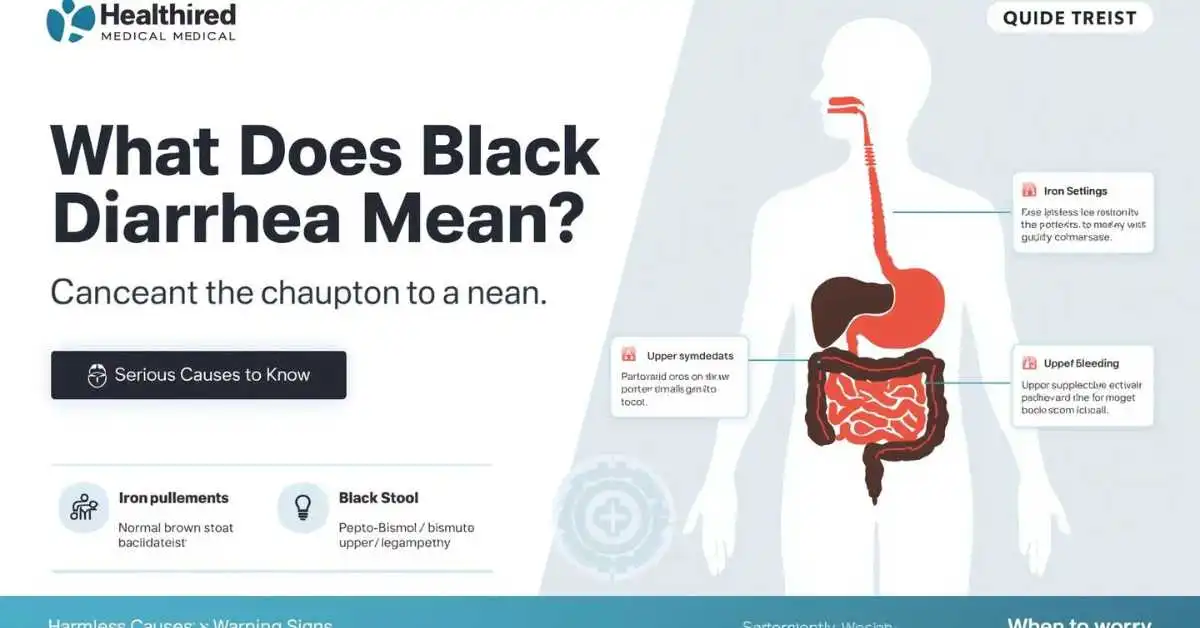
Black diarrhea can happen for harmless reasons, such as iron supplements, bismuth medicines like Pepto-Bismol, or dark foods. But black, tarry diarrhea can also mean melena, which is stool darkened by digested blood from bleeding in the upper digestive tract.
Get urgent medical help now if black diarrhea comes with dizziness, fainting, vomiting blood, coffee-ground vomit, chest pain, trouble breathing, severe stomach pain, or signs of dehydration. Black, tarry stools are a recognized warning sign of gastrointestinal bleeding.
Black diarrhea is not a symptom most people ignore. The color alone can be scary, and the fear is understandable. Sometimes the cause is mild and temporary.
Other times, black loose stool points to bleeding higher up in the gastrointestinal tract, such as the esophagus, stomach, or duodenum. That is why the texture, smell, and other symptoms matter just as much as the color.
This guide explains what black diarrhea means, the difference between harmless black stool and melena, common causes like iron supplements and bismuth subsalicylate, the warning signs of a GI bleed, and what to do next.
What does black diarrhea mean?
Black diarrhea means your stool is both dark black and loose or watery. It may appear jet black, sticky, shiny, or tar-like. It may also smell unusually strong if blood is present.
Melena is the medical term for black, tarry stool caused by digested blood, usually from bleeding in the upper gastrointestinal (GI) tract. That includes the esophagus, stomach, and upper small intestine, especially the duodenum.
Not every black stool is melena. Cleveland Clinic notes that some medicines, supplements, and foods can stain stool black without there being blood in it. Mayo Clinic also lists iron supplements, bismuth subsalicylate products such as Pepto-Bismol or Kaopectate, and black licorice as common non-bleeding causes of black stool.
Black stool vs black diarrhea vs melena
The easiest way to understand this symptom is to compare the possibilities.
| Type | What it looks like | What it may mean |
|---|---|---|
| Black but formed stool | Dark, solid bowel movement | Iron, bismuth, dark foods, or possible bleeding |
| Black loose stool | Dark, runny diarrhea | Medicine effect, food effect, diarrhea illness, or possible bleeding |
| Black tarry stool | Sticky, shiny, foul-smelling, tar-like stool | More concerning for melena and upper GI bleeding |
| Bright red blood in stool | Fresh red or maroon blood | More often lower GI bleeding, such as colon, rectum, or anus |
This distinction matters because upper GI bleeding is more likely to turn stool black, while lower GI bleeding more often appears red or maroon.
Common Harmless causes of black diarrhea
Many people search “why is my diarrhea black” because they want to know if it could be something simple. Sometimes it is.
Iron supplements
MedlinePlus says black stools are normal when taking iron tablets. But it also says to contact a healthcare provider if the stools are tarry-looking, have red streaks, or happen with stomach pain.
Bismuth subsalicylate
Mayo Clinic says bismuth subsalicylate can cause grayish black stools and a dark tongue, and that this is temporary. This is a very common reason for black stool after taking Pepto-Bismol for nausea, indigestion, or diarrhea.
Dark foods and products
Mayo Clinic and Cleveland Clinic both note that certain foods and products may stain stool black, including black licorice, blueberries, blood sausage, and even activated charcoal.
When a harmless cause is more likely
A harmless cause is more likely when:
- you recently started iron tablets
- you took Pepto-Bismol or another bismuth product
- you ate a large amount of black licorice or other very dark foods
- you feel otherwise well
- the stool is dark, but not sticky or tar-like
- the color goes away after the product is stopped
When black diarrhea may be serious
The more serious answer to “what does black diarrhea mean?” is melena from internal bleeding. MedlinePlus says black or tarry stools with a foul smell usually point to a problem in the upper digestive tract and most often indicate bleeding.
Cleveland Clinic explains that melena is usually caused by bleeding somewhere in the upper GI tract. The blood turns black as it is digested during its trip through the digestive system.
Serious causes of melena and black tarry diarrhea
Possible causes include:
- Peptic ulcer disease
- a stomach ulcer
- a duodenal ulcer
- gastritis
- esophagitis
- acute hemorrhagic erosive gastropathy
- esophageal varices
- stomach varices
- a tear in the esophagus after severe vomiting, sometimes called a Mallory-Weiss tear
- trauma or gastrointestinal perforation
- cancers involving the stomach, esophagus, or pancreas
These are important entities to cover because they explain why black diarrhea is sometimes far more than a simple stomach upset.
Warning signs: When to worry about black diarrhea
You should treat black diarrhea as more urgent if it comes with any of the following:
- dizziness
- lightheadedness
- fainting
- weakness
- trouble breathing
- chest pain
- vomiting blood
- vomit that looks like coffee grounds
- severe abdominal pain
- rectal pain
- red blood in stool
- signs of dehydration
- diarrhea lasting more than 2 days in adults
- high fever
- six or more loose stools per day
NIDDK specifically says adults should talk with a doctor right away if diarrhea includes black and tarry stools, red blood, severe pain, frequent vomiting, or dehydration.
What black diarrhea can look like in real life
Example 1: Black diarrhea after Pepto-Bismol
You had nausea or an upset stomach, took Pepto-Bismol, and the next bowel movement was dark or black. If you otherwise feel okay and the stool is not tarry, bismuth may be the reason. Mayo Clinic says this color change is temporary and should go away after stopping the medicine.
Example 2: Black stool after iron pills
You recently started iron supplements for anemia. Your stool turns black, but you have no dizziness, no stomach pain, and no vomiting. MedlinePlus says black stools are normal with iron tablets, though tarry stool or pain needs prompt medical advice.
Example 3: Black watery stool with weakness
You have black loose stool, feel shaky, and get dizzy when standing up. That is more concerning because black, tarry stool plus lightheadedness may suggest blood loss from a GI bleed.
Example 4: Black tarry diarrhea with stomach pain
You have upper abdominal pain and repeated jet-black diarrhea with a strong smell. That pattern is more consistent with melena, especially if there is a history of ulcers, gastritis, NSAID use, or vomiting.
What to do right now
If you recently took iron or bismuth and feel fine
Think about timing first. If the dark stool began after iron tablets or bismuth subsalicylate, a medicine effect is possible. Keep watching the stool closely and monitor how you feel.
If you have diarrhea without emergency signs
Replace lost fluids and electrolytes. NIDDK recommends drinking water and liquids with electrolytes, and using oral rehydration solutions when needed.
If the stool is black and tarry or you feel unwell
Do not assume it is “just food” or “just Pepto.” Black, tarry stool is a recognized warning sign of upper GI bleeding and should be assessed quickly, especially if you also have dizziness, vomiting blood, or severe pain.
How doctors check black diarrhea
When doctors evaluate black diarrhea, they usually ask:
- when it started
- whether the stool is tarry or sticky
- whether you took iron, Pepto-Bismol, or activated charcoal
- whether you ate dark foods like black licorice or blueberries
- whether you have abdominal pain, vomiting, coffee-ground vomit, or faintness
- whether you have a history of ulcers, gastritis, esophagitis, or GI bleeding
A provider may test for blood in the stool. MedlinePlus says a stool guaiac test looks for hidden, or occult, blood in a stool sample. Cleveland Clinic notes that blood tests, CT imaging, CT angiography, and upper endoscopy (EGD) may be used to find the source of bleeding.
Common mistakes to avoid
Assuming black stool is always harmless
That is one of the biggest mistakes. Iron and bismuth can darken stool, but black, tarry stool can still signal internal bleeding.
Ignoring the texture
Plain dark stool is not the same as jet-black, sticky, tar-like stool. Cleveland Clinic says the tarry consistency is one clue that the stool may be melena.
Overlooking dehydration
Diarrhea itself can become dangerous when it causes dehydration. That is one reason black diarrhea deserves extra attention.
Self-treating when red flags are present
If you also have vomiting blood, coffee-ground vomit, severe stomach pain, chest pain, or lightheadedness, do not keep self-treating at home. Seek urgent medical care.
Practical takeaways
If you are asking, “what does black diarrhea mean?”, the honest answer is this:
- It may be a temporary color change from iron supplements, bismuth subsalicylate, activated charcoal, black licorice, blueberries, or other dark foods.
- It may also be melena, which means digested blood is passing through your stool from bleeding in the upper GI tract.
- The most worrying pattern is black, tarry, sticky stool with symptoms like dizziness, weakness, vomiting blood, or severe abdominal pain.
- When in doubt, especially if the stool is truly tarry or you feel unwell, medical evaluation is the safer choice.
FAQ
Is black diarrhea always a sign of bleeding?
No. Black diarrhea can also happen after iron supplements, bismuth subsalicylate, activated charcoal, or dark foods. But black, tarry stool is more concerning for bleeding.
What is melena?
Melena is the medical term for black, tarry stool caused by digested blood, usually from bleeding in the upper GI tract.
Can Pepto-Bismol cause black diarrhea?
Yes. Mayo Clinic says bismuth subsalicylate can cause grayish black stools temporarily.
Can iron pills make stool black?
Yes. MedlinePlus says black stools are normal when taking iron tablets.
What does black tarry diarrhea mean?
Black, tarry diarrhea is more concerning for melena and upper gastrointestinal bleeding than plain dark stool.
When should I go to the ER for black diarrhea?
Go urgently if it comes with vomiting blood, coffee-ground vomit, dizziness, fainting, trouble breathing, chest pain, severe stomach pain, or dehydration.
How do doctors test black stool?
They may use a stool guaiac test for hidden blood, blood tests, imaging, or an upper endoscopy to find the cause.
Can black stool come from food?
Yes. Black licorice, blueberries, blood sausage, and some dark products can stain stool black.
Conclusion
Black diarrhea is not a symptom you should dismiss. Sometimes it has a simple explanation, like iron tablets or Pepto-Bismol. But sometimes it is the body’s warning sign for melena, upper GI bleeding, a bleeding ulcer, gastritis, esophageal bleeding, or another serious digestive problem.
The safest way to think about it is simple: check what you took, look closely at the stool, and pay attention to the red-flag symptoms. If it is black and tarry, or you feel weak, dizzy, or sick, seek medical care quickly.
Click Here To Read About: What Does Arbitrary Mean? Definition and Examples

Hi, I’m Evan Lexor, the voice behind Meanpedia.com. I break down English words, slang, and phrases into clear, simple meanings that actually make sense. From modern internet terms to everyday expressions, my goal is straightforward: help you understand English better, faster, and with confidence, one word at a time.