An apostle is more than a follower of Jesus Christ. The word comes from the Greek apostolos, meaning “one who is sent.” Apostles are messengers, teachers, and leaders given a special mission by God.
In the Bible, apostles spread Jesus’ teachings and helped establish the Early Church. Today, apostles continue to guide communities, teach faith, and inspire believers worldwide.
This guide explains:
- The meaning of an apostle
- Biblical apostles, including the Twelve and Paul
- Differences between apostles, disciples, prophets, and evangelists
- Apostolic missions and teachings
- Modern apostles and their role today
By the end, you will fully understand the role of apostles. Both historical and modern, and their continuing influence in Christianity.
Definition of Apostle
An apostle is someone chosen and sent on a special mission. They are messengers, teachers, and evangelists. Who guide communities, establish churches, and spread faith.
Unlike ordinary disciples who only learn, apostles teach, heal, and lead. Apostles are central figures in the New Testament. Tasked with spreading the Gospel and maintaining the integrity of Christian teachings.
Famous examples:
- Peter (Saint Peter): Leader of the Early Church, preached in Jerusalem, performed miracles (Acts 2:14-41)
- Paul (Saint Paul): Converted on the road to Damascus (Acts 9:15), traveled widely, and wrote letters that became part of the New Testament
Apostles carry responsibility, authority, and the mission to teach and guide others.
Biblical Apostles: The Twelve and Beyond
The most famous apostles are the Twelve Apostles of Jesus:
Peter, James, John, Andrew, Philip, Bartholomew, Matthew, Thomas, James (son of Alphaeus), Thaddeus, Simon the Zealot, and Judas Iscariot (later replaced by Matthias).
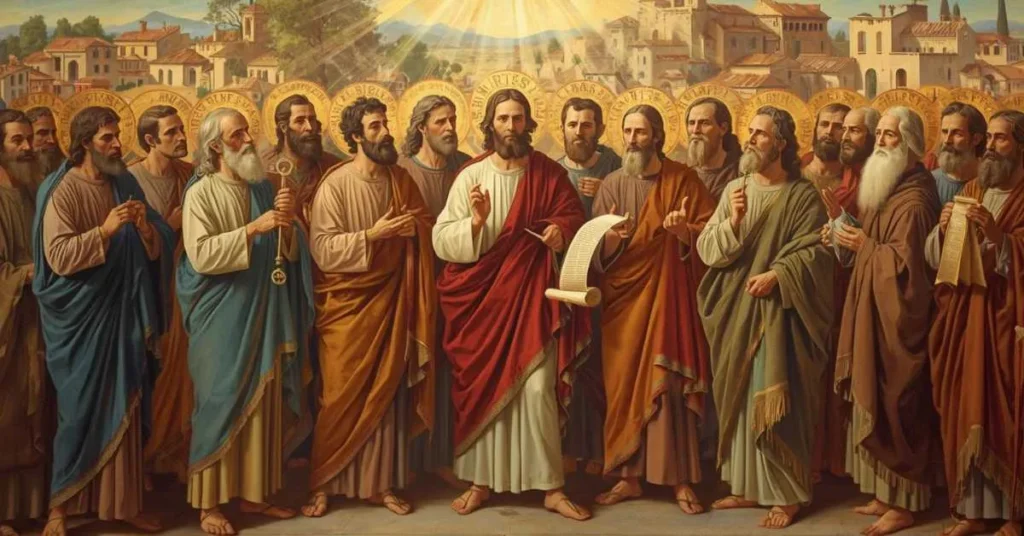
These apostles:
- Spread Jesus’ teachings
- Performed miracles
- Built the Early Church
- Were witnesses to Jesus’ life, death, and resurrection
Short Biographies of Key Apostles
- Peter: The “rock” of the church (Matthew 16:18). Preached in Jerusalem, healed the sick, and helped organize the early Christian community.
- James: First apostle martyred for faith (Acts 12:2), encouraged believers in Jerusalem.
- Paul: Converted from Saul of Tarsus, became a missionary to Gentiles. Authored letters to early churches (Romans, Corinthians, Galatians).
Other apostles included those who traveled widely, teaching, establishing churches, and performing miracles, fulfilling their apostolic mission.
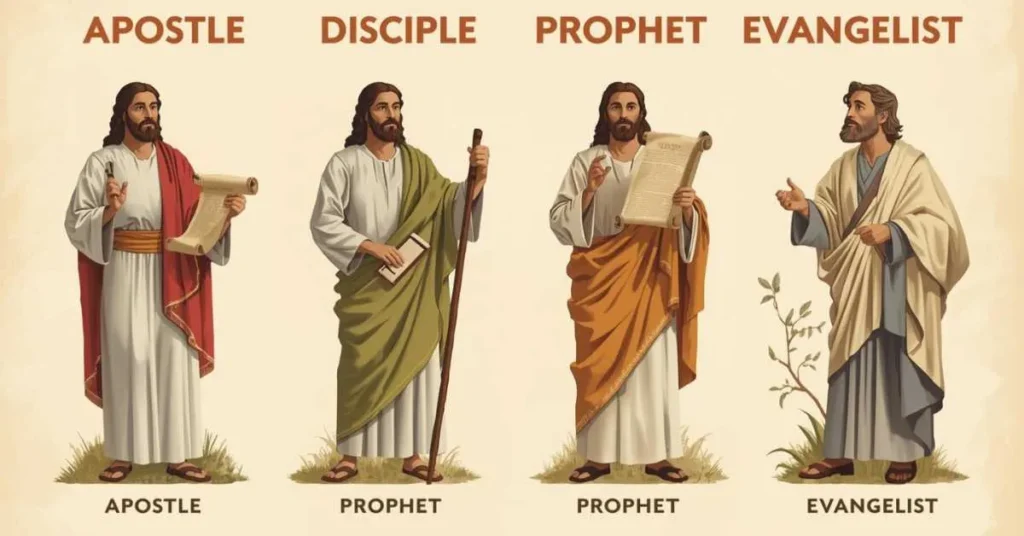
Apostle vs Disciple vs Prophet vs Evangelist
| Role | Meaning | Main Function |
|---|---|---|
| Disciple | Student or follower | Learns and supports apostles |
| Prophet | Messenger chosen by God | Speaks God’s word, often predicting the future |
| Apostle | One sent with authority | Teaches, guides, and leads communities |
| Evangelist | Gospel preacher | Focused on spreading faith to non-believers |
Every apostle begins as a disciple, but not every disciple becomes an apostle. Apostles bridge learning and leadership, turning faith into action.
Apostolic Mission and Teachings
The apostolic mission involves:
- Preaching the Gospel (Mark 16:15)
- Teaching ethical and spiritual principles
- Establishing churches and guiding believers (Acts 14:21-23)
- Performing miracles as signs of God’s power
Peter helped organize the Early Church. While Paul’s letters guide early Christian communities and modern believers. Apostles helped people live according to God’s will, inspiring both spiritual growth and communal leadership.
Modern Apostles
Apostles are still recognized today in some Christian denominations and movements. Modern apostles:
- Lead churches and communities
- Teach, mentor, and guide believers
- Engage in charity, education, and missionary work
- Continue the biblical legacy of spreading faith
Modern apostles are messengers, evangelists, and teachers, proving that apostleship is not just historical, it remains active in guiding faith today.
Why Apostles Matter Today
Apostles remain vital because they:
- Preserve and share Jesus’ teachings
- Inspire leadership and faith in communities
- Bridge discipleship with action
- Promote modern church growth and missionary work
They show that the apostolic mission is ongoing and practical, helping believers navigate faith in the modern world.
Apostles in Different Christian Denominations
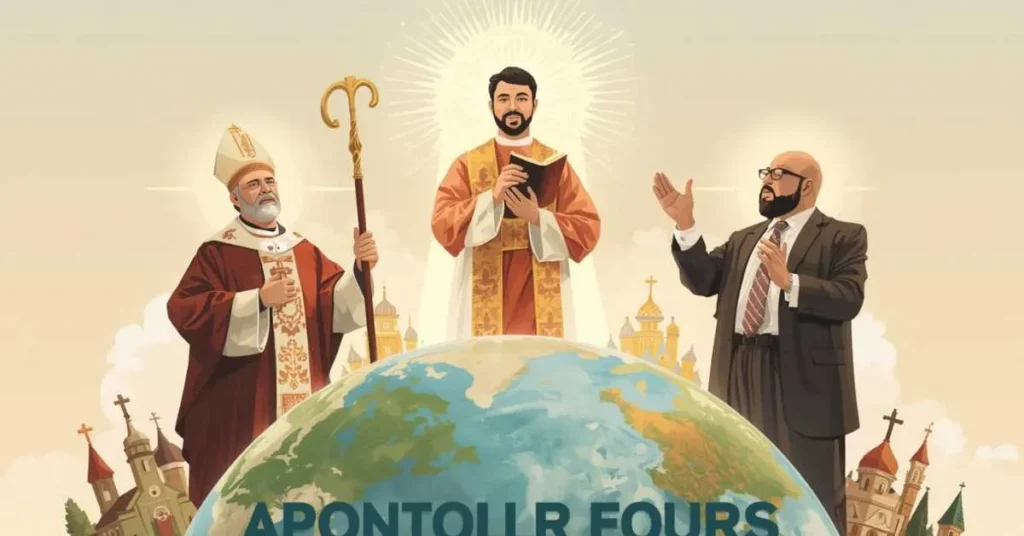
- Catholic Church: Recognizes apostolic succession, passing authority from Peter to modern bishops and the Pope.
- Orthodox Church: Maintains apostolic tradition through bishops and church councils.
- Protestant Movements: Some recognize modern apostles as spiritual leaders who teach and mentor communities.
Understanding these roles helps believers appreciate how apostleship continues across traditions.
Historical Fun Facts About Apostles
- The word “apostle” originally meant “messenger” or “one sent.”
- Apostolic succession ensures that church authority is passed down through generations.
- Paul traveled thousands of miles to teach, showing the dedication of apostles.
- Apostles performed miracles, establishing their authority and faith in God.
FAQs About Apostles
1. Who is considered an apostle?
Anyone sent by God to teach, guide, and lead. Biblical apostles include Peter and Paul; modern apostles are recognized as spiritual leaders.
2. Can women be apostles?
Some Christian traditions recognize women as apostles, serving in teaching, leadership, and missionary roles.
3. How do apostles differ from pastors?
Pastors lead local churches, while apostles may have a broader mission, planting churches, teaching multiple communities, and mentoring other leaders.
4. Are apostles only in Christianity?
While the term is most common in Christianity, “apostle” broadly means someone sent on a special mission in other spiritual contexts.
5. How many apostles were there?
The primary group is the Twelve Apostles. Others like Paul are recognized for their missionary work and teaching.
6. What qualities make a true apostle?
Faith, leadership, teaching ability, courage, and commitment to God’s mission.
7. How are apostles recognized today?
Through their work in teaching, mentoring, church planting, charity, and spreading faith in alignment with biblical principles.
Conclusion
The word apostle means far more than “follower.” Apostles are messengers, teachers, and leaders sent by God to guide believers and spread faith.
From the Twelve Apostles to Paul (Saint Paul), their missions shaped the Early Church and continue to influence Christianity today. Modern apostles continue this legacy through teaching, mentoring, and leading communities.
Understanding apostles, both biblical and modern, helps believers see the ongoing impact of these messengers of God. Apostleship remains a living, active, and essential part of Christian faith.
Read Also About: What is IYKYK Mean: Slang, Full Form & Social Media Explained

Hi, I’m Evan Lexor, the voice behind Meanpedia.com. I break down English words, slang, and phrases into clear, simple meanings that actually make sense. From modern internet terms to everyday expressions, my goal is straightforward: help you understand English better, faster, and with confidence, one word at a time.